How Much Does It Cost to Open a Coffee Shop in 2026?
Opening a coffee shop in 2026 requires careful cost planning across rent, equipment, labor, technology, menu strategy, marketing, and sustainability.
operations
May 15, 2026
Opening a coffee shop in 2026 requires careful cost planning across rent, equipment, labor, technology, menu strategy, marketing, and sustainability.
May 15, 2026
This AI playbook covers restaurant tools for voice ordering, staffing, compliance, menu pricing, inventory, marketing, ChatGPT prompts, and SEO.
May 15, 2026
Hardee’s giant Boddie-Noell inks 31-unit Scooter’s Coffee deal for NC and VA, leveraging drive-thru growth and local roots with rollout over 12–18 months.
May 15, 2026
Wingstop turns match weeks into a multi-sensory festival, aligning bold pop-ups with World Cup energy to build brand affinity and measurable momentum.
May 15, 2026
The parent company behind Dunkin', Buffalo Wild Wings, and Arby's has filed for an IPO a move that could reshape how Wall Street views the restaurant sector.
May 15, 2026

Learn how to develop a memorable restaurant brand identity that stands out in a crowded market, attracts loyal customers, and drives repeat business with actionable strategies and affordable tools.
May 15, 2026
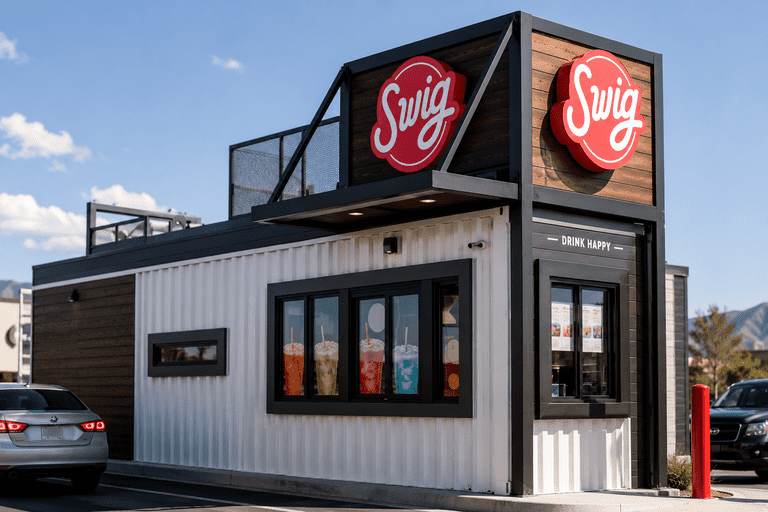
Dirty soda chain Swig is expanding into Colorado through a 10-unit franchise deal, riding a consumer beverage trend that's catching the attention of major QSR players nationwide.
May 15, 2026
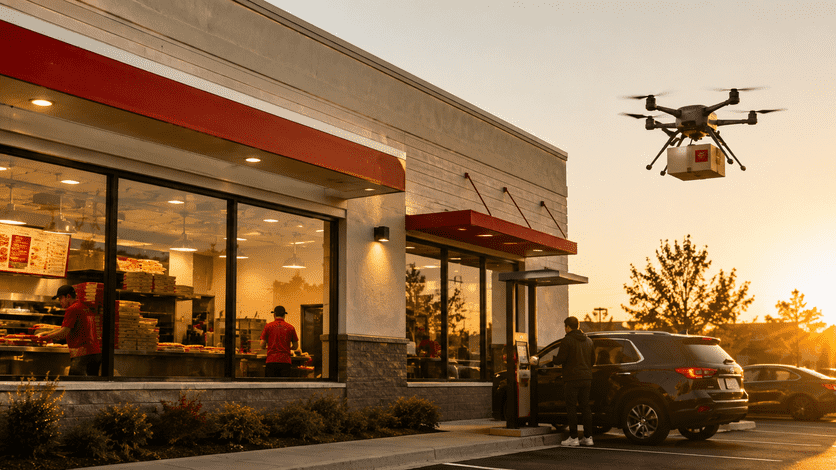
Papa Johns has teamed up with Alphabet's Wing for drone delivery of its new sandwich lineup in parts of Charlotte marking the first partnership of its kind between Wing and a national QSR brand.
May 15, 2026
A warm, expert-led look at McDonald’s Q1 results, menu makeover, and the refranchise question shaping its growth.
May 14, 2026
A reflective look at Habit Ranch, its immersive desert activation, and what it signals for brand loyalty and mindful, experiential dining.
May 14, 2026

Unlock Exclusive Access To Webinars, Events, And The Latest News For Free!
Portillo’s reboots around world‑class operations to elevate guest experience, speed, and growth in a discount‑driven market.

Photo by Frolicsome Fairy
At its core, Portillo’s is betting on a gentler, more deliberate pace in a fast‑food world that prizes discounts and rapid promotions. The reboot centers on four pillars, anchored by operational excellence. They want to recast the guest experience as the primary source of value, inviting visitors to linger by the counter and in the kitchen as they would in a familiar café. The mood is gentle and nostalgic, a quiet promise that speed and reliability can be comforting again. If managers stay committed, fans may find a familiar rhythm returning to the front line:
Portillo’s frames the reboot around four pillars, with operational excellence leading the way. The other investments—smarter marketing, selective expansion, and an emphasis on the guest’s journey—are designed to boost both sales and transactions. CEO Michael Osanloo has been clear: “running world‑class operations” is the single most powerful lever to lift results, even as the company navigates a quarter where same-store sales slipped 0.6% and transactions fell 2.3%. It’s a longer view, a pause on discount wars, and a bet that speed, accuracy, and consistency at the counter and in the kitchen can translate into more visits and larger orders. The challenge remains daunting yet hopeful: can the discipline endure amid competitive pressure?
Behind Portillo’s quieter pivot lies a recent leadership moment: the departure of COO Derrick Pratt created space for reassessment, and CEO Osanloo stepped in to observe operations firsthand. He found an overload of metrics crowding the front lines and pulling attention away from the guest experience. The reorg that followed reframed focus around what actually drives transactions and sales: faster, more reliable drive‑thru service and better coaching for speed and urgency. The result has been tangible in the dining room and on the drive‑thru lane—an invitation to guests that feels less hurried and more attentive, even as the market remains unforgiving.
To close the loop, Portillo’s has begun mapping training to outcomes: staff coached in real time, field managers stationed outside to observe and reinforce standards, and friendly competitions that reward top performers. A 15‑second improvement year‑to‑date in drive‑thru speed signals progress toward the brand’s cherished pace, though Osanloo cautions that catching up to the 2019 tempo—nearly a full minute faster—will take time and sustained discipline. The underlying aim is straightforward: convert renewed focus into reliable, smiling service that can withstand a new round of price pressures and keep guests returning.
Field managers now spend more time outside, where they provide real‑time feedback and coaching to ensure staff meet Portillo’s standards for efficiency. Competitive contests reward high‑achieving workers and motivate others to step up their performance. The drive‑thru discipline remains a focal point as the brand works to recapture the quick service reputation that defined its earlier growth.
These changes are not merely cosmetic. They translate into less chaos at the window and more confidence in the kitchen’s rhythm. The aspiration is to restore the familiar pace fans remember, while preserving the care that makes a visit feel special. The path is still being paved, but the cadence is clearer: coach, measure, and reward in a way that honors the brand’s drive‑thru heritage.

Current leadership efforts sit alongside a candid search for a new COO to drive these initiatives forward. Osanloo remains deeply engaged with operations teams, using hands‑on involvement to gain valuable insight and reinvigorate the brand’s execution culture. “We want a world‑class leader who fits our culture and appreciates Portillo’s for the sleeping giant that it is,” he stated, signaling a willingness to align talent with Portillo’s distinctive brand identity.
The message is not simply about replacement; it’s about translating a culture of hands‑on learning into scalable discipline. The leadership team is trying to protect Portillo’s character while sharpening its operational habits—an endeavor that depends as much on people as on processes. The result, if sustained, could be a brand that feels both familiar and relentlessly capable in the same breath.

Portillo’s wrapped a year of mixed performance, with 2025第四 quarter revenues at $185.7 million and same‑restaurant sales down 3.3%, while full‑year revenue reached $732.1 million and same‑store sales declined 0.5%. The company opened eight restaurants in fiscal 2025, pushing the total to 102, and added two more after December 28, 2025, for a current count of 104. A reset was needed, and the plan for 2026 emphasizes disciplined expansion, improved operations, and a sharper marketing mix to drive transactions and guest satisfaction.
Key bets include a lighter, more cost‑efficient RoTF (Restaurant of the Future) prototype—1.0 with a smaller footprint and streamlined production, roughly 6,000–6,200 square feet—debuting in markets like Willowbrook, Stafford, and Grapevine, Texas, by year‑end 2024. Willowbrook, as a flagship RoTF, blends Portillo’s nostalgic charm with modern convenience, illustrating how the brand envisions growth without sacrificing its soul. The 2026 plan imagines eight new units, capital investments of approximately $55–60 million, and a path toward flat to positive free cash flow as execution tightens.