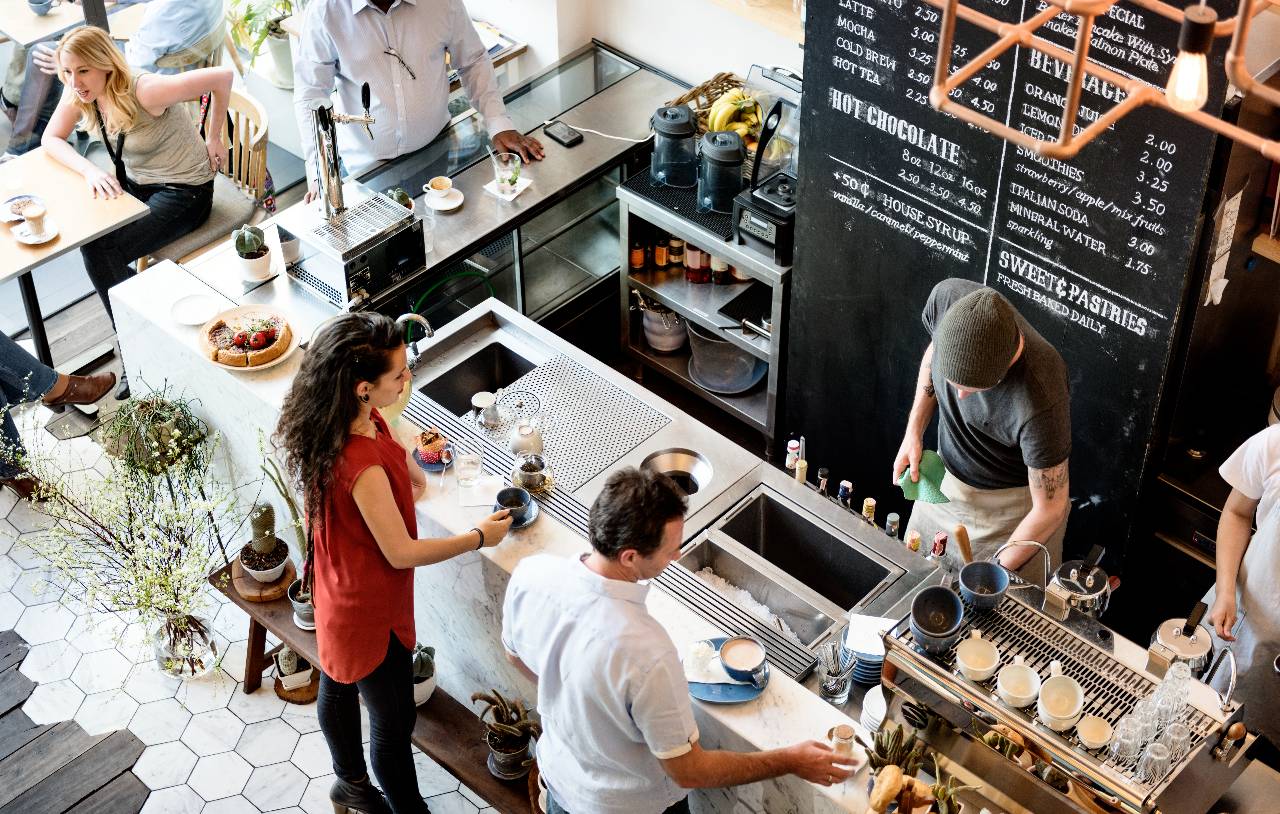
How Much Does It Cost to Open a Coffee Shop in 2026?
Opening a coffee shop in 2026 requires careful cost planning across rent, equipment, labor, technology, menu strategy, marketing, and sustainability.
operations
May 15, 2026
Opening a coffee shop in 2026 requires careful cost planning across rent, equipment, labor, technology, menu strategy, marketing, and sustainability.
May 15, 2026
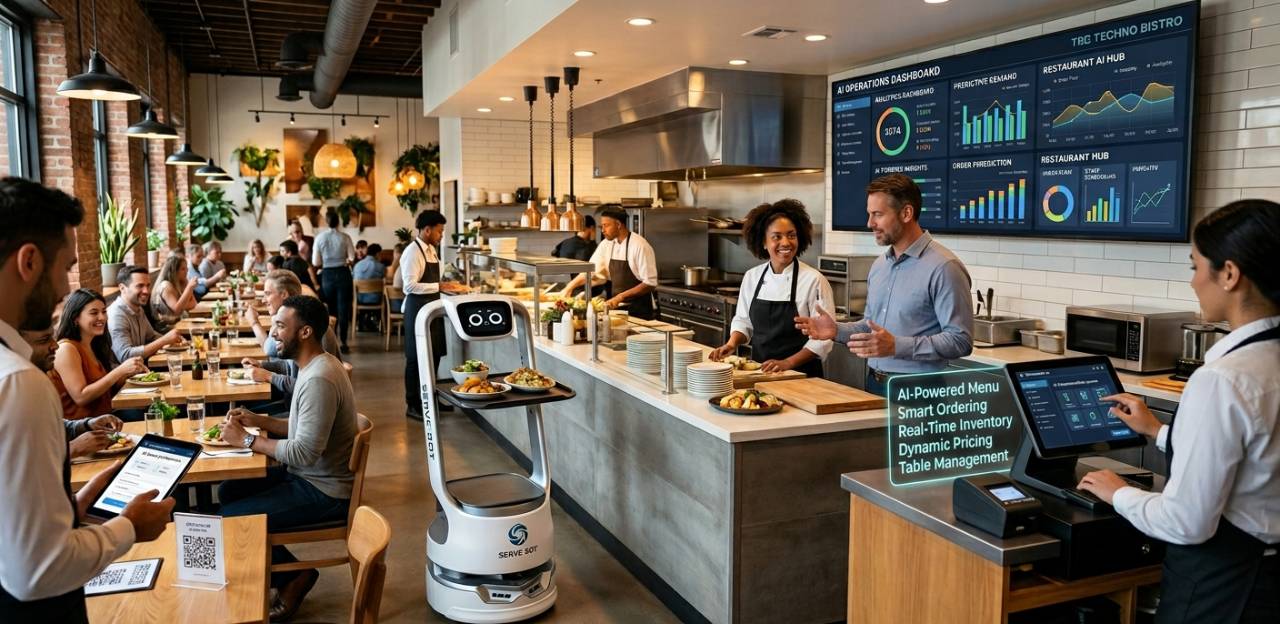
This AI playbook covers restaurant tools for voice ordering, staffing, compliance, menu pricing, inventory, marketing, ChatGPT prompts, and SEO.
May 15, 2026
Hardee’s giant Boddie-Noell inks 31-unit Scooter’s Coffee deal for NC and VA, leveraging drive-thru growth and local roots with rollout over 12–18 months.
May 15, 2026
Wingstop turns match weeks into a multi-sensory festival, aligning bold pop-ups with World Cup energy to build brand affinity and measurable momentum.
May 15, 2026
The parent company behind Dunkin', Buffalo Wild Wings, and Arby's has filed for an IPO a move that could reshape how Wall Street views the restaurant sector.
May 15, 2026

Learn how to develop a memorable restaurant brand identity that stands out in a crowded market, attracts loyal customers, and drives repeat business with actionable strategies and affordable tools.
May 15, 2026
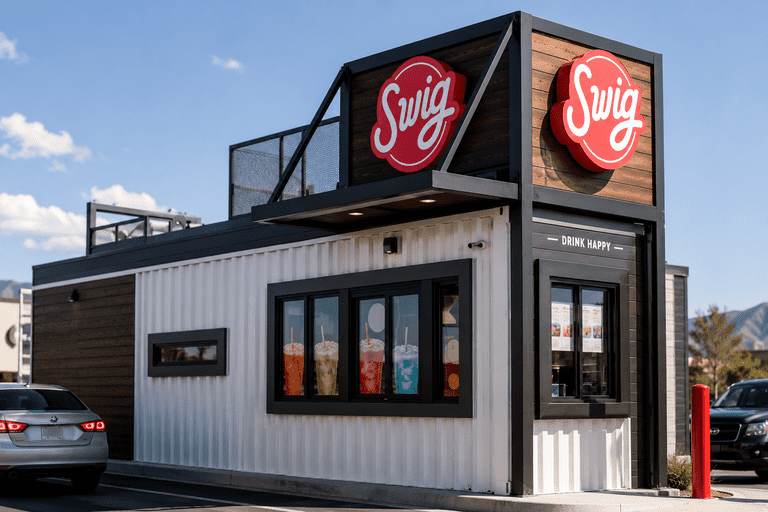
Dirty soda chain Swig is expanding into Colorado through a 10-unit franchise deal, riding a consumer beverage trend that's catching the attention of major QSR players nationwide.
May 15, 2026
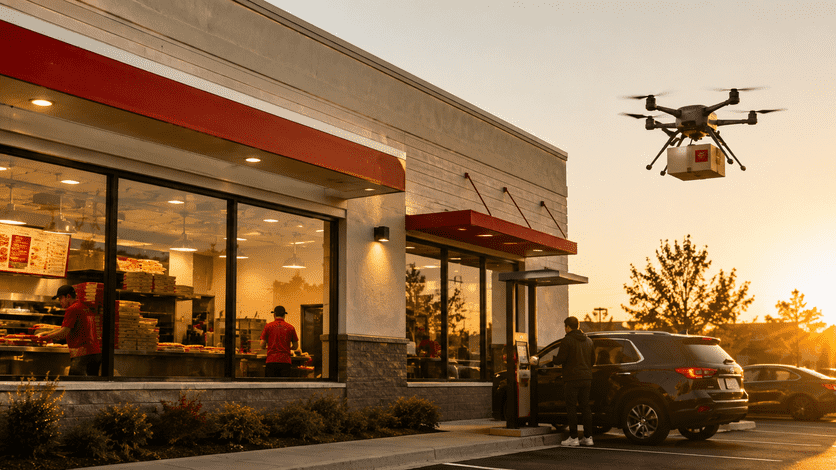
Papa Johns has teamed up with Alphabet's Wing for drone delivery of its new sandwich lineup in parts of Charlotte marking the first partnership of its kind between Wing and a national QSR brand.
May 15, 2026
A warm, expert-led look at McDonald’s Q1 results, menu makeover, and the refranchise question shaping its growth.
May 14, 2026
A reflective look at Habit Ranch, its immersive desert activation, and what it signals for brand loyalty and mindful, experiential dining.
May 14, 2026

Unlock Exclusive Access To Webinars, Events, And The Latest News For Free!
FSC Franchise Co. unites Beef O’ Brady’s, The Brass Tap, and Newk’s Eatery into a scalable, multi-brand engine—pursuing a billion-dollar sales trajectory through shared resources.
Photo by
In a market where growth is measured by velocity, FSC Franchise Co. threads Beef O’ Brady’s, The Brass Tap, and Newk’s Eatery into a single, deliberate engine. The objective is audacious: a platform capable of delivering a billion dollars in annual sales through disciplined scale rather than sheer expansion. Before this wave of consolidation, the trio operated with a combined cadence near $500 million in revenue; executives say momentum across all brands is now accelerating. The aim is not merely counting outlets but orchestrating operating leverage, guest reach, and culinary coherence so the pace of growth feels inevitable.
With the 2023 acquisition of Newk’s Eatery, FSC added a third brand to the Capital Spring‑backed platform, a move observers describe as catalytic for scale. The The Brass Tap stands out with a pipeline of 85 new locations, signaling expansion beyond Newk’s. Taken together, leadership contends that uniting the brands will yield meaningful benefits over the next four to five years, enabling FSC to compete more aggressively in fast-casual and casual-dining landscapes. Industry observers note that such platform plays—shared purchasing and centralized culinary leadership—have become a recognizable path to scale, reinforcing FSC’s multi-brand ambitions and its drive to leverage a unified supply chain.
At the heart of the plan lies a precise belief: shared resources can translate ambition into steady profitability. The platform emphasizes collective purchasing power and a consolidated culinary team as core levers, enabling cross‑brand sourcing—from Newk’s Parisian Roll to higher‑quality shrimp and salmon across the portfolio. The goal is elegant practicality: reduce per‑unit costs while lifting product quality, a combination executives deem essential to scaling in a crowded fast‑casual market. Franchisees are expected to feel the benefit in lower operating costs and stronger support as the brands align on procurement, product development, and menu optimization.
As a discipline, leadership frames higher quality paired with cost discipline as a home run for the system: incremental improvements across brands, realized through shared platforms and centralized governance. The promise is not only sharper margins but a more consistent guest experience, achieved by aligning sourcing, recipe development, and menu testing under a common playbook.
Leadership Voices: Founders and Executives. At the center of the narrative are FSC’s chief executive and Newk’s leadership, speaking in a cadence of measured optimism. Chris Elliot, CEO of FSC Franchise Co., casts the multi‑brand collaboration as a long‑term growth engine, noting that synergy opportunities will accumulate over time. "Over time, there’s probably going to be probably a dozen more opportunities like that to work together to improve quality, and when you improve quality and save money at the same time, that’s a home run." he explains. On the Newk’s side, Frank Paci, Newk’s CEO, emphasizes tangible franchisee benefits: "We’ve got better service at lower costs for the franchisees in the Newk’s system." These statements anchor the shared‑value narrative driving the platform’s roll‑out.
Together, the leaders frame synergies as a route to guest satisfaction and stronger economics for franchisees. The narrative is not only about scale but about quality, consistency, and the reassurance that the platform will support expansion without diluting brand identity. The effect, they suggest, will be visible in training, procurement, and menu development that travels well across concept borders.
Looking ahead, Newk’s Eatery and FSC’s platform map a rapid expansion path. The brand targets roughly a 50% uplift in unit growth over the next five years, while trimming store footprints to around 2,800 square feet from the traditional 3,500–4,000, a move designed to curb construction costs and expand guest access. Off‑premise now accounts for more than half of business, and inline locations are preferred when feasible. Average unit volume sits near $2.4 million, with the top third approaching $3.3 million. Value‑driven combinations and catering have helped anchor three consecutive years of comp‑store growth, while operations evolve to support scale.
Operational innovations—out‑sourcing dough pressing and switching to pre‑sliced cheese—free labor for guest service, a strategic response to labor shortages. The platform’s menu engineering and procurement rationalizations reinforce a broader shift toward efficiency without sacrificing personality. Off‑premise offerings and catering complement in‑restaurant experiences, shaping a business model that can endure the volatility of labor markets and real estate costs while still delivering personalized, affordable options for families.
Against this horizon, other operators are pursuing scale with notable zeal. Darden Restaurants agreed to acquire Chuy’s for about $605 million in cash, signaling a push into mid‑market, fast‑casual‑adjacent brands. The ONE Group Hospitality followed with the purchase of Benihana for $365 million, underscoring a taste for experiential, brand‑led growth through consolidation. Craveworthy Brands and Brix are expanding portfolios as well, illustrating a broader pattern: platform‑based strategies that seek to unlock supply‑chain efficiencies, shared services, and cross‑brand branding across related concepts.
The sea of signals confirms a market appetite for scale, even as operators navigate integration challenges. The long‑horizon logic favors platforms that align purchasing, culinary development, and brand storytelling across multiple concepts. Yet the strength of the outcome will hinge on disciplined execution, seamless collaboration with franchisees, and the ability to translate platform‑level ambitions into tangible, guest‑facing advantages.
For franchisees, the aggregation under FSC’s platform promises enhanced purchasing leverage, broader brand access, and stronger support as efficiencies migrate across procurement, product development, and operations. The emphasis on smaller footprints, robust off‑premise performance, and value‑driven menus aligns with evolving guest preferences and labor-market realities. The broader industry pattern—multi‑brand platforms pursuing scale while maintaining quality—offers a blueprint for growth that is as much about disciplined execution as it is about ambition.
As Newk’s and FSC press toward expanded unit counts and cross‑brand opportunities, the work ahead will hinge on sourcing, menu innovation, and operational alignment. The lesson is not a single statistic but a careful orchestration: grow with precision, invest where it matters, and allow shared platforms to lift margins while preserving the character of each brand.