How Much Does It Cost to Open a Coffee Shop in 2026?
Opening a coffee shop in 2026 requires careful cost planning across rent, equipment, labor, technology, menu strategy, marketing, and sustainability.
operations
May 15, 2026
Opening a coffee shop in 2026 requires careful cost planning across rent, equipment, labor, technology, menu strategy, marketing, and sustainability.
May 15, 2026
This AI playbook covers restaurant tools for voice ordering, staffing, compliance, menu pricing, inventory, marketing, ChatGPT prompts, and SEO.
May 15, 2026
Hardee’s giant Boddie-Noell inks 31-unit Scooter’s Coffee deal for NC and VA, leveraging drive-thru growth and local roots with rollout over 12–18 months.
May 15, 2026
Wingstop turns match weeks into a multi-sensory festival, aligning bold pop-ups with World Cup energy to build brand affinity and measurable momentum.
May 15, 2026
The parent company behind Dunkin', Buffalo Wild Wings, and Arby's has filed for an IPO a move that could reshape how Wall Street views the restaurant sector.
May 15, 2026
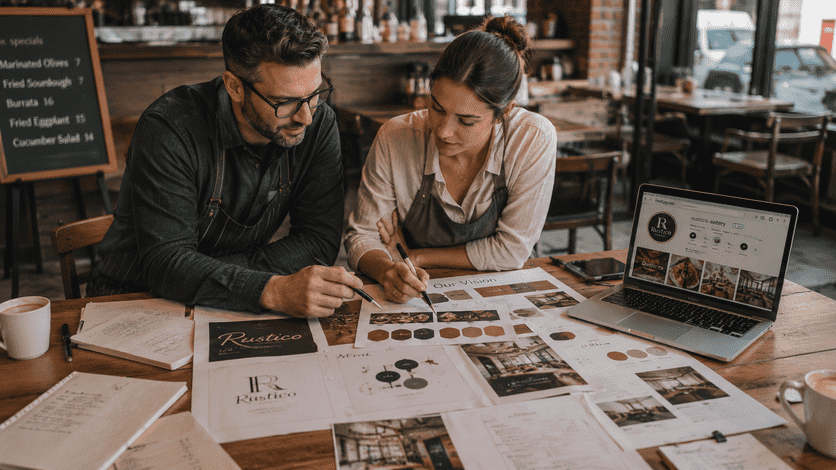
Learn how to develop a memorable restaurant brand identity that stands out in a crowded market, attracts loyal customers, and drives repeat business with actionable strategies and affordable tools.
May 15, 2026
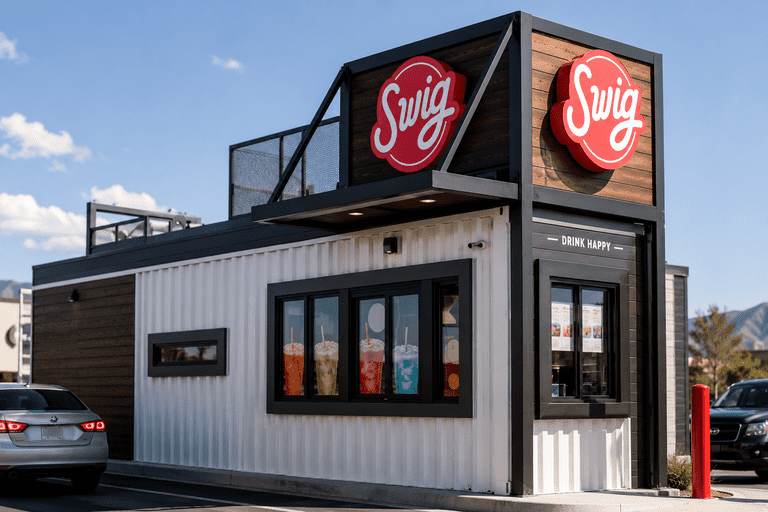
Dirty soda chain Swig is expanding into Colorado through a 10-unit franchise deal, riding a consumer beverage trend that's catching the attention of major QSR players nationwide.
May 15, 2026
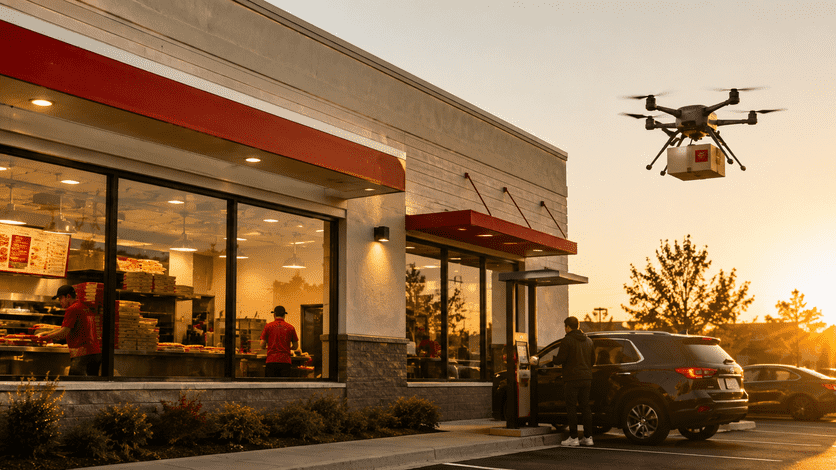
Papa Johns has teamed up with Alphabet's Wing for drone delivery of its new sandwich lineup in parts of Charlotte marking the first partnership of its kind between Wing and a national QSR brand.
May 15, 2026
A warm, expert-led look at McDonald’s Q1 results, menu makeover, and the refranchise question shaping its growth.
May 14, 2026
A reflective look at Habit Ranch, its immersive desert activation, and what it signals for brand loyalty and mindful, experiential dining.
May 14, 2026

Unlock Exclusive Access To Webinars, Events, And The Latest News For Free!
A former flight attendant anchors Beef-A-Roo in Rose City, Michigan, using modular spaces and strong community ties to fuel deliberate, local growth.
Photo by Giorgi Iremadze
Amanda Brown began a new chapter in a small town that would become the anchor of her story. A 12-year flight attendant who welcomed her daughter at 35 chose a path closer to family in Rose City, Michigan. Critics warned of a pay cut and a dramatic shift to the restaurant world, but she trusted the value of hands-on learning. A year and a half at McDonald’s offered daily schooling in service, teams, and tempo. In January 2024, she opened her first Beef-A-Roo in Rose City, signaling a new model for out-of-state expansion that would be tested with care:
Her return to hospitality was grounded in practical choice. In a rural Northern Michigan town, options favor schooling or local service roles, yet Brown sought stability and proximity to family after becoming a mother. The approach centers on hands-on operations before ownership, a philosophy sharpened by her time at McDonald’s and later applied to Beef-A-Roo, where a shipping-container–style footprint would prove to be a deliberate response to space constraints while honoring a community’s footprint. This is a plan that feels thoughtful and balanced, not rushed.
Brown’s journey is a quiet case study in turning local ties into leadership. Her choices—grounding herself in operations, embracing a community-first angle, and aligning with a brand that rewards performance—suggest a path where nontraditional backgrounds can flourish in franchising. The Rose City path isn’t merely about a store; it’s a balanced, nourishing way of thinking that honors people and place before scale.
Modular growth is not a buzzword here; it’s a practical response to space and pace. The Rose City store sits in a modular, container-based footprint engineered to maximize a compact site and streamline outfitting. Next Brands, a family-owned growth accelerator, has driven Beef-A-Roo’s Michigan push, translating modular concepts into quicker timelines and the ability to test brand-aligned concepts in small markets. Brown’s experience becomes the proof point: when a local leader is backed by a scalable model, speed and quality can advance in step with place-based purpose.
Brown began at Beef-A-Roo Rose City as a crew member, progressed to assistant general manager and then to general manager, before becoming franchise owner—propelled by consistently positive performance reviews. The compact footprint and a rapid ascent illustrate how a brand can elevate dedicated teammates into local leadership. The January opening of the first franchise and plans for a second nearby site underscore a deliberate, scalable approach that blends internal promotion with modular site concepts to accelerate development while preserving standards.
This isn’t merely about speed; it’s a tested model in a living community. The sequence—from crew member to franchise owner in a single market—shows how a carefully designed system can convert strong performance into local leadership, site by site, season by season.
Brown has positioned Beef-A-Roo as a community hub in Rose City, investing time and resources into local traditions. When Charlton Heston Academy planned homecoming, the superintendent sought her support, resulting in a pep rally where shakes rolled out and the crowd sang along to 'Shake it Up.' Beyond events, she commissioned a mural capturing Rose City’s 'exit 222' identity, with a cowboy delivering a beef sandwich to the trailers and side-by-sides. These gestures foster visibility, trust, and a sense that the restaurant is a dependable partner, not a transient stop.
Local engagement deepens the bond between franchise and residents. The mural sits alongside ongoing school involvement, community fundraisers, and a commitment Brown outlined to contribute whenever possible. This approach mirrors a broader pattern: franchisees seeking lasting relevance stay close to the communities they serve, letting culture and character shape everyday service.
Together, the community‑centered program and the modular store design form a feedback loop: local goodwill fuels sales, and steady operations reinforce the town’s identity as a place where a beef sandwich becomes a shared ritual.

Ambition here is deliberate and local. Brown describes a conversation with one of Beef-A-Roo’s owners about opening one new restaurant each year for the next five years—a proposal she greeted with “Heck yeah!” The plan emphasizes place‑based growth rather than rapid, nationwide expansion, keeping expansion tightly connected to Rose City and nearby markets. The use of modular locations and mentorship through Next Brands underpins this thoughtful, steady scale, inviting a future where small towns anchor the brand’s presence.
In the near term, Brown intends to keep expansion as local as possible, using Rose City as a test bed for proven concepts. This stance aligns with a broader industry pattern—franchise networks rely on local champions to build scale while preserving brand integrity, ensuring opportunities are balanced with responsibility and that operations stay grounded in community values.
Brown’s trajectory demonstrates how franchise opportunities can align personal aspiration with local vitality. A careful, community-minded stance—aimed at steady growth and durable service—offers a nourishing model for others who want to shape a brand from the roots up.
Industry context helps explain Brown’s rapid ascent. Beef-A-Roo’s Michigan push has been shaped by Next Brands, a family-owned growth accelerator that champions modular locations and multi-brand franchising. The approach translates space into compact, container-based restaurants to shorten development timelines and reduce upfront costs. Rose City appears among the first out-of-state deployments, signaling the brand’s intent to root itself in smaller communities ready for accessible quick-service options.
Takeaways for franchising in small towns emerge from Brown’s arc: operators with nontraditional educational backgrounds, deep local ties, and hands-on operating experience can become owners when mentorship, structured internal advancement, and community networks are in place. Manufactures and growth accelerators like Next Brands show how modular formats and targeted expansion can reach smaller markets without sacrificing brand standards. The takeaway is a blend of authentic local engagement with disciplined scalability so growth remains anchored in community value and operational excellence.
Ultimately, Brown’s story reads as a balanced, nourishing example of mindful franchising: growth that respects place, supports families, and stays true to a core mission—making good food that fits the rhythms of everyday life.