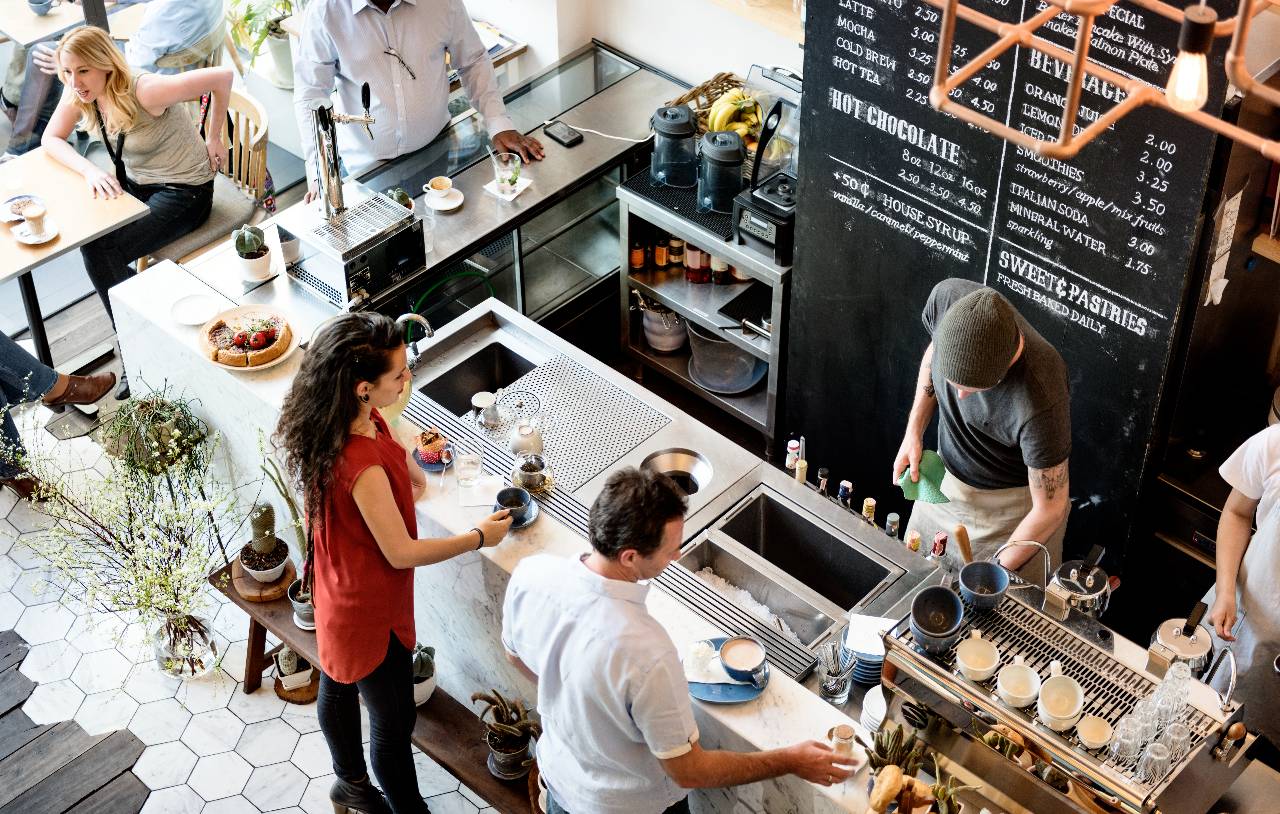
How Much Does It Cost to Open a Coffee Shop in 2026?
Opening a coffee shop in 2026 requires careful cost planning across rent, equipment, labor, technology, menu strategy, marketing, and sustainability.
operations
May 15, 2026
Opening a coffee shop in 2026 requires careful cost planning across rent, equipment, labor, technology, menu strategy, marketing, and sustainability.
May 15, 2026
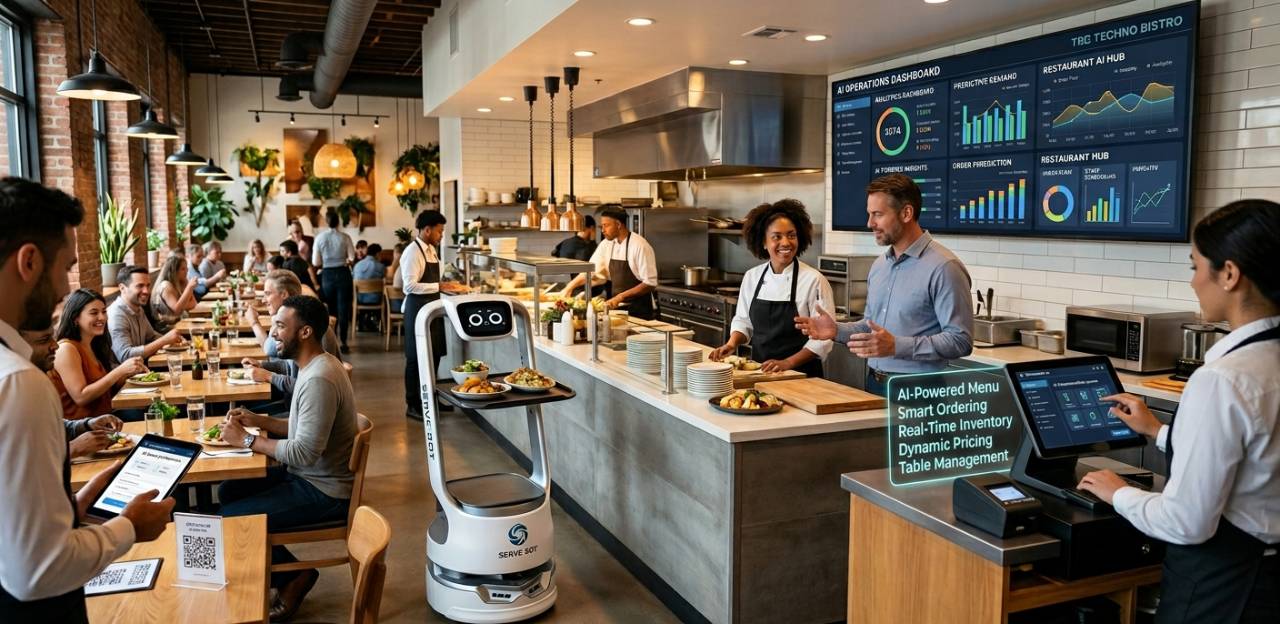
This AI playbook covers restaurant tools for voice ordering, staffing, compliance, menu pricing, inventory, marketing, ChatGPT prompts, and SEO.
May 15, 2026
Hardee’s giant Boddie-Noell inks 31-unit Scooter’s Coffee deal for NC and VA, leveraging drive-thru growth and local roots with rollout over 12–18 months.
May 15, 2026
Wingstop turns match weeks into a multi-sensory festival, aligning bold pop-ups with World Cup energy to build brand affinity and measurable momentum.
May 15, 2026
The parent company behind Dunkin', Buffalo Wild Wings, and Arby's has filed for an IPO a move that could reshape how Wall Street views the restaurant sector.
May 15, 2026

Learn how to develop a memorable restaurant brand identity that stands out in a crowded market, attracts loyal customers, and drives repeat business with actionable strategies and affordable tools.
May 15, 2026
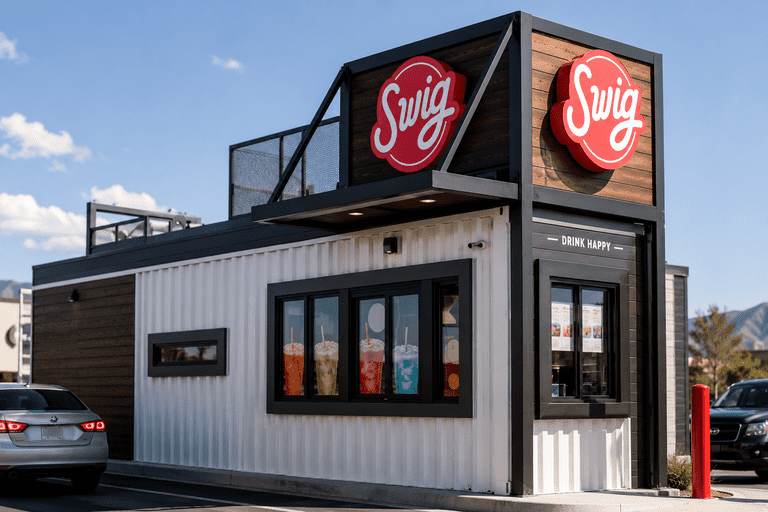
Dirty soda chain Swig is expanding into Colorado through a 10-unit franchise deal, riding a consumer beverage trend that's catching the attention of major QSR players nationwide.
May 15, 2026
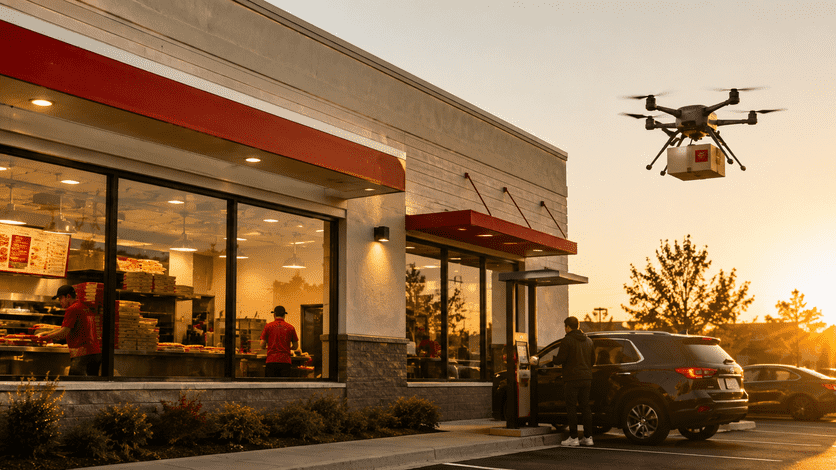
Papa Johns has teamed up with Alphabet's Wing for drone delivery of its new sandwich lineup in parts of Charlotte marking the first partnership of its kind between Wing and a national QSR brand.
May 15, 2026
A warm, expert-led look at McDonald’s Q1 results, menu makeover, and the refranchise question shaping its growth.
May 14, 2026
A reflective look at Habit Ranch, its immersive desert activation, and what it signals for brand loyalty and mindful, experiential dining.
May 14, 2026

Unlock Exclusive Access To Webinars, Events, And The Latest News For Free!
After a late-October closing transferred control of most U.S. units to founder-led operators, Hooters unveils a heritage-driven revival across menu, service, ambiance, and brand voice.

Hooters of America closed a pivotal chapter on "October 31, 2025," when a transaction restored brand stewardship to operators aligned with the company’s origin story. The hand‑off brought more than 100 company‑owned restaurants under a buyer group led by Hooters Inc. (the original founders) and Hoot Owl Restaurants LLC, while Hooters Brand Management, LLC took the reins of franchise support. With the ink dry, that buyer group held sway over "approximately 140 of the 198" domestic locations—"roughly 70%"—and held influence over "60 international locations," together representing a systemwide sales base of "around $700 million." It is a transfer of custody that feels less like a sale and more like a restoration, one that frames the next act in the brand’s long-running American saga. The architecture is deliberate: operational control sits with founder‑tied operators, and the connective tissue—advertising, purchasing, development—runs through a centralized entity built to coordinate a franchise‑weighted system. In the language of dining rooms and dining cultures, this is a return to mise en place: a methodical gathering of ingredients, talent, and tools so the kitchen can move with speed and purpose. Analysis: The closing date, ownership mix, and system scale establish the immediate scope of the turnaround. Placing founder‑aligned operators in charge and centralizing franchise support clarifies decision‑rights at the moment they matter most.
The path to this inflection began with a reckoning. On "March 31, 2025," Hooters filed for Chapter 11 in Texas to address "approximately $376 million" in debt, buoyed by about "$35–40 million" in debtor‑in‑possession financing. In June, over 30 company‑owned restaurants closed across "more than a dozen states — including Florida, Georgia, Michigan, Texas, North and South Carolina, Tennessee and others," trimming ballast to steady the ship. Before the closures, the U.S. footprint included "about 151" company‑owned and "154" franchise‑run locations—"around 251" in total. After the pruning, unit counts dropped to "approximately 220," a leaner lattice for future growth rather than a retreat. Rather than chase breadth, the company chose depth—consolidating where it could perform, simplifying operations, and pivoting toward a purer franchise model. The intention read like a chef’s edit of a menu that had grown too baroque: remove what obscures the signature flavors, invest in what guests return for, and prepare service to meet the moment. Analysis: The debt load, DIP financing, and targeted closures illustrate a traditional balance‑sheet and portfolio reset. The contraction points to cost and complexity reduction as the precondition for reinvestment in core markets.
As the restructuring took hold, the operating model was recast. Ownership of more than 100 company‑owned restaurants moved to the founder‑led buyer group, and Hooters Brand Management, LLC assumed oversight of franchise support functions, including "national advertising, purchasing, and development." A management agreement granted Hooters Brand Management "majority franchise support responsibilities"—a clear line of authority where pricing, supply, and expansion are determined. Timeline mattered. "According to Reuters, the goal was to exit bankruptcy in three to four months," a cadence the company states it met with the late‑October closing. Speed is not merely an aesthetic here; it is a signal to franchisees, suppliers, and guests that the house is being set in order. In effect, the brand’s blueprint now resembles a well‑run brigade: operators with historical ties lead the pass, while a central support body expedites procurement, media, and development with the discipline of a seasoned expediter. The ambition is not flamboyant; it is precise, the culinary equivalent of heat well‑managed and seasoning placed exactly where it belongs. Analysis: Centralizing franchise support under a dedicated entity is designed to accelerate execution on marketing, purchasing, and development. The swift exit supports confidence in the turnaround’s pacing and governance.
With the acquisition closed, the new leadership has uncorked a comprehensive revitalization called "Re‑Hooterization." Early November statements describe enhancements across menu, service, ambiance, and identity, anchored in the brand’s roots. On the plate, the return of "hand‑breaded wings made with Grade AA butter" offers a tactile nod to legacy craft, joined by "wild‑caught fish options," "fresh‑cut salads," and "in‑house–made blue cheese and ranch dressings." These are not novelties; they are heirloom recipes presented anew, the culinary equivalent of rediscovering a classic vintage and realizing why it became a classic in the first place. The look shifts, too. Server uniforms are reverting to the original "beachy vibe," including the "classic orange shorts and white tops." Physical spaces receive upgrades and equipment improvements, while service is tuned toward hospitality that reads warmer and more attentive. The brand’s social posture is also in motion—renewed community presence through local events, partnerships, and sponsorships, an outward‑facing extension of the internal reset. Taken together, the plan is both nostalgic and pragmatic: rekindle loyalty through iconic items and familiar atmosphere, while tightening operations so the promise is delivered consistently from lunch rush to late‑night bite. Analysis: Pairing heritage menu items with service and ambiance upgrades is designed to stir emotional connection and operational reliability. Community engagement adds a neighborhood relevance that can translate into repeat traffic.
At the moment of closing, the buyer group controlled "approximately 140 of the 198" domestic units—"roughly 70%"—and held influence over "60 international locations," translating to "around $700 million" in systemwide sales. The capital stack includes the earlier "$35–40 million" in debtor‑in‑possession financing, and with the restructuring complete, the brand steps into execution mode under experienced stewardship. The roadmap echoes a broader industry repertoire. Red Lobster "invested $60 million post‑bankruptcy in menu innovation and tech integration," while TGI Fridays "cited restructuring as the basis for renewed growth." In similar spirit, Hooters is reframing toward family friendliness—ending bikini nights, tempering overt objectification in uniforms, and leaning into charitable and community programs. It is a tonal re‑composition running alongside the operational score, intended to change how the dining room feels without losing the signatures that loyalists expect. For a chain defined in the public imagination by atmosphere as much as flavor, this cultural calibration is not trivial. It suggests a desire to be invited back into the weeknight rotation—less spectacle, more hospitality; less flourish, more balance. Analysis: The concentration of control and the system sales base provide the scale to influence outcomes quickly. Aligning with industry precedents and shifting cultural tone demonstrate a tested playbook aimed at rebuilding traffic and trust.
Not every variable is pinned down. Pre‑closing estimates anticipated control of "around 130 units, or 65% of domestic operations," yet the completed deal conferred "approximately 140 of the 198"—"roughly 70%." Post‑closures total U.S. units were described as "approximately 220," while the transaction references "198" domestic locations; the reconciliation of these figures is not detailed. Upgrades and equipment improvements are noted, though the plan does not specify a timeline or quantify investment beyond the earlier "$35–40 million" in financing. The brand’s community integration is central to the narrative, but specific markets, schedules, and measures of success remain unstated. Looking ahead, the near‑term agenda is straightforward: execute a back‑to‑basics identity through heritage food, service, and a "beachy vibe" reset; maintain hospitality standards; and animate community presence. With over 30 closures already pruning the tree across "more than a dozen states," the system is lighter, pointed toward a franchise‑weighted model meant to enable reinvestment in core markets. The lesson is classical in its simplicity: when a brand loses its edge, economy of effort and fidelity to its defining notes become the most reliable path back. The triumph, if it arrives, will taste like discipline—seasoned, consistent, and unmistakably in character. Analysis: Variances in reported unit counts and undisclosed rollout timing introduce uncertainty about pacing. Even so, the combination of centralized support, heritage‑led updates, and cultural recalibration sets a coherent framework for recovery, contingent on consistent execution across the "approximately 140 of the 198" domestic locations under direct influence.