How Much Does It Cost to Open a Coffee Shop in 2026?
Opening a coffee shop in 2026 requires careful cost planning across rent, equipment, labor, technology, menu strategy, marketing, and sustainability.
operations
May 15, 2026
Opening a coffee shop in 2026 requires careful cost planning across rent, equipment, labor, technology, menu strategy, marketing, and sustainability.
May 15, 2026

This AI playbook covers restaurant tools for voice ordering, staffing, compliance, menu pricing, inventory, marketing, ChatGPT prompts, and SEO.
May 15, 2026

Hardee’s giant Boddie-Noell inks 31-unit Scooter’s Coffee deal for NC and VA, leveraging drive-thru growth and local roots with rollout over 12–18 months.
May 15, 2026

Wingstop turns match weeks into a multi-sensory festival, aligning bold pop-ups with World Cup energy to build brand affinity and measurable momentum.
May 15, 2026

The parent company behind Dunkin', Buffalo Wild Wings, and Arby's has filed for an IPO a move that could reshape how Wall Street views the restaurant sector.
May 15, 2026

Learn how to develop a memorable restaurant brand identity that stands out in a crowded market, attracts loyal customers, and drives repeat business with actionable strategies and affordable tools.
May 15, 2026

Dirty soda chain Swig is expanding into Colorado through a 10-unit franchise deal, riding a consumer beverage trend that's catching the attention of major QSR players nationwide.
May 15, 2026

Papa Johns has teamed up with Alphabet's Wing for drone delivery of its new sandwich lineup in parts of Charlotte marking the first partnership of its kind between Wing and a national QSR brand.
May 15, 2026

A warm, expert-led look at McDonald’s Q1 results, menu makeover, and the refranchise question shaping its growth.
May 14, 2026

A reflective look at Habit Ranch, its immersive desert activation, and what it signals for brand loyalty and mindful, experiential dining.
May 14, 2026

Unlock Exclusive Access To Webinars, Events, And The Latest News For Free!
A gentle, expert look at FAT Brands’ growth engine, its expanding portfolio, and the profitability questions that accompany rapid expansion.
Photo by Thiago Cardoso
From the clink of coffee cups to the soft glow of a kitchen at dawn, FAT Brands unfolds as a study in patient expansion. The group has grown into a portfolio of 18 brands and about 2,300 units spread across 40 countries and 49 states, a map that reads like a road trip through familiar flavors and new ideas. In the last four years, the company has welcomed Johnny Rockets (2020) and Smokey Bones Barbecue (2023), building a laboratory for scale. In the second quarter, the numbers began to speak a louder dialect: 24 new store openings and a plan to surpass 120 new restaurants in 2024. Yet within the ledger, profitability kept a gentler tempo, inviting questions about the pace and polish of growth: how far the momentum will carry earnings as the doors keep opening:
Here are the levers that shaped the quarter: $152.0 million in revenue, up 42.4% from a year earlier, buoyed by the Smokey Bones acquisition and new openings; yet FAT Brands posted a GAAP net loss of $39.4 million and an adjusted net loss of $30.9 million. The portfolio’s reach is broad, and so is the challenge of turning volume into stable earnings. In the quarter, 24 new stores opened, while same-store sales slipped 1.6% year over year. The engine hums, but the music isn’t yet ready to claim a chorus. The question: where does momentum lead next?
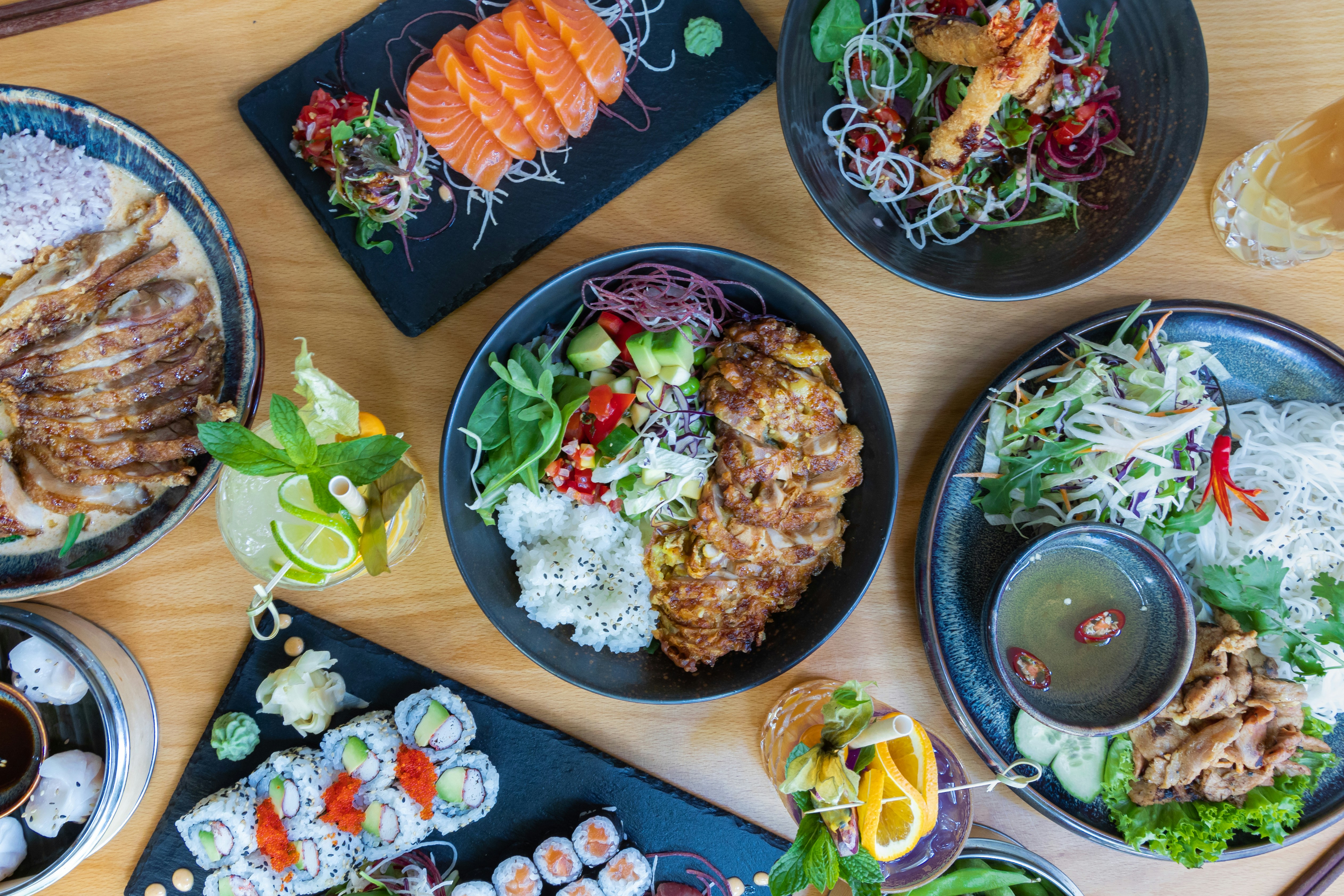
A portfolio on the map is more than numbers; it's a living mosaic of brands and potential. FAT Brands now counts 18 brands and about 2,300 units, a footprint spanning 40 countries and 49 states. The four-year arc of growth—adding Johnny Rockets in 2020 and Smokey Bones in 2023—reads like a deliberate experiment in scale. Leaders describe the portfolio as a platform for expansion, with room for strategic divestments to tame debt. “Over the last three years, we have grown the FAT Brands portfolio to 18 iconic restaurant brands,” Wiederhorn said, underscoring that the value lies as much in integration as in accumulation. The take‑away is a map of opportunities awaiting alignment.
From a broader lens, the portfolio isn’t just about adding brands; it’s about how the right mix can unlock value across channels. The release notes that growth dynamics are supported by ongoing brand development and hint at strategic divestments to optimize debt levels. The portfolio’s breadth—from Round Table Pizza to Fazoli’s and Smokey Bones—acts as a platform for scale, a reminder that expansion is as much about choosing what to hold as what to grow.

At the heart of FAT Brands’ expansion is a patient choreography of development deals and selective acquisitions. Management has signed more than 180 development deals year to date and maintains a pipeline of about 1,100 locations, a horizon that stretches the calendar as much as the bottom line. The focus has a familiar beat: grow Twin Peaks in the field—the four lodges opened in the first half of 2024—and plan to add 12 to 15 more Twin Peaks lodges in 2024, aiming for roughly 125 lodges by year-end. The first Smokey Bones location conversion signals the portfolio’s ongoing evolution as a platform for scale.
That strategy blends acquisition with potential divestments to keep debt in check, a message the company framed as growth with discipline. Management stresses that the portfolio should be integrated and leveraged across channels, turning a diverse mix of brands into a single operational rhythm. In this picture, the growth engine is less about one bright concept and more about how a family of brands can cooperate to deliver scale, margins, and shared marketing momentum.

Executives framed the quarter as a careful balance between organic expansion and portfolio optimization. “Over the last three years, we have grown the FAT Brands portfolio to 18 iconic restaurant brands,” Wiederhorn said, lending a voice to the growth narrative. Rob Rosen, Co‑Chief Executive Officer, noted that though opportunities in 2024 were plentiful, the long‑term strategy centers on value creation through organic expansion, the acquisition of additional brands, and strategic divestments when appropriate to manage outstanding debt and increase long-term value for stakeholders. The plan, he added, will depend on how effectively the brand portfolio can be integrated and leveraged across channels.
The environment around FAT Brands isn’t purely about balance sheets. The quarter lived under a cloud of regulatory and governance questions surrounding founder Andy Wiederhorn and related matters. The press materials described the landscape as challenging but navigable, with investor and franchisee confidence deemed essential as the company pressed ahead with its sizable development program. Securities actions and investor lawsuits added texture to the narrative, reminding readers that growth is rarely merely a matter of openings and earnings.
Looking ahead, FAT Brands’ path will hinge on balancing the breadth of its portfolio with disciplined cost management and debt reduction. The company signaled that 2025 could carry continued earnings pressure, even as management sought to fortify cash flow through financial engineering and strategic partnerships. The consolidation of legal clarity and the potential for ongoing asset reorganizations could shape investor sentiment and the pace of new store openings. By early 2026, the SEC indicated a resolution in its enforcement action against FAT Brands and executives, with a dismissal approved on March 27, 2026, opening the door to renewed growth discussions and capital-market engagement.
In a quieter, more human register, the FAT Brands story is also a story about hospitality—an industry’s best compass when growth runs ahead of clarity. If the company can keep a welcoming pace, align its diverse brands under a shared operational rhythm, and foster confidence among franchisees and communities, the doors opening abroad might feel less like margins and more like conversations: guests lingering, teams mentoring, and a steady, sustainable pace that honors the everyday kindness of a neighborhood café.