How Much Does It Cost to Open a Coffee Shop in 2026?
Opening a coffee shop in 2026 requires careful cost planning across rent, equipment, labor, technology, menu strategy, marketing, and sustainability.
operations
May 15, 2026
Opening a coffee shop in 2026 requires careful cost planning across rent, equipment, labor, technology, menu strategy, marketing, and sustainability.
May 15, 2026

This AI playbook covers restaurant tools for voice ordering, staffing, compliance, menu pricing, inventory, marketing, ChatGPT prompts, and SEO.
May 15, 2026

Hardee’s giant Boddie-Noell inks 31-unit Scooter’s Coffee deal for NC and VA, leveraging drive-thru growth and local roots with rollout over 12–18 months.
May 15, 2026

Wingstop turns match weeks into a multi-sensory festival, aligning bold pop-ups with World Cup energy to build brand affinity and measurable momentum.
May 15, 2026

The parent company behind Dunkin', Buffalo Wild Wings, and Arby's has filed for an IPO a move that could reshape how Wall Street views the restaurant sector.
May 15, 2026

Learn how to develop a memorable restaurant brand identity that stands out in a crowded market, attracts loyal customers, and drives repeat business with actionable strategies and affordable tools.
May 15, 2026

Dirty soda chain Swig is expanding into Colorado through a 10-unit franchise deal, riding a consumer beverage trend that's catching the attention of major QSR players nationwide.
May 15, 2026

Papa Johns has teamed up with Alphabet's Wing for drone delivery of its new sandwich lineup in parts of Charlotte marking the first partnership of its kind between Wing and a national QSR brand.
May 15, 2026

A warm, expert-led look at McDonald’s Q1 results, menu makeover, and the refranchise question shaping its growth.
May 14, 2026

A reflective look at Habit Ranch, its immersive desert activation, and what it signals for brand loyalty and mindful, experiential dining.
May 14, 2026

Unlock Exclusive Access To Webinars, Events, And The Latest News For Free!
Tuition support and career pathways reshape frontline retention in fast-service restaurants, backed by ROI data and university partnerships.

Photo by Duskfall Crew
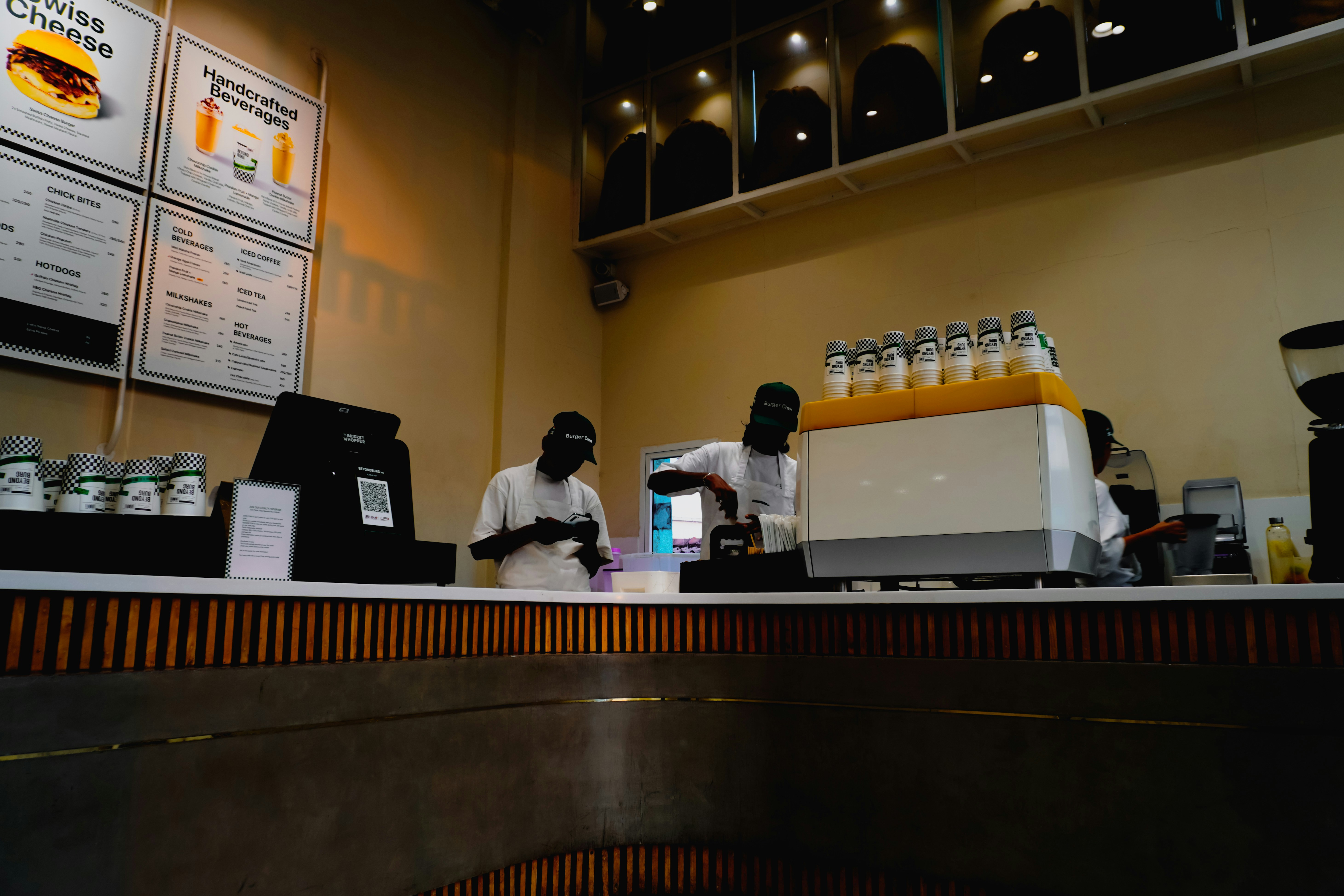
In a labor market where frontline unemployment remains near record lows, turnover in quick-service restaurants stays stubborn. Operators chase experience because guest service and kitchen accuracy ride on stable teams. A 2022 study found only 54 percent of QSR workers stayed more than three months before quitting, a stat that keeps operators anxious. The churn inflates recruitment and training costs and strains scheduling. As workers gain bargaining power, employers who fail to offer benefits or clear career paths risk ongoing talent drain and weaker margins. Education benefits emerge as a practical remedy to bolster tenure.
Education benefits center on tuition support and clear career pathways. The model removes financial barriers for current staff who continue studying while on the job. A standout example is Chipotle, which partnered with Guild Education to offer debt-free degrees in agriculture, culinary, and hospitality, illustrating how a program can transform possible career tracks. Alongside this, Chipotle’s benefits ecosystem includes a tuition reimbursement program that pays up to $5,250 per year for eligible expenses. Since launching the debt-free degree initiative, average employee tenure has more than tripled, signaling education’s potential to shift retention dynamics. This isn’t a gimmick; it’s a deliberate upgrade to the employment value proposition.
Industry voices anchor the case for education benefits as a long-horizon investment. Partnerships with higher education reflect a broader shift toward inside-out talent strategies. The University of Virginia joined InStride to give working adults access to online degrees through a nationwide university network, signaling high-level endorsement for employer-sponsored pathways. InStride’s expanding network includes CUNY and other systems, widening debt-free or low-cost degree options for workers across sectors. Doug Donovan, CEO of Interplay Learning, stresses that expanding opportunities for thousands to explore skilled trades is a shared goal among employers and educators.
These moves are more than PR. They reflect a business logic: aligning workforce needs with accessible education strengthens retention and internal mobility. The UVA–InStride partnership is pitched as a scalable model that could translate across quick-service and related fields. The broader trend is to weave education providers into ongoing career paths rather than treating degrees as a one-shot benefit. InStride’s evolution into a networked platform enables employer partners to deliver scalable, debt-free education across universities, supporting workers who want advancement without sacrificing current pay.
Beyond morale, the math backs up the shift. The Cornell Center for Hospitality Research estimates replacing a single frontline worker costs about $5,864, a sum that covers recruiting, training, productivity hits, and morale. Upskilling programs can yield a strong return: a reported 226 percent ROI over three years, suggesting that investing in education upfront helps shrink turnover and lift productivity. Those forces push operators to rethink benefits—shifting toward long-term development rather than simple tuition coverage.
As for the scope of Chipotle’s plans, the exact reach of debt-free degrees depends on partnerships, and tuition caps may shift over time. The broader health of the labor market and automation will influence how education benefits compete with other retention levers. Operators should design programs with clear objectives, measure impact, and stay adaptable; the numbers will move, but the core principle remains: invest in people with a plan.
Education benefits are about durable skills as much as credentials. The real value surfaces in durable skills like leadership, communication, and problem-solving that endure across roles. Medtronic has advanced programs focused on both technical learning and these durable skills, with rising participation after structured upskilling efforts. A 2024 overview notes a cross-functional emphasis on comprehensive skill-building, and the results point to a more adaptable workforce ready for higher responsibilities.
Durable skills translate to practical gains: steadier problem-solving on the floor, smoother shift handoffs, and fewer service gaps. Workers who gain these capabilities tend to stay longer and take on more responsibility, widening internal mobility even in high-volume outlets. This is not abstract training; it’s integrated into daily practice, shaping teams that execute with consistency under pressure.
Despite the optimism, gaps remain. ROI varies by program design, sector, and local market conditions. The exact scope of Chipotle’s debt-free degree plans—whether they cover all eligible majors or are limited to particular tracks—depends on program structure and partnerships, and tuition assistance caps may shift over time. Additionally, the broader health of the labor market and the evolution of automation will influence how education benefits compete with other retention levers. Operators should monitor program participation, cost-per-hire, and guest experience metrics to build a clear evidence base for continued investment.
Measured, disciplined implementation is the path forward. The takeaway is simple: education benefits can be a powerful retention lever, but they demand ongoing evaluation and alignment with real business outcomes. When done right, employer-sponsored education keeps frontline workers connected to the business and to each other.