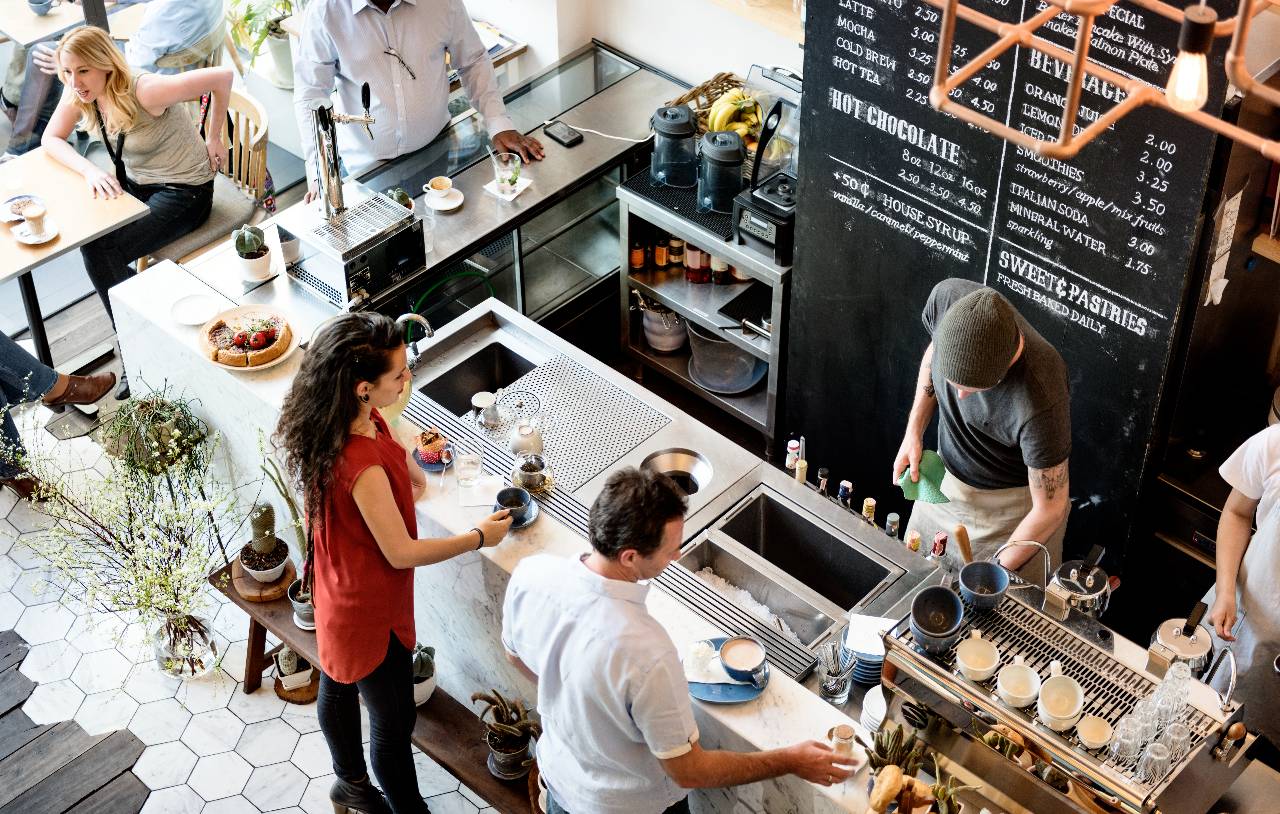
How Much Does It Cost to Open a Coffee Shop in 2026?
Opening a coffee shop in 2026 requires careful cost planning across rent, equipment, labor, technology, menu strategy, marketing, and sustainability.
operations
May 15, 2026
Opening a coffee shop in 2026 requires careful cost planning across rent, equipment, labor, technology, menu strategy, marketing, and sustainability.
May 15, 2026
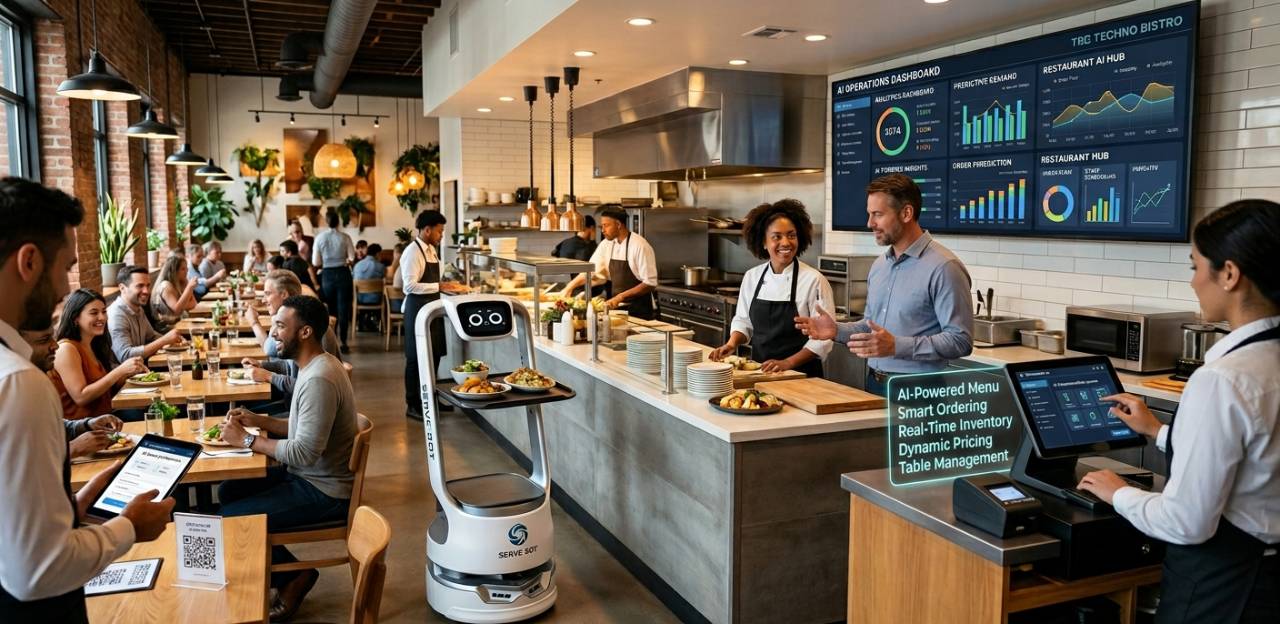
This AI playbook covers restaurant tools for voice ordering, staffing, compliance, menu pricing, inventory, marketing, ChatGPT prompts, and SEO.
May 15, 2026
Hardee’s giant Boddie-Noell inks 31-unit Scooter’s Coffee deal for NC and VA, leveraging drive-thru growth and local roots with rollout over 12–18 months.
May 15, 2026
Wingstop turns match weeks into a multi-sensory festival, aligning bold pop-ups with World Cup energy to build brand affinity and measurable momentum.
May 15, 2026
The parent company behind Dunkin', Buffalo Wild Wings, and Arby's has filed for an IPO a move that could reshape how Wall Street views the restaurant sector.
May 15, 2026

Learn how to develop a memorable restaurant brand identity that stands out in a crowded market, attracts loyal customers, and drives repeat business with actionable strategies and affordable tools.
May 15, 2026
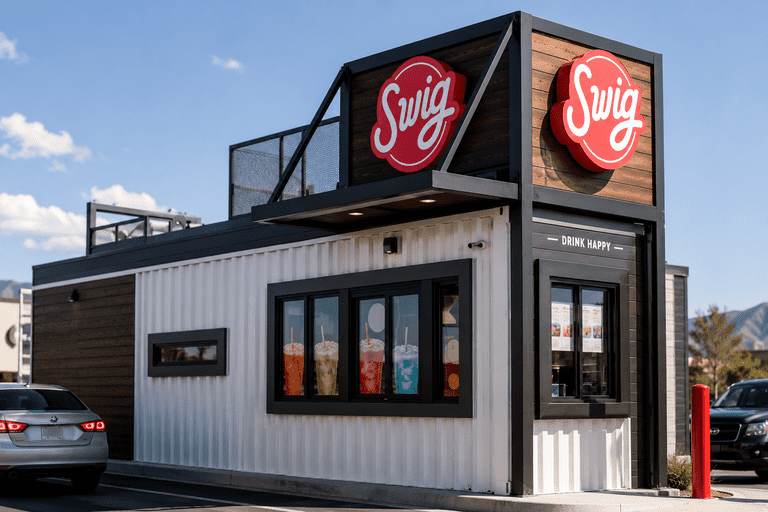
Dirty soda chain Swig is expanding into Colorado through a 10-unit franchise deal, riding a consumer beverage trend that's catching the attention of major QSR players nationwide.
May 15, 2026
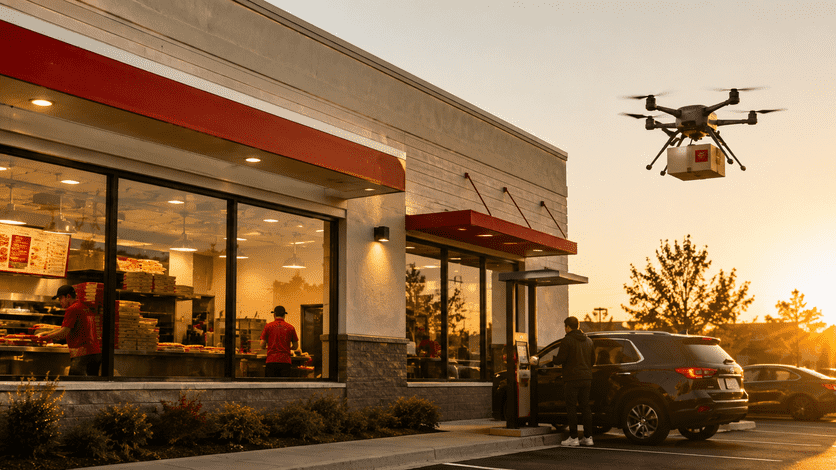
Papa Johns has teamed up with Alphabet's Wing for drone delivery of its new sandwich lineup in parts of Charlotte marking the first partnership of its kind between Wing and a national QSR brand.
May 15, 2026

A warm, expert-led look at McDonald’s Q1 results, menu makeover, and the refranchise question shaping its growth.
May 14, 2026
A reflective look at Habit Ranch, its immersive desert activation, and what it signals for brand loyalty and mindful, experiential dining.
May 14, 2026

Unlock Exclusive Access To Webinars, Events, And The Latest News For Free!
DoorDash links its in-house Dot robot with partners like Serve, Waymo, Coco, and Wing under an AI dispatcher, advancing a multi-year, multi-city plan to scale autonomous delivery.
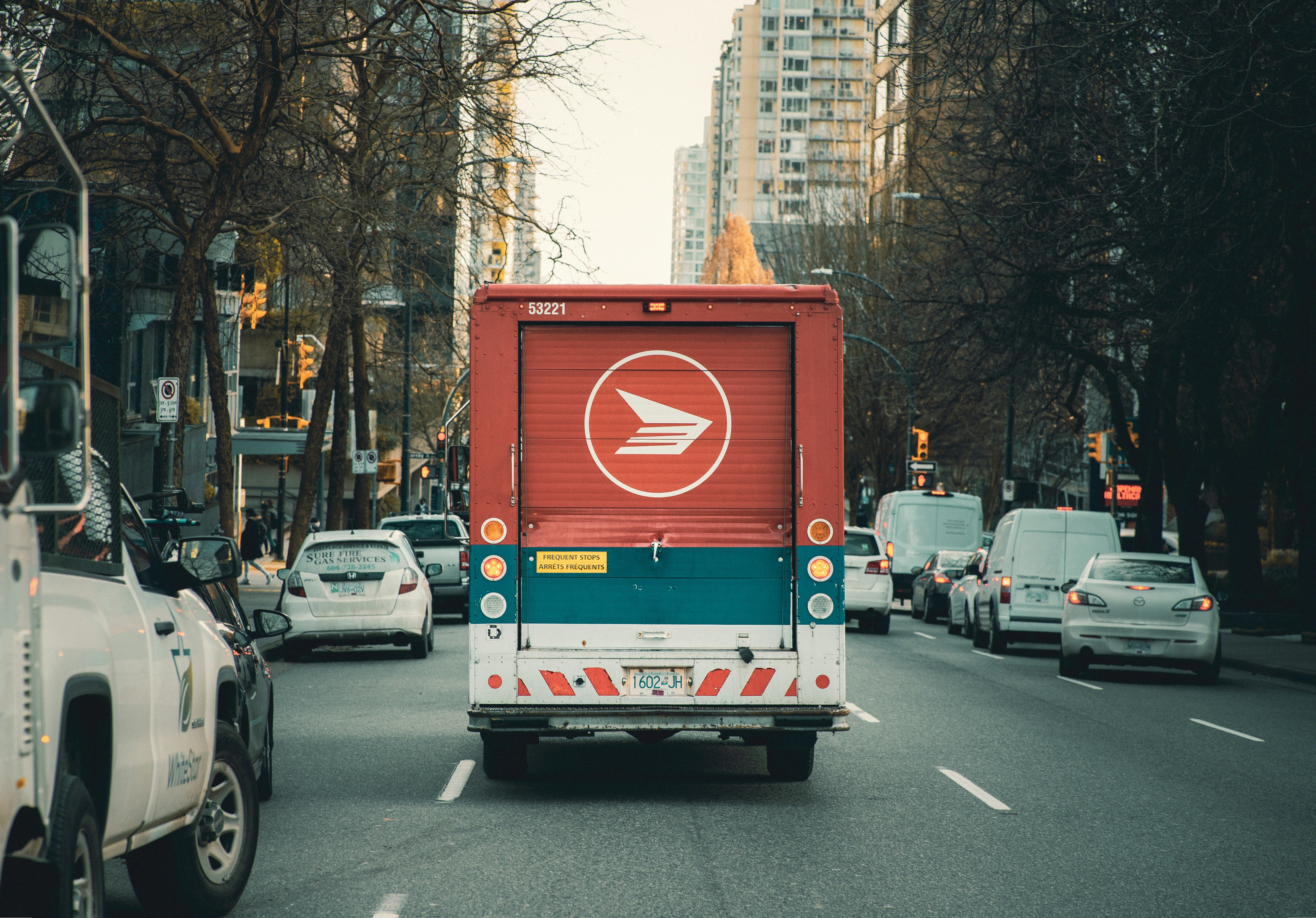
Photo by Colby Winfield
DoorDash is moving with intent, linking its in-house robot, Dot, to partner fleets and an AI-driven dispatcher in a rapid sequence that reads like a relay. Dot arrived in "late September 2025" and immediately began initial deployments in Tempe and Mesa, Arizona. Days later, on "October 9, 2025," the company announced a "multi‑year" partnership with Serve Robotics, enabling Serve’s sidewalk robots to deliver DoorDash orders in Los Angeles. And by "mid‑October 2025," a pilot with Waymo launches in Metro Phoenix across a "315‑square‑mile" service area, fulfilling select DashMart orders via driverless Waymo Jaguar I‑Pace vehicles with trunk retrieval guided by the DoorDash app. This sprint extends a network already threaded with Coco Robotics in Chicago and Los Angeles and aerial logistics via Wing. The tempo matters: DoorDash’s moves “signal sustained momentum rather than isolated tests,” positioning the company to scale autonomy across varied environments. The strategy feels balanced and thoughtful—an attempt to place the right mode in the right place with minimal friction, a nourishing mix of capabilities designed to adapt as demand and terrain shift. Analysis: The timeline—Dot in late September, Serve’s multi-year activation in early October, and Waymo mid-October—demonstrates a coordinated path to scale, not a one-off pilot. The inclusion of Coco and Wing underscores a multi-modal foundation rather than reliance on a single solution.

The plan is to widen autonomous coverage by matching each order to the best delivery mode—human couriers, sidewalk bots, road-going robots, drones, or autonomous cars—based on a matrix tuned to speed, cost, location, and user experience. Dot is central here. Described as approximately "one‑tenth the size of a car," it moves up to "20 mph" and carries up to "30 lbs," traversing bike lanes, roads, sidewalks, and driveways. In its first commercial node spanning Tempe and Mesa, Dot’s mixed-terrain routing pairs with secure, app-enabled compartments designed to protect and cool items. This is orchestration as design principle: the right vehicle on the right street segment at the right time. Sidewalk robots like Serve can excel in dense urban blocks, while drones can address specialized or constrained routes. Dot, with its mixed-terrain capability, is poised to bridge suburban gaps where pure sidewalk approaches may be constrained. It’s a humble but strategic recalibration—less about flashy hardware and more about a balanced system that feels both efficient and considerate of neighborhood textures. Analysis: By equipping Dot to operate beyond sidewalks, DoorDash can cover complex suburban routes while reserving sidewalk fleets and drones for dense or specialized corridors, improving coverage without overextending any single modality.
At the core is DoorDash’s Autonomous Delivery Platform, an AI-enabled dispatcher that assigns each order to Dashers, drones, sidewalk bots, Dot, or autonomous cars like Waymo based on "speed, cost, location, and user experience." Dot plugs into this system as a fully electric, sensor-equipped robot tested over "hundreds of thousands of miles." Its secure cold compartments, accessible through the DoorDash app, are aligned to neighborhood trips that pass across driveways and local roads—small, thoughtful touches that help protect quality. In the Waymo pilot, select DashMart orders in Metro Phoenix arrive via driverless "Jaguar I‑Pace" vehicles; customers receive instructions in the app and retrieve items from the trunk within a "315‑square‑mile" service zone. The orchestration layer is the leverage point. By switching among modes as conditions change, DoorDash can lean into resilience and a smoother, more balanced user experience, all while learning from live data. Analysis: The dispatcher enables DoorDash to dynamically balance cost and service levels across robots, drones, humans, and autonomous cars. This capability offers operational flexibility while the company gathers performance data across different neighborhoods and trip types.
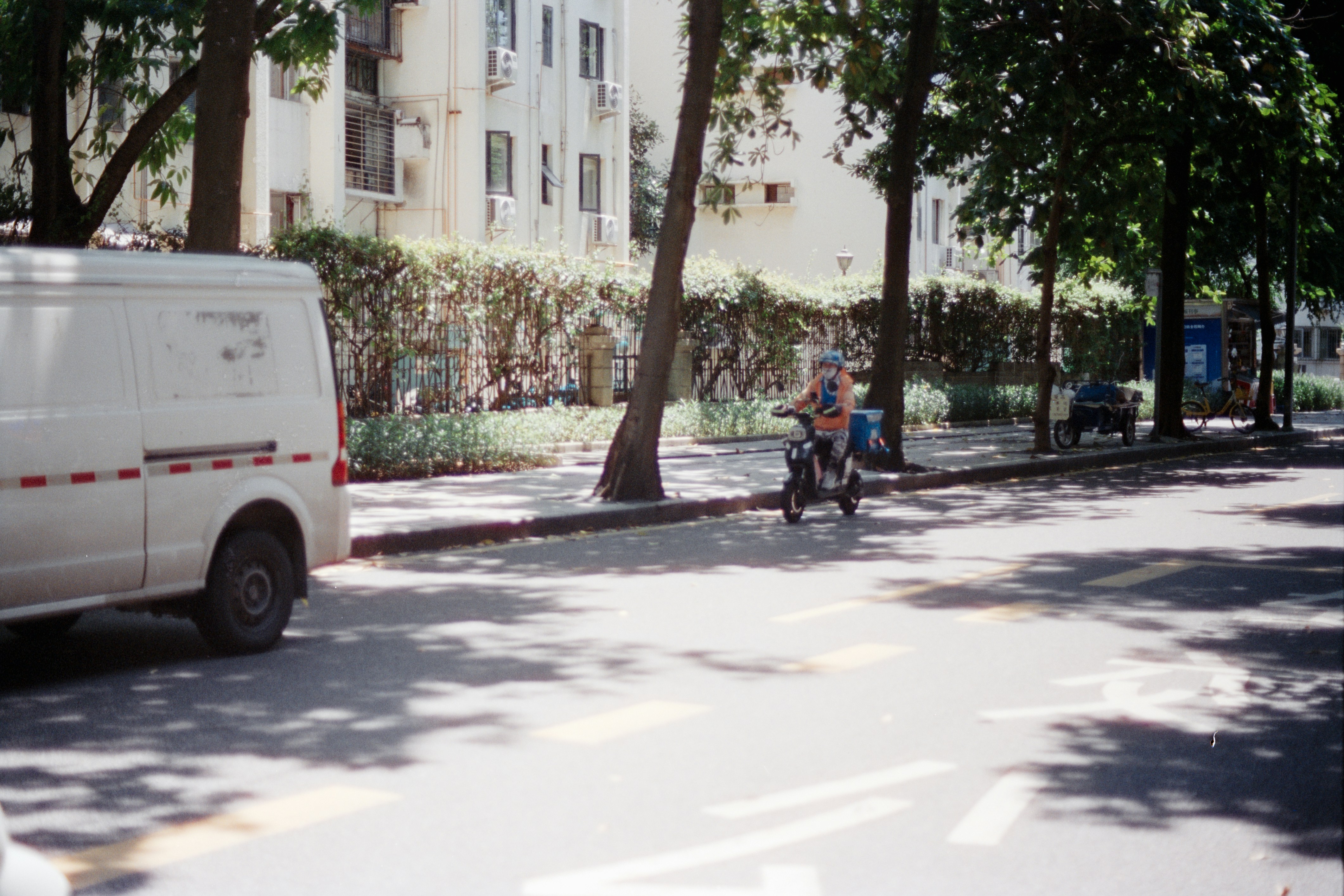
Serve Robotics arrives with a readiness profile that matches DoorDash’s pace. After a 2023 commercial agreement with Uber Eats to deploy up to "2,000" sidewalk delivery robots, Serve expanded operations to Los Angeles, Miami, Chicago, and Atlanta. In "Q2 2025," it delivered "120 robots"—an "80% year‑over‑year increase"—and reported a "350%" surge in daily active robot hours with a "99.8%" order‑completion rate. Beyond U.S. streets, Serve concluded a pilot in Doha and launched a brand collaboration with Little Caesars, signaling flexibility across geographies and merchant types. With DoorDash’s "October 9, 2025" announcement, Serve’s sidewalk robots began servicing DoorDash orders in Los Angeles. The fit seems pragmatic: Serve’s footprint is tuned for dense urban blocks and high-frequency, short-haul trips where sidewalk autonomy can shine. For DoorDash, it’s a nuanced way to keep service balanced—reserving Dot for mixed terrain and leaning on sidewalk fleets where they are already proven reliable. Analysis: Serve’s metrics indicate it can absorb DoorDash volume without compromising completion rates, allowing DoorDash to expand sidewalk coverage in dense neighborhoods while maintaining service quality.
The timeline outlines an intentional march: Dot unveiled in "late September 2025" and deployed in Tempe and Mesa; a "multi‑year" Serve partnership starting "October 9, 2025" in Los Angeles; and a Waymo pilot beginning in "mid‑October 2025" across a "315‑square‑mile" section of Metro Phoenix focused on DashMart orders. The business thesis is straightforward. With DoorDash’s scale, Serve’s DoorDash expansion is expected to raise Serve’s order volume and scale revenues by tapping into DoorDash’s national merchant and customer base. Crucially, within DoorDash’s model, merchant partners receive operational handoffs and "no-cost" robot integration efforts. That reduces friction and helps onboard more merchants without heavy lift. The defined geographies and multi-year terms hint at capacity planning designed to measure return on investment as order mix shifts between humans and machines—a thoughtful path to sustainable unit economics. Analysis: While dollar figures are not disclosed, formal multi-year agreements, specified pilot zones, and merchant-friendly integration lower adoption barriers and create a structure to track ROI as volume grows and mode mix evolves.
DoorDash’s approach blends human Dashers with sidewalk robots from Serve and Coco, aerial deliveries via Wing, road-based autonomy from Dot, and full-size autonomous vehicles from Waymo. The result is a layered autonomy model capable of adapting to different neighborhoods, payload sizes, and speed requirements. Industry signals point to growing acceptance: media reports note college campus deployments at "78 universities," suggesting that contained environments continue to acclimate consumers to autonomous handoffs. Waymo’s trunk-based experience—customers unlocking and retrieving items from a driverless "Jaguar I‑Pace"—is a distinctly different interaction than a doorstep drop. Yet, the orchestration framework can accommodate such variations without fragmenting the service. It is a balanced, nourishing idea for logistics: curate the mode to the moment, then guide the handoff so it remains intuitive. Analysis: Bringing several modalities under one dispatcher sets a template that others can follow. The context-aware selection of modes can influence consumer norms and how platforms integrate partners at scale.
Open questions remain. Consumer reception to trunk retrieval has yet to be fully tested; it departs from the familiar rhythm of doorstep service. Dot’s performance metrics are not specified beyond testing over "hundreds of thousands of miles," and the pace of expansion beyond greater Phoenix is not detailed here. Financial terms across partnerships are undisclosed, and regulatory dynamics are not described. It is also not clear how the platform will prioritize modes when multiple options appear equally efficient on "speed, cost, location, and user experience." Still, the multi-year terms and defined pilots offer a thoughtful framework for learning—live markets where the company can observe behaviors, refine routing, and calibrate its orchestration without overpromising timelines. Analysis: These gaps limit precise forecasting of adoption curves and unit economics, but the staged rollouts provide a mechanism to gather the missing evidence and iterate in-market.
The lesson threaded through DoorDash’s moves is that orchestration is the edge. Rather than betting on a single fleet, the company is shaping a coordinated ecosystem—robots, drones, and autonomous vehicles guided by a dispatcher that routes to the best fit for each trip. Dot’s mixed-terrain capability—up to "20 mph" with a "30 lbs" payload—pairs naturally with sidewalk fleets from Serve and Coco, aerial deliveries via Wing, and road autonomy through Waymo’s "Jaguar I‑Pace" services. It is a balanced system designed to feel seamless to the customer and efficient for merchants. Near-term milestones are clear: the "multi‑year" Serve partnership in Los Angeles, the Waymo start in "mid‑October 2025" across Metro Phoenix, and Dot’s deployments in Tempe and Mesa. If the platform continues to learn across modes and markets, the approach could convert flexibility into cost control, emissions reduction, and merchant growth—outcomes that reinforce a more sustainable, nourishing last mile. Analysis: By treating autonomy as an orchestrated portfolio, DoorDash positions itself to refine experience and economics simultaneously. The milestones ahead will test scalability, reliability, and consumer comfort, validating whether multi-modal balance can become standard in last-mile delivery.