How Much Does It Cost to Open a Coffee Shop in 2026?
Opening a coffee shop in 2026 requires careful cost planning across rent, equipment, labor, technology, menu strategy, marketing, and sustainability.
operations
May 15, 2026
Opening a coffee shop in 2026 requires careful cost planning across rent, equipment, labor, technology, menu strategy, marketing, and sustainability.
May 15, 2026

This AI playbook covers restaurant tools for voice ordering, staffing, compliance, menu pricing, inventory, marketing, ChatGPT prompts, and SEO.
May 15, 2026

Hardee’s giant Boddie-Noell inks 31-unit Scooter’s Coffee deal for NC and VA, leveraging drive-thru growth and local roots with rollout over 12–18 months.
May 15, 2026

Wingstop turns match weeks into a multi-sensory festival, aligning bold pop-ups with World Cup energy to build brand affinity and measurable momentum.
May 15, 2026

The parent company behind Dunkin', Buffalo Wild Wings, and Arby's has filed for an IPO a move that could reshape how Wall Street views the restaurant sector.
May 15, 2026

Learn how to develop a memorable restaurant brand identity that stands out in a crowded market, attracts loyal customers, and drives repeat business with actionable strategies and affordable tools.
May 15, 2026

Dirty soda chain Swig is expanding into Colorado through a 10-unit franchise deal, riding a consumer beverage trend that's catching the attention of major QSR players nationwide.
May 15, 2026

Papa Johns has teamed up with Alphabet's Wing for drone delivery of its new sandwich lineup in parts of Charlotte marking the first partnership of its kind between Wing and a national QSR brand.
May 15, 2026

A warm, expert-led look at McDonald’s Q1 results, menu makeover, and the refranchise question shaping its growth.
May 14, 2026

A reflective look at Habit Ranch, its immersive desert activation, and what it signals for brand loyalty and mindful, experiential dining.
May 14, 2026

Unlock Exclusive Access To Webinars, Events, And The Latest News For Free!
Domino’s leans on rewards, promos, and new delivery partnerships to sustain momentum in a volatile market.
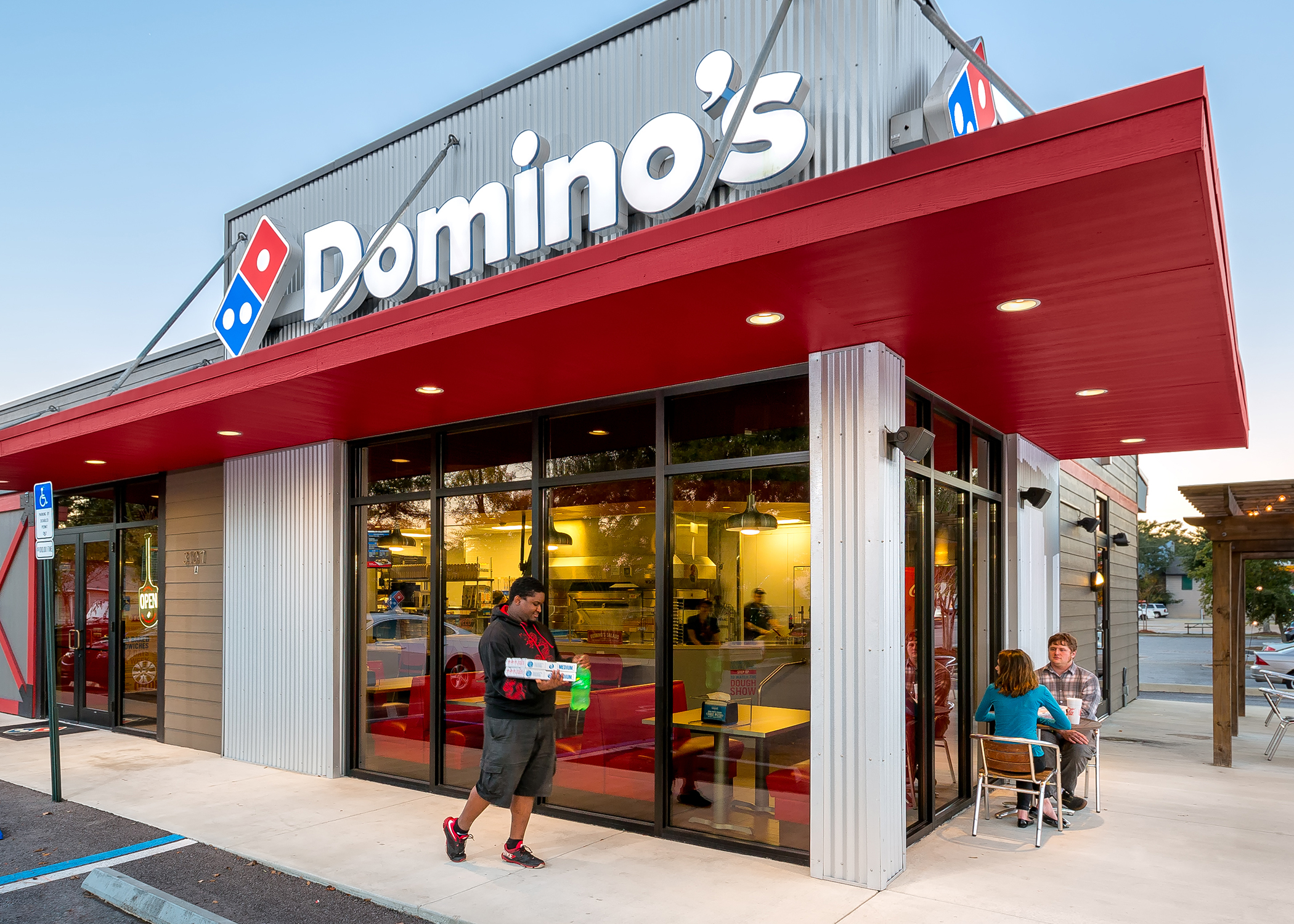
Domino’s operates in a guarded terrain, but the playbook is blunt and tested: lean on the Hungry for MORE strategy, pull the levers of value, and widen the delivery net. In the third quarter of 2024, which closed September 8, Domino’s reported U.S. same-store sales up 3.0% and international SSS up 0.8% on a currency-neutral basis, while global retail sales rose 5.1% in the same terms. The Ann Arbor, Michigan–based chain expanded to 21,002 restaurants with a net store increase of 72 for the period. Management pins four straight quarters of profitable order-count growth on the program’s momentum, a sign the strategy is resonating in a pressured global marketplace. The tone is controlled, not boastful, and the results give the plan teeth.
The core approach rests on Rewards and smart pricing, with a cadence of promotions designed to re-engage lapsed customers. The Emergency Pizza concept and targeted boost weeks are cited as engines for carryout and delivery growth. On the delivery side, Domino’s blends its own network with aggregator partnerships, recognizing that some customers are price-sensitive and won’t reach the brand through direct channels alone. A notable move is the DoorDash collaboration, slated for nationwide rollout in May 2025 in the U.S. and later expansion into Canada, aimed at broadening reach while preserving Domino’s direct-delivery economics.
Momentum for more means a longer horizon: the company notes four consecutive quarters of positive same-store sales and an expanding order cadence since launch. The growth story hinges on a disciplined mix of value, promotions, and selective international expansion, with an eye on how delivery channels bend the growth curve. The takeaway is simple: keep the strategy tight, keep the promotions relevant, and push reach without surrendering margins.
Revenue for the quarter reached $1,080.1 million, up 5.1% year over year. Global retail sales grew by the same margin, while net income stood at $146.9 million, or $4.19 per share on a diluted basis, a hair below the prior year’s $147.7 million and $4.18 per share. The balance sheet shows strong cash flow and a firm store-growth trajectory, with total restaurants at 21,002 and trailing net openings of 72. The management narrative frames this as domestic resilience paired with measured international expansion, aided by promotional tactics and a broadened delivery network.
On the growth side, profitability rose 5.0% on the quarter (5.7% excluding FX effects), underscoring that the Hungry for MORE strategy can translate into sustained demand and improved margins. The company emphasizes a dual path: strengthen the domestic core while expanding international reach through master-franchise support and new-delivery models. The message is clear: the numbers justify a patient, discipline-led expansion that leverages both media-driven promotions and a robust delivery framework.
Bottom line is momentum with a purpose. The quarter’s results and the path forward show a business leaning into price discipline, a well-timed cadence of offers, and a broadened reach through delivery partnerships. The real test will be sustaining this through currency moves, regulatory dynamics, and the dampening forces of competition across markets.
“Our third quarter results once again demonstrated that our Hungry for MORE strategy is resonating, despite a pressured global marketplace,” said Russell Weiner, the brand’s CEO. The remarks anchor a narrative of disciplined growth: a steady drip of value, a pipeline of profitable order-count expansion, and a plan that aligns product tweaks with ongoing promotions. The emphasis remains on balancing volume growth with sustaining value in a shifting macro backdrop.
Looking ahead, leadership reiterates pride in execution of the Hungry for MORE framework and highlights that the synergy of promo activity (think Best Deal Ever-type events) and product innovations is driving delivery and carryout growth. The narrative stays tight: value, innovation, and distribution are the three pillars supporting market share in a volatile landscape.
The messages from the top signal a steady, data-informed path: defend share through Renowned Value, push growth through international expansion, and extend reach with delivery-aggregation channels. The practical result is a brand that aims to stay visible in promotions while keeping the direct-delivery core intact.
Domino’s story unfolds against an industry backdrop defined by inflation, shifting consumer spending, and a rapid acceleration of digital ordering and delivery partnerships. The move into DoorDash’s Marketplace signals a broader trend toward a hybrid delivery model that blends brand-owned channels with third-party reach to capture price-sensitive customers and non-users alike. Executives frame these links as a deliberate step in a long-term plan to accelerate market share gains while protecting shareholder value in a volatile macro environment.
Risks are tangible and acknowledged: currency fluctuations, international regulatory dynamics, and the Russia market’s exclusion following a 2023 master-franchise bankruptcy. Forward-looking statements carry uncertainty because demand, energy costs, labor, real estate, and competitive dynamics can shift quickly. Investors should watch currency trends, openings and closings, and how pricing and promos evolve as the Hungry for MORE program scales globally.
In this context, the industry is moving toward partnerships that extend reach while preserving unit economics. That reality — and Domino’s execution of it — will shape the road ahead as currency, regulatory factors, and competition continue to bite at margins. The takeaway is simple: right mix, right scale, right partners.
Domino’s remains committed to a dual-path growth model that uses the Rewards program to boost loyalty and order frequency while expanding reach through delivery aggregators and new-store openings. The strategy pairs price discipline with value, aiming to weather inflation and evolving consumer preferences. International expansion and partner-driven distribution sit at the core of the plan, providing a bridge between domestic momentum and global upside.
As leadership wires Hungry for MORE into product, promotions, and distribution, the coming quarters will test the model’s resilience. The cadence is deliberate: sustain momentum at home, push international growth, and optimize a blended delivery strategy that balances cost with reach. If the data holds, Domino’s will keep leaning into its loyalty engine while widening its footprint.
Bottom line is clear: the dual-path approach, powered by the Rewards program and a broadened delivery network, aims to defend share and grow volume in a volatile market. The combination of data-driven promotions, international expansion, and strategic partnerships is Domino’s response to a rapidly shifting competitive landscape.