How Much Does It Cost to Open a Coffee Shop in 2026?
Opening a coffee shop in 2026 requires careful cost planning across rent, equipment, labor, technology, menu strategy, marketing, and sustainability.
operations
May 15, 2026
Opening a coffee shop in 2026 requires careful cost planning across rent, equipment, labor, technology, menu strategy, marketing, and sustainability.
May 15, 2026
This AI playbook covers restaurant tools for voice ordering, staffing, compliance, menu pricing, inventory, marketing, ChatGPT prompts, and SEO.
May 15, 2026
Hardee’s giant Boddie-Noell inks 31-unit Scooter’s Coffee deal for NC and VA, leveraging drive-thru growth and local roots with rollout over 12–18 months.
May 15, 2026
Wingstop turns match weeks into a multi-sensory festival, aligning bold pop-ups with World Cup energy to build brand affinity and measurable momentum.
May 15, 2026
The parent company behind Dunkin', Buffalo Wild Wings, and Arby's has filed for an IPO a move that could reshape how Wall Street views the restaurant sector.
May 15, 2026
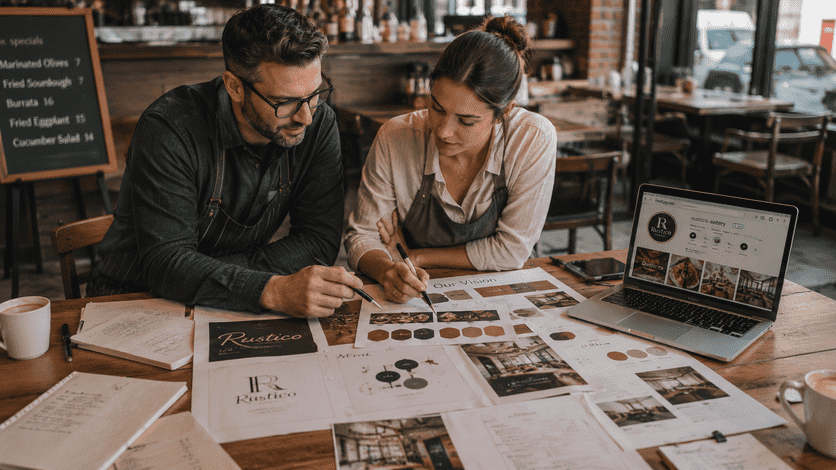
Learn how to develop a memorable restaurant brand identity that stands out in a crowded market, attracts loyal customers, and drives repeat business with actionable strategies and affordable tools.
May 15, 2026
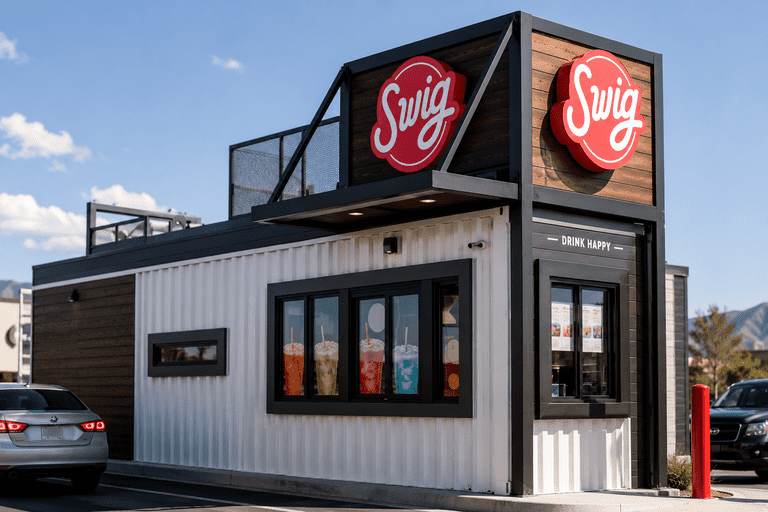
Dirty soda chain Swig is expanding into Colorado through a 10-unit franchise deal, riding a consumer beverage trend that's catching the attention of major QSR players nationwide.
May 15, 2026
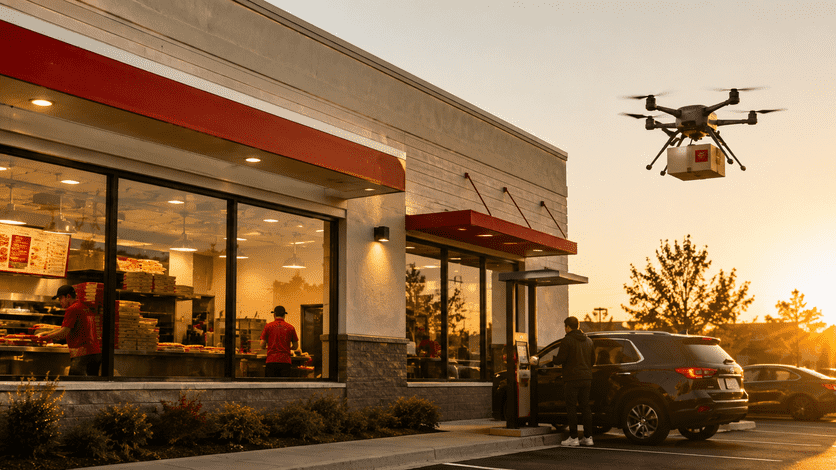
Papa Johns has teamed up with Alphabet's Wing for drone delivery of its new sandwich lineup in parts of Charlotte marking the first partnership of its kind between Wing and a national QSR brand.
May 15, 2026
A warm, expert-led look at McDonald’s Q1 results, menu makeover, and the refranchise question shaping its growth.
May 14, 2026
A reflective look at Habit Ranch, its immersive desert activation, and what it signals for brand loyalty and mindful, experiential dining.
May 14, 2026

Unlock Exclusive Access To Webinars, Events, And The Latest News For Free!
A four-lane, elevated kitchen concept blends high-velocity service with Chick-fil-A hospitality, reshaping drive-thru expectations.
Photo by Christopher Yiu Chung
Chick-fil-A unveils a bold architectural shift in its drive-thru language with an elevated Drive-Thru concept that stacks two levels of operation into a single, human-centered experience. A kitchen sits above street level while four lanes sit below, connected by a meal transport system that moves orders from heart of the building to the curb with precision. This arrangement is about speed, yes, but it is speed with intention—an orchestration that keeps Chick-fil-A’s warmth intact even as throughput climbs. A meal can travel from kitchen to guest in a cycle that hints at six seconds per lane, a theoretical pace of 2,400 meals per hour across the quartet. What guests encounter is efficient motion that never forgets the familiar smile.
This four-lane arrangement is designed to deliver two to three times more vehicles than a standard Chick-fil-A drive-thru, with a kitchen that is two times the size of typical units and a meal transport cadence of six seconds per meal. A dedicated ground-level team completes hand-offs with guests in each lane, and guests can choose between ordering ahead via the Chick-fil-A App and picking up through Mobile Thru lanes or placing orders in the conventional drive-thru. The architecture seeks that delicate balance between cutting waits and preserving personal service.
Chick-fil-A’s leap sits inside a broader, technology-forward strategy intended to sustain strong unit volumes while meeting consumer expectations for speed and convenience. In 2023 the company expanded mobile pickup lanes systemwide, adding dedicated lanes to over 300 locations, and has experimented with geofencing to anticipate guest arrivals. This aligns with a sector-wide shift toward digital ordering, while the brand maintains its emphasis on hospitality and personal service. Industry observers note that other fast-casual players, like Chipotle, are pursuing parallel paths with dedicated pickup channels that aim to lift per-unit sales and reduce wait times.
Even as speed evolves, performance metrics matter: drive-thru satisfaction has been a consistent spotlight for Chick-fil-A, even as total time in line can vary with context and traffic. The four-lane elevated concept sits within the broader push toward digital ordering and hospitality-focused service, a combination that observers say may differentiate brands in a crowded drive-thru landscape.
At the core, the Elevated Drive-Thru places the kitchen on an upper level, connected to a conveyer belt that brings meals down to a ground-level Team Member at each lane. The four-lane design is intended to deliver two to three times more vehicles than a standard drive-thru, while hospitality remains front and center through pull-aside lanes and direct Team Member handoffs. Guests may order ahead via the app or use the Mobile Thru option in dedicated lanes, or place orders with a Team Member in the conventional queue. The model envisions a twofold to threefold throughput with a kitchen that is two times the size of a typical unit and a meal transport cadence of six seconds.
Beyond the cadence, the system emphasizes hand-offs at ground level and dedicated pull-aside lanes, reinforcing that speed can sit alongside Chick-fil-A’s distinctive hospitality. Guests move through a thoughtfully choreographed sequence that prioritizes accuracy and care as much as velocity.
The executive materials emphasize that the elevated concept is not about replacing personal service but enhancing it in a high-velocity setting. The aim is to deliver quality food and genuine hospitality in a way that is uniquely Chick-fil-A and time-saving for Guests. Hospitality remains a focal point as the operation scales, with Team Members delivering meals with a smile before guests depart. The balance between speed and warmth is acknowledged as challenging yet potentially differentiating in a crowded drive-thru landscape. “The elevated concept is not about replacing personal service but enhancing it in a high-velocity setting,” reads the press materials.
Observers highlight that maintaining consistent service across lanes will test the model at scale, but the framing—speed with care—offers a compelling differentiator in a crowded fast-food landscape. The emphasis on human connection remains a throughline from the original concept to its broader rollout.
Key operational details accompany the elevated design: the four-lane format has the capacity to support two to three times more vehicles than a standard Chick-fil-A drive-thru, and Guests can order ahead in-app or place orders with a Team Member in the drive-thru. The Jodeco Road unit will staff about 150 full- and part-time workers, exceeding typical standalone-unit staffing levels of 80–120. The restaurant’s official opening followed a mid-2024 rollout of the concept and represented the second of two innovative tests launched that year after a mobile pickup concept in New York City.
Taken together, these elements reveal Chick-fil-A’s willingness to invest in infrastructure and people to sustain high volumes while preserving the brand’s service standard. The labor and capital commitments signal that speed is not pursued at the expense of hospitality, but as a calibrated exchange that rewards both efficiency and care.
The elevated drive-thru fits a broader pattern of adding digital and physical channels to speed service. For example, Chipotle reports substantial growth in Chipotlanes as part of its digital strategy; by year-end 2024 there were 1,068 Chipotlanes in operation, with hundreds of new openings where a majority included a Chipotlane. The lesson for fast-casual brands is clear: blending technology with consistent, high-touch service may determine who captures share in the drive-thru market.
Gaps and uncertainties temper the headlines: the 2,400 meals per hour figure is theoretical, and real-world performance hinges on demand, order accuracy, kitchen execution, and labor management. Ongoing Intouch Insight drive-thru studies remind us that speed must be balanced with service quality; Chick-fil-A has historically performed well on satisfaction metrics, though total time in line can vary by context. As the industry leans into Mobile Thru and geofenced preparation, the shift toward speed and convenience seems durable, but it will require careful, location-specific execution.