How Much Does It Cost to Open a Coffee Shop in 2026?
Opening a coffee shop in 2026 requires careful cost planning across rent, equipment, labor, technology, menu strategy, marketing, and sustainability.
operations
May 15, 2026
Opening a coffee shop in 2026 requires careful cost planning across rent, equipment, labor, technology, menu strategy, marketing, and sustainability.
May 15, 2026

This AI playbook covers restaurant tools for voice ordering, staffing, compliance, menu pricing, inventory, marketing, ChatGPT prompts, and SEO.
May 15, 2026

Hardee’s giant Boddie-Noell inks 31-unit Scooter’s Coffee deal for NC and VA, leveraging drive-thru growth and local roots with rollout over 12–18 months.
May 15, 2026

Wingstop turns match weeks into a multi-sensory festival, aligning bold pop-ups with World Cup energy to build brand affinity and measurable momentum.
May 15, 2026

The parent company behind Dunkin', Buffalo Wild Wings, and Arby's has filed for an IPO a move that could reshape how Wall Street views the restaurant sector.
May 15, 2026

Learn how to develop a memorable restaurant brand identity that stands out in a crowded market, attracts loyal customers, and drives repeat business with actionable strategies and affordable tools.
May 15, 2026

Dirty soda chain Swig is expanding into Colorado through a 10-unit franchise deal, riding a consumer beverage trend that's catching the attention of major QSR players nationwide.
May 15, 2026

Papa Johns has teamed up with Alphabet's Wing for drone delivery of its new sandwich lineup in parts of Charlotte marking the first partnership of its kind between Wing and a national QSR brand.
May 15, 2026

A warm, expert-led look at McDonald’s Q1 results, menu makeover, and the refranchise question shaping its growth.
May 14, 2026

A reflective look at Habit Ranch, its immersive desert activation, and what it signals for brand loyalty and mindful, experiential dining.
May 14, 2026

Unlock Exclusive Access To Webinars, Events, And The Latest News For Free!
Wingstop tests Europe with a Paris activation, blending flavor, culture, and partnerships to seed a broader expansion.
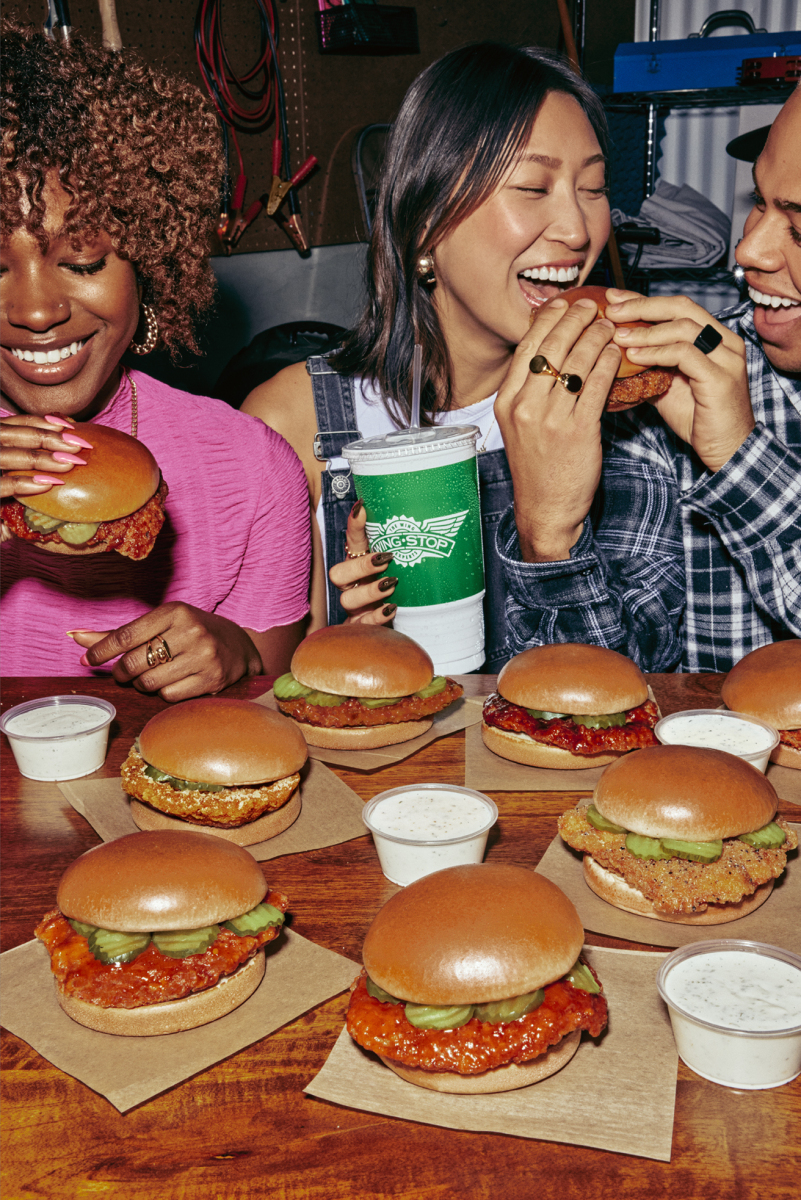
When Wingstop opens its House of Flavor in Paris, it feels less like a momentary pop-up and more like a thoughtfully staged doorway into the brand’s European ambitions. Set at 12 Rue Philippe de Girard, the activation fuses sampling with basketball competitions, breakdance showcases, and live-streamed sporting events, turning a temporary space into a living, breathing expression of culture and flavor. The aim is clear: invite locals and visitors to experience Wingstop as a balanced, nourishing part of a social meal rather than a quick stop between errands. Running through August 10, this pop-up acts as a prelude to a longer, in-market presence later this year, signaling a deliberate, event-driven path to broader resonance.
The experience centers on House of Flavor as a hub where sampling meets urban culture—an intentional bridge between food and place. The site’s design embraces a cross-section of urban culture enthusiasts, sports fans, and curious travelers, inviting a broader audience to discover Wingstop’s flavor-forward proposition in a city deeply attuned to style and spectacle. Though it’s temporary, the activation is pitched as a pivotal test case, a stage for learning how flavor and culture can travel together—and how that travel translates into a longer-term footprint later in the year.

Wingstop’s broader growth logic in Paris rests on a playbook the company has repeatedly cited: partner-driven growth, scalable operations, and in-market activations that build familiarity before a permanent location opens. In discussions around Europe, CEO Michael Skipworth has highlighted the importance of choosing the right partners and scaling thoughtfully, underscoring a model that has already gained momentum in the United Kingdom. The emphasis on leveraging existing systems and brand equity, rather than reinventing the wheel in every market, frames Paris as a measured but ambitious experiment. This approach is being watched as a potential template for other high-profile city launches, with a ready-to-scale rhythm that aligns with Wingstop’s international momentum.
The Paris push sits alongside a broader narrative of European expansion that includes the U.K.’s rapid openings and a developing pipeline of commitments. Wingstop frames international growth as a disciplined, analytics-backed effort: strong quarterly performance, a growing footprint, and a clear signal that partnerships accelerate the pace without sacrificing unit economics. In this light, Paris becomes a bridge—testing the waters of a difficult market while keeping eyes on a bigger horizon that includes Europe’s diverse consumer appetites and logistically complex supply chains.
Wingstop’s hybrid event-dining concept comes alive in Paris as the House of Flavor blends product experience with experiential programming—a deliberate move to situate a fast-casual concept within the city’s cultural zeitgeist. The governance of taste and tempo matters here: the site is designed to draw a cross-cultural audience into an informal yet carefully curated setting where flavor, movement, and music braid together. The activation’s temporary status is acknowledged as a strategic advantage, allowing Wingstop to learn quickly and adapt, while still presenting a compelling, culturally resonant experience to fans and newcomers alike.
Analysts watching the rollout see the Paris site as more than a one-off spectacle; they view it as a potential blueprint for other ambitious city launches. The blend of sampling, sports and arts showcases, and a living, social atmosphere provides a practical model for how fast-casual brands can embed themselves in local culture before committing to a permanent footprint. In that sense, the progressive rhythm of the activation—product experience paired with programming—reads as a thoughtful, scalable approach rather than a stunt.
Wingstop’s leadership has consistently framed Paris as part of a disciplined growth strategy. The emphasis on choosing the right partners and scaling with intention remains central as the brand translates early Olympic-era attention into sustained in-market momentum. The broader market narrative reflects a balance between international openings and a careful evaluation of partnerships to accelerate growth without compromising unit economics. In this sense, Paris is less a stunt and more a measured lab for a broader European push that depends on the same constants: alignment with local collaborators, scalable processes, and clear performance signals.
Analysts also flag a practical truth: the pace of European regulatory alignment, supply chain reliability, and local talent pipelines will shape how quickly Wingstop can convert Olympic-era attention into a stable presence. The Paris experiment is thus a forecast as much as a footprint—a forecast of what a future European rollout could look like when the right partners and the right markets align, and when the economics stay as balanced as the dining experience itself.
Wingstop’s mid-year numbers anchor its international ambitions. In the second quarter, the brand delivered a same-store sales increase of 28.7% year over year and revenue of $155.7 million, up from $107.2 million a year earlier. Net income reached $27.5 million, or 93 cents per share, versus $16.2 million or 54 cents per share in the prior year. The company also noted a global system of 2,352 open locations as of the quarter’s end. Taken together, the numbers reinforce confidence in the Paris experiment as a bridge to a broader, more profitable international footprint.
The Paris activation is positioned as a test and a forecast: a demonstration of how a flavor-led concept can travel through partnerships and cultural programming toward sustainable growth across Europe. If momentum persists, Wingstop’s approach—anchored in analytics, experiential marketing, and partner-led deployment—could become a reference for fast-casual brands seeking scale without compromising flavor identity or local relevance. The Paris chapter would then feed into a broader European trajectory—one that turns city-by-city experimentation into a well-timed continental footprint.