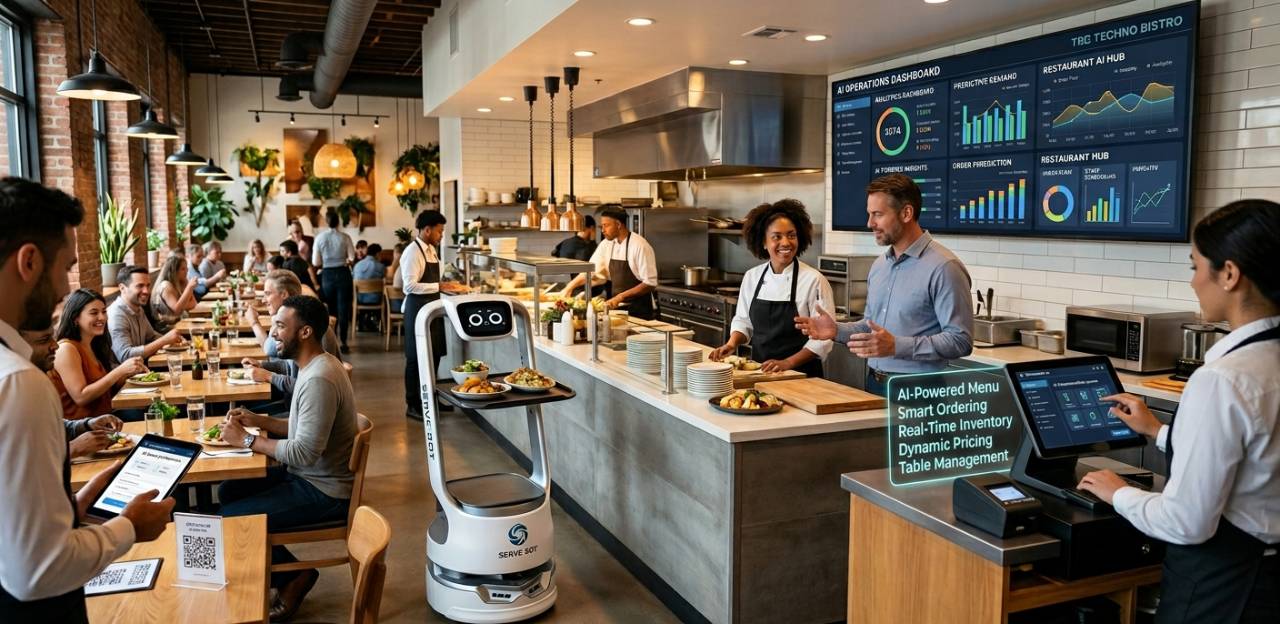
AI Playbook for Restaurant Owners
This AI playbook covers restaurant tools for voice ordering, staffing, compliance, menu pricing, inventory, marketing, ChatGPT prompts, and SEO.
tech
May 15, 2026
This AI playbook covers restaurant tools for voice ordering, staffing, compliance, menu pricing, inventory, marketing, ChatGPT prompts, and SEO.
May 15, 2026

Opening a coffee shop in 2026 requires careful cost planning across rent, equipment, labor, technology, menu strategy, marketing, and sustainability.
May 15, 2026

Hardee’s giant Boddie-Noell inks 31-unit Scooter’s Coffee deal for NC and VA, leveraging drive-thru growth and local roots with rollout over 12–18 months.
May 15, 2026
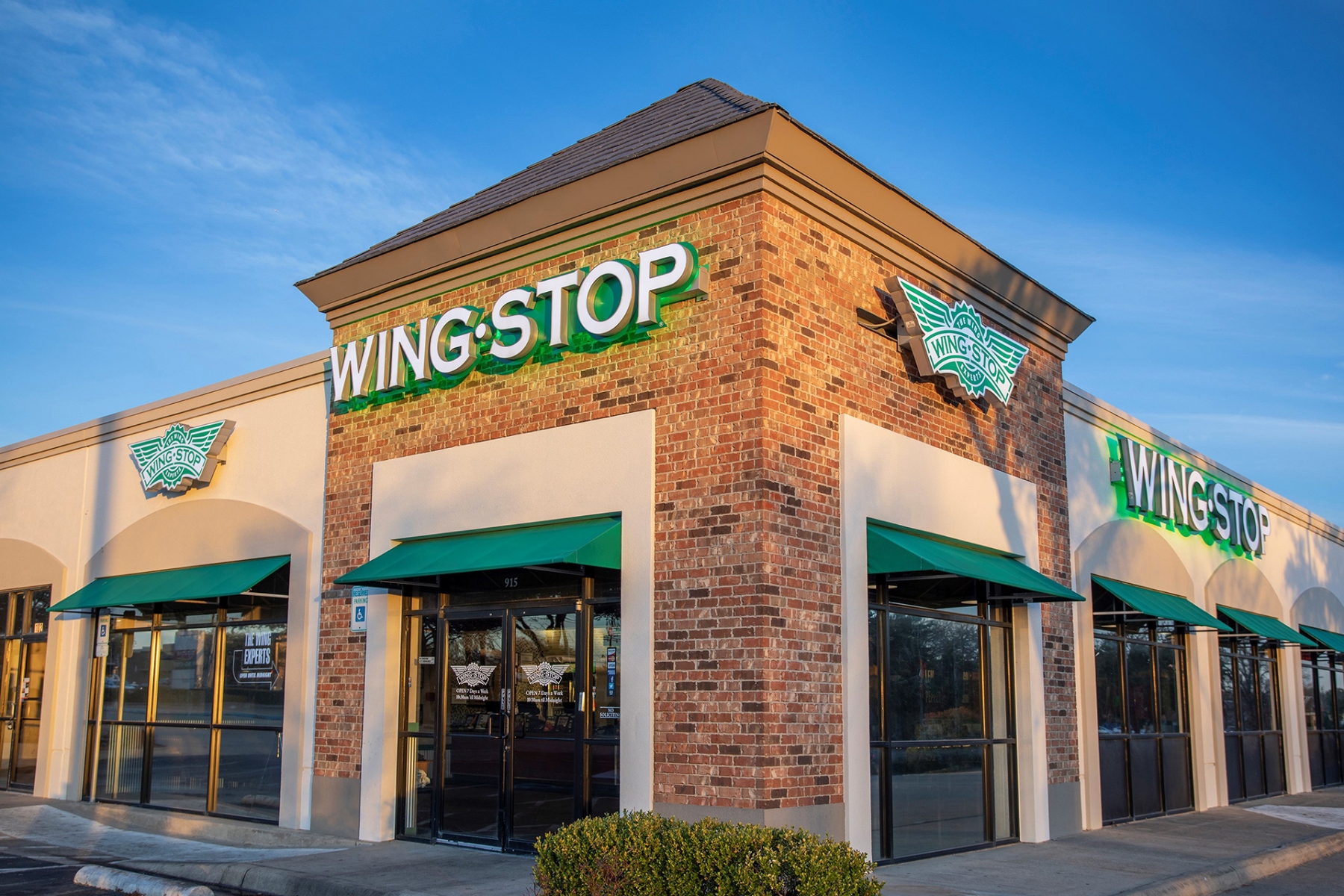
Wingstop turns match weeks into a multi-sensory festival, aligning bold pop-ups with World Cup energy to build brand affinity and measurable momentum.
May 15, 2026

Learn how to develop a memorable restaurant brand identity that stands out in a crowded market, attracts loyal customers, and drives repeat business with actionable strategies and affordable tools.
May 15, 2026
The parent company behind Dunkin', Buffalo Wild Wings, and Arby's has filed for an IPO a move that could reshape how Wall Street views the restaurant sector.
May 15, 2026
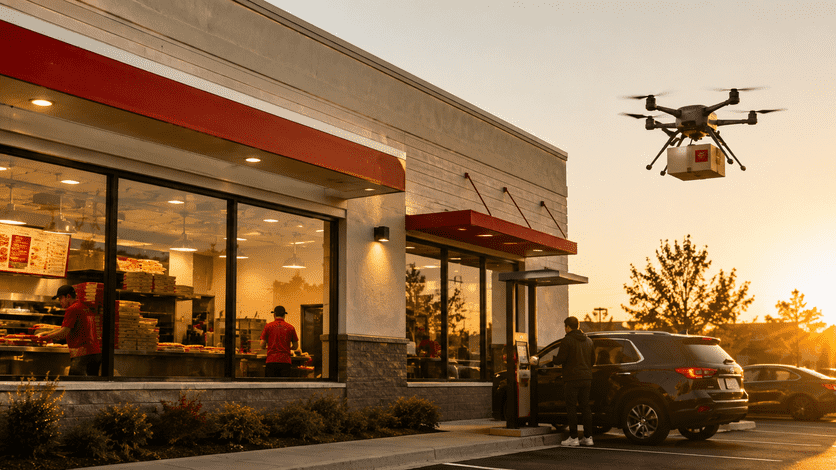
Papa Johns has teamed up with Alphabet's Wing for drone delivery of its new sandwich lineup in parts of Charlotte marking the first partnership of its kind between Wing and a national QSR brand.
May 15, 2026
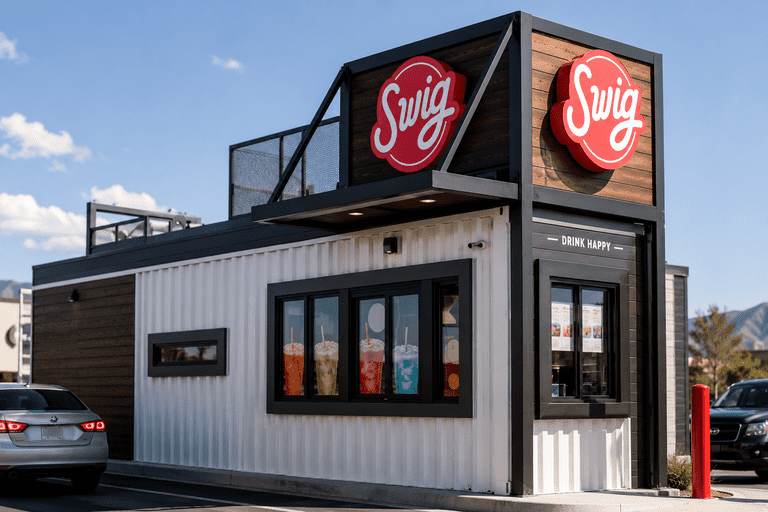
Dirty soda chain Swig is expanding into Colorado through a 10-unit franchise deal, riding a consumer beverage trend that's catching the attention of major QSR players nationwide.
May 15, 2026

A warm, expert-led look at McDonald’s Q1 results, menu makeover, and the refranchise question shaping its growth.
May 14, 2026

A reflective look at Habit Ranch, its immersive desert activation, and what it signals for brand loyalty and mindful, experiential dining.
May 14, 2026

Unlock Exclusive Access To Webinars, Events, And The Latest News For Free!
Explore how AI, Machine Learning, and Automation are shaping the future of technology and changing industries.

Photo by Gabriele Malaspina

Photo by Gabriele Malaspina
Artificial Intelligence (AI), Machine Learning, and Automation are driving the next wave of technological advancements across various sectors. AI encompasses the simulation of human intelligence processes by machines, while Machine Learning refers to the ability of systems to learn and improve from experience without being explicitly programmed. Automation, on the other hand, involves the use of technology to perform tasks with minimal human intervention.

Photo by Gabriele Malaspina
AI has found applications in diverse industries such as healthcare, finance, retail, and transportation. In healthcare, AI is being utilized for disease diagnosis, personalized treatment plans, and drug discovery. Financial institutions are leveraging AI for fraud detection, risk assessment, and algorithmic trading. Retailers use AI for personalized recommendations, inventory management, and customer service automation. Transportation companies are implementing AI for route optimization, autonomous vehicles, and predictive maintenance.
Photo by Gabriele Malaspina
Machine Learning plays a crucial role in data analysis and decision-making processes. Organizations use Machine Learning algorithms to analyze large datasets, extract valuable insights, and make data-driven decisions. From predicting customer behavior to optimizing supply chain operations, Machine Learning empowers businesses to enhance efficiency and drive innovation. Algorithms like regression, clustering, and neural networks are commonly employed in various industries to unlock the potential of data.

Photo by Gabriele Malaspina
Automation is reshaping workflows and processes in industries like manufacturing, banking, and customer service. Robotic Process Automation (RPA) automates repetitive tasks, streamlines operations, and reduces human errors. In manufacturing, automated assembly lines enhance production efficiency and quality control. Banks use automation for customer onboarding, transaction processing, and compliance tasks. Customer service chatbots provide instant assistance and support, improving customer satisfaction.

Photo by Gabriele Malaspina
While AI, Machine Learning, and Automation offer remarkable benefits, they also pose challenges and ethical considerations. Issues such as data privacy, algorithm bias, job displacement, and ethical AI use need to be addressed. Ensuring data security, promoting transparency in algorithmic decision-making, and upskilling the workforce to adapt to automation are critical aspects that require attention. Ethical frameworks and regulations are being developed to guide the responsible deployment of AI technologies.