How Much Does It Cost to Open a Coffee Shop in 2026?
Opening a coffee shop in 2026 requires careful cost planning across rent, equipment, labor, technology, menu strategy, marketing, and sustainability.
operations
May 15, 2026
Opening a coffee shop in 2026 requires careful cost planning across rent, equipment, labor, technology, menu strategy, marketing, and sustainability.
May 15, 2026
This AI playbook covers restaurant tools for voice ordering, staffing, compliance, menu pricing, inventory, marketing, ChatGPT prompts, and SEO.
May 15, 2026
Hardee’s giant Boddie-Noell inks 31-unit Scooter’s Coffee deal for NC and VA, leveraging drive-thru growth and local roots with rollout over 12–18 months.
May 15, 2026
Wingstop turns match weeks into a multi-sensory festival, aligning bold pop-ups with World Cup energy to build brand affinity and measurable momentum.
May 15, 2026
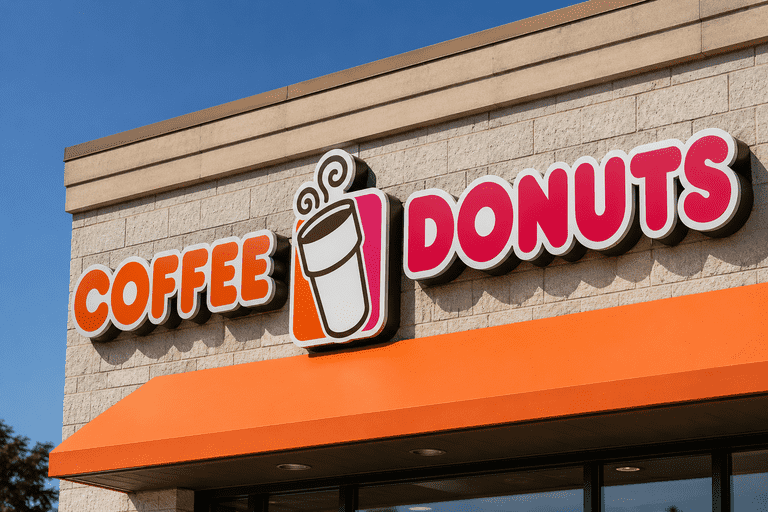
The parent company behind Dunkin', Buffalo Wild Wings, and Arby's has filed for an IPO a move that could reshape how Wall Street views the restaurant sector.
May 15, 2026

Learn how to develop a memorable restaurant brand identity that stands out in a crowded market, attracts loyal customers, and drives repeat business with actionable strategies and affordable tools.
May 15, 2026
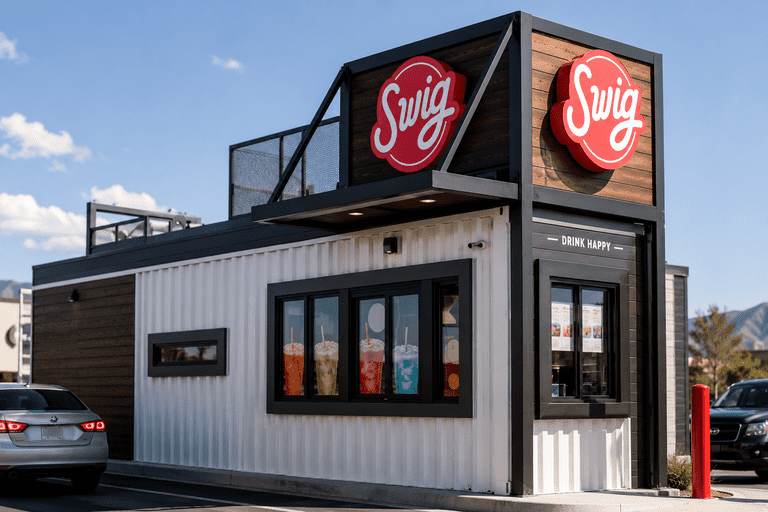
Dirty soda chain Swig is expanding into Colorado through a 10-unit franchise deal, riding a consumer beverage trend that's catching the attention of major QSR players nationwide.
May 15, 2026
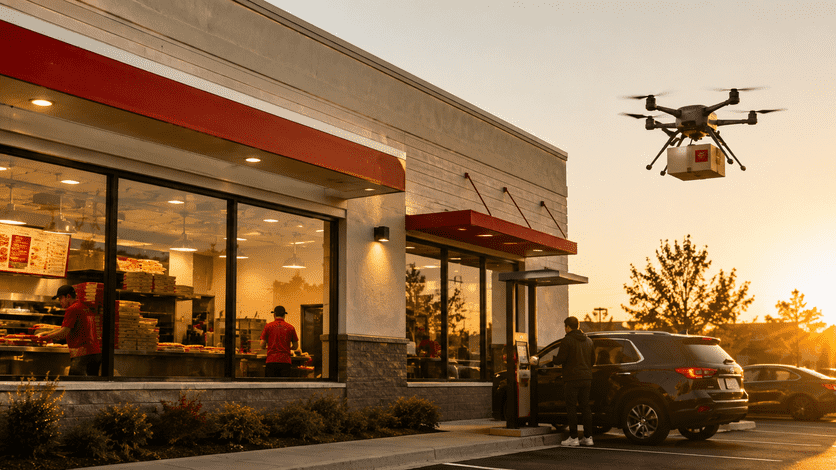
Papa Johns has teamed up with Alphabet's Wing for drone delivery of its new sandwich lineup in parts of Charlotte marking the first partnership of its kind between Wing and a national QSR brand.
May 15, 2026
A warm, expert-led look at McDonald’s Q1 results, menu makeover, and the refranchise question shaping its growth.
May 14, 2026
A reflective look at Habit Ranch, its immersive desert activation, and what it signals for brand loyalty and mindful, experiential dining.
May 14, 2026

Unlock Exclusive Access To Webinars, Events, And The Latest News For Free!
Private equity-guided rescue reshapes TGI Fridays UK, preserving thousands of jobs while prompting questions on leadership and communication.
Photo by Johan Mouchet
Across the United Kingdom, a year of upheaval tested the backbone of a brand steeped in casual dining heritage. When Hostmore PLC moved toward administration, two private equity houses stepped in: Breal Capital and Calveton UK. The rescue condensed a once sprawling footprint to 51 operating sites, while 36 sites were shuttered with little forewarning and 1,012 employees were terminated. Yet nearly 2,400 staff remained across the surviving restaurants, a reminder that a rescue can preserve life in a business even as momentum is pruned elsewhere. The decision was framed as a rebalancing—a careful, forward-looking reassembly rather than a retreat. It raises a pressing question: can a beloved brand endure a financial reboot without losing its essence?
From the human side, the upheaval unfolded with stark immediacy. Unite Hospitality described closures as abrupt and poorly communicated, reporting that workers were not informed of closures and were locked out of sites, with some invited only to a company-wide Zoom call. The leadership response centered on stability for the remaining pubs and restaurants, but the experience underscored a broader crisis-management challenge in hospitality: when speed collides with care, how do you protect people while protecting a brand? Julie McEwan, CEO of TGI Fridays UK, said, “We are devastated for our colleagues who will be leaving TGIs and thank them for their loyalty and contribution during their time with us. We are doing everything possible to retain our team and support those impacted.” The episode becomes a case study in balanced, mindful leadership—an insistence that heritage can live on only with clear, compassionate communication, even in the middle of restructuring.
The upheaval traces to Hostmore PLC’s financial distress and its administration, which occurred just weeks before the private equity–led rescue. A planned all-share merger with a Dallas-based TGI Fridays franchise operator, valued at about $220 million, would have united Hostmore and its parent franchisor to stabilize finances and secure the chain’s UK future. Instead, the plan unravelled, prompting Hostmore to offload more than half its holdings to Breal Capital and Calveton UK, with the new owners expressing optimism about rejuvenating the brand and modernizing the business while leveraging its heritage. In the broader context, the PE-backed turnaround for a high-profile franchise illustrates both the potential upside and the risks embedded in cross-border consolidation during volatile market periods.
That turn of events embodies the double-edged sword of cross-border consolidation: it can unlock capital, fund modernization, and re-energize a brand with new resources, yet it also places workforce futures and wage entitlements under close scrutiny. The rescue signals a belief that heritage and modern efficiency can coexist, provided leadership communicates with clarity and care, and that the right governance structure can convert an abrupt shock into a thoughtful renewal.
The pact effectively reallocated ownership and activity across the UK estate: 51 sites were retained and rebranded under the new ownership, while 36 sites were shuttered, marking a sharp contraction from the prior portfolio. The consolidation was framed as a rescue that safeguarded a substantial portion of the workforce, but the process also involved timing and communications concerns, including sudden closures and partial redundancies. External reporting highlights a tension between preservation of the brand’s footprint and the immediate need to cut underperforming units, a pattern observed in other sector turnarounds where private equity partners stabilize cash flow while navigating difficult workforce decisions.
Behind the numbers lies an operational puzzle: renegotiating supplier commitments, aligning concepts under a unified identity, and delivering a consistent guest experience across a leaner map. The question for late 2024 and beyond becomes how the surviving sites will carry the brand’s heritage forward while integrating new capital and governance. This is not merely about store counts; it is about recharging a beloved concept with disciplined, sustainable rhythms that can endure under new ownership.
Staff and unions cast the moment as a crucible for workplace communication and security. Unite Hospitality reported that employees were not informed of closures and were locked out of sites, with many receiving only a company-wide Zoom call invitation. The human toll extended beyond job losses to questions of redundancy consultations, wages owed, and transitional support. Julie McEwan’s public statement, included in the leadership discourse around the rescue, emphasized stabilizing the business while standing by affected workers. Together, these reactions illustrate the broader social frictions that accompany rapid restructurings in hospitality, where workforce expectations collide with financial realignment.
Viewed as a governance moment, the episode asks how leadership can translate strategic risk into responsible, nourishing practice on the floor and in payroll. The narrative invites operators to embed clearer communication, fair transition terms, and a culture of care that aligns with a sustainable dining ethos—where people and plates are balanced, nourished, and respected even as a company recalibrates.
Even with a rescue that preserves nearly 2,400 jobs and a portion of the brand’s footprint, critical questions persist. The precise wage entitlements for staff affected by closures, the sufficiency of redundancy consultations, and the long-term viability of the surviving 51 sites under private equity ownership require ongoing monitoring. Market reporting shows variance in closure counts and job losses, underscoring the difficulty of pinning down exact figures during fast-moving restructurings. These gaps are not merely numbers; they point to uncertainties about strategic direction, capital structure, and the effectiveness of crisis-management practices in a high-profile franchised system.
Looking ahead, the rescue offers a temporary reprieve but forewarns that recovery will require disciplined change management, transparent communication, and a credible long-term growth plan. Since October 2024, the brand’s UK ownership has evolved again, signaling a dynamic, evolving landscape in franchise ecosystems. The narrative also intersects with a larger aspiration in mindful dining: sustainable practices, thoughtful sourcing, and staff well-being as core ingredients, not afterthoughts. As the sector navigates shifting consumer preferences, the TGI Fridays episode becomes a case study in how private equity, portfolio reviews, and operational resets shape a brand’s future. In October 2025, Sugarloaf acquired the UK business from Breal Capital and Calveton UK, signaling another major inflection point in the brand’s journey.