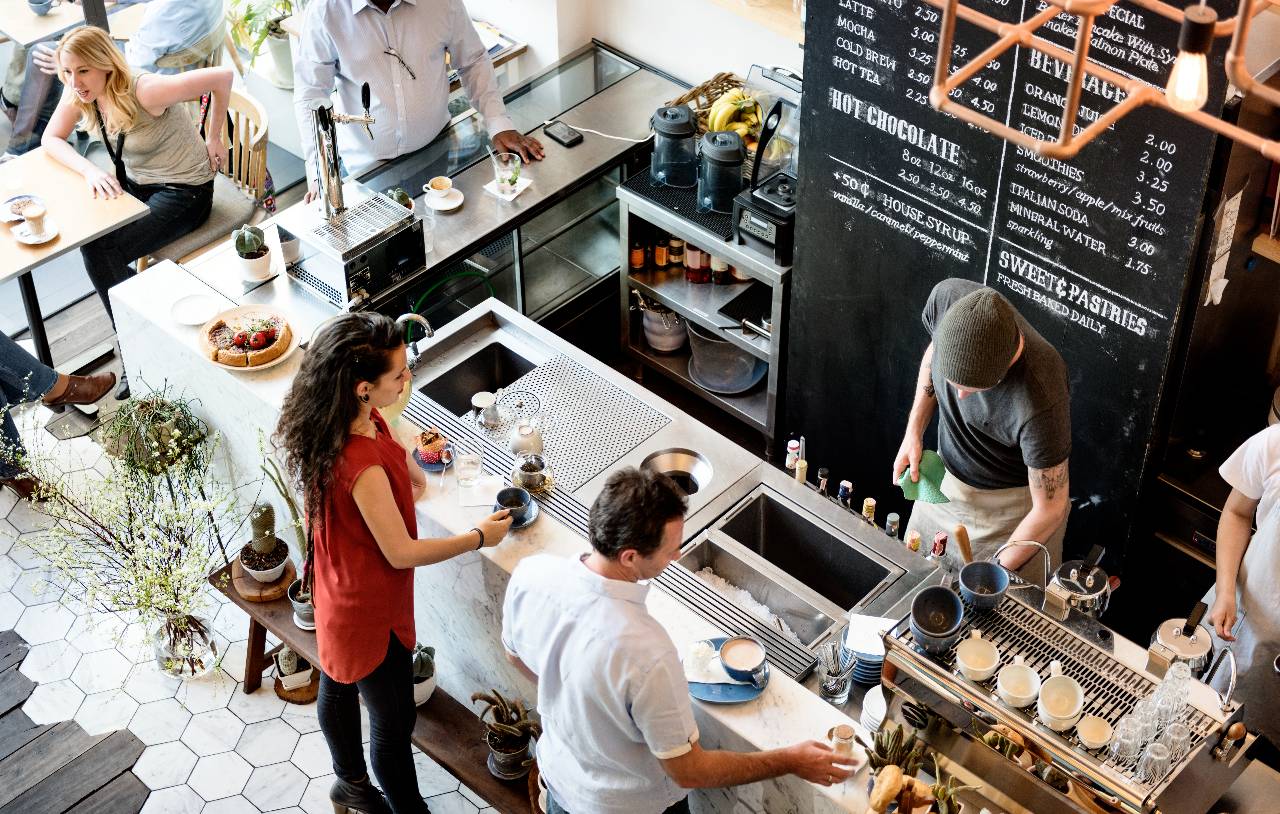
How Much Does It Cost to Open a Coffee Shop in 2026?
Opening a coffee shop in 2026 requires careful cost planning across rent, equipment, labor, technology, menu strategy, marketing, and sustainability.
operations
May 15, 2026
Opening a coffee shop in 2026 requires careful cost planning across rent, equipment, labor, technology, menu strategy, marketing, and sustainability.
May 15, 2026
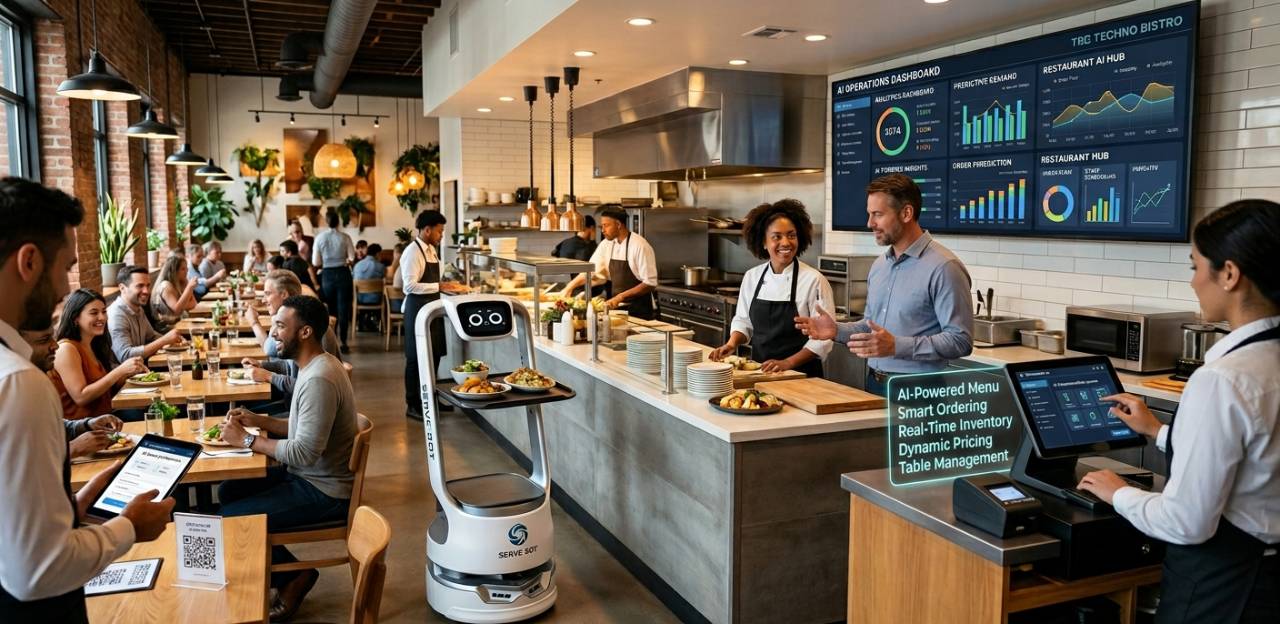
This AI playbook covers restaurant tools for voice ordering, staffing, compliance, menu pricing, inventory, marketing, ChatGPT prompts, and SEO.
May 15, 2026
Hardee’s giant Boddie-Noell inks 31-unit Scooter’s Coffee deal for NC and VA, leveraging drive-thru growth and local roots with rollout over 12–18 months.
May 15, 2026
Wingstop turns match weeks into a multi-sensory festival, aligning bold pop-ups with World Cup energy to build brand affinity and measurable momentum.
May 15, 2026
The parent company behind Dunkin', Buffalo Wild Wings, and Arby's has filed for an IPO a move that could reshape how Wall Street views the restaurant sector.
May 15, 2026

Learn how to develop a memorable restaurant brand identity that stands out in a crowded market, attracts loyal customers, and drives repeat business with actionable strategies and affordable tools.
May 15, 2026
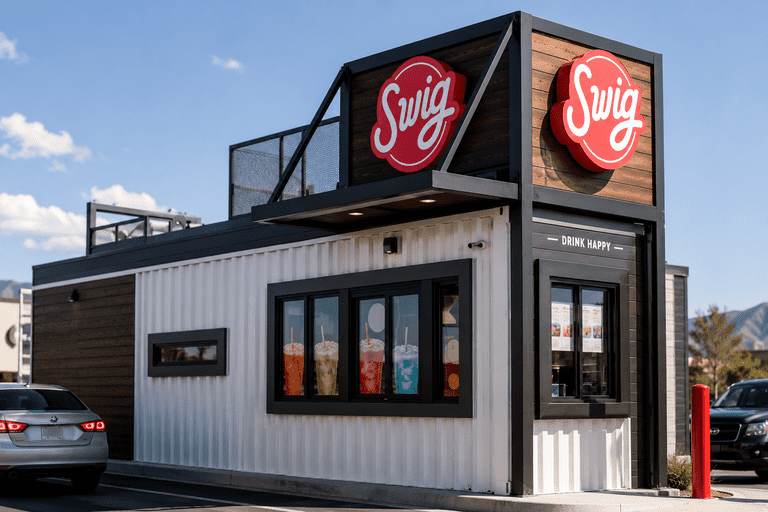
Dirty soda chain Swig is expanding into Colorado through a 10-unit franchise deal, riding a consumer beverage trend that's catching the attention of major QSR players nationwide.
May 15, 2026
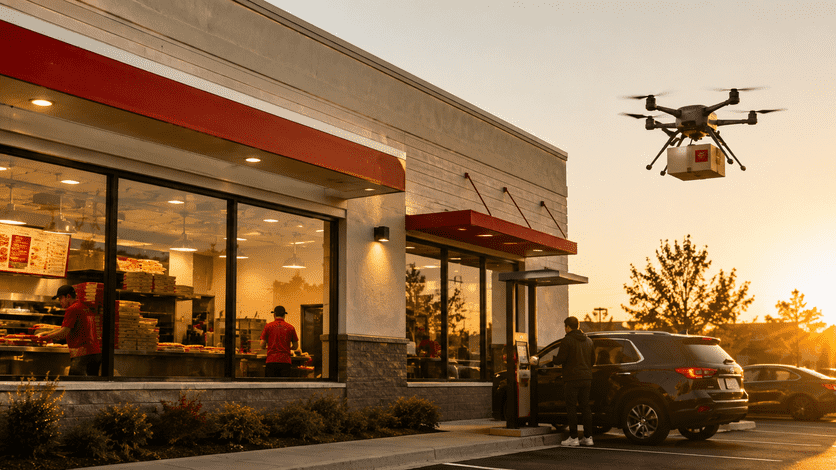
Papa Johns has teamed up with Alphabet's Wing for drone delivery of its new sandwich lineup in parts of Charlotte marking the first partnership of its kind between Wing and a national QSR brand.
May 15, 2026
A warm, expert-led look at McDonald’s Q1 results, menu makeover, and the refranchise question shaping its growth.
May 14, 2026
A reflective look at Habit Ranch, its immersive desert activation, and what it signals for brand loyalty and mindful, experiential dining.
May 14, 2026

Unlock Exclusive Access To Webinars, Events, And The Latest News For Free!
Moe’s Southwest Grill anchors a gentle, under-$10 promise—junior burrito, queso, drink, and signature chips—backed by a national game‑show promotion and a clear stance on pricing clarity.

Photo by Igor Rodrigues
Moe’s Southwest Grill has set a welcoming table at $9.95, introducing the Moe Value Meal as a permanent bundle that softens the noise of today’s prices. The package reads like a gentle checklist of satisfiers: a junior burrito, a two‑ounce side of queso, a fountain drink, and Moe’s signature free chips, salsa, and dipping sauces. The brand frames the meal as a nod to the year 2000, when a ten-dollar bill felt fuller, and it ties this memory to the present through a simple promise—your total stays under $10. “In today’s world, it feels like $10 doesn’t go very far,” said chief brand officer Mike Smith, before adding, “We’re proud to offer our guests a full, delicious meal that doesn’t break the bank.” With 580 locations confirmed as of June 30, 2025, the reach is broad enough to make this value story feel accessible rather than theoretical. Analysis: The brand’s choice to fix the price at $9.95 and keep the offer permanent signals steadiness; the national footprint and executive messaging reinforce credibility for cost-conscious diners.
The meal components have a reassuring cadence: the warmth of a junior burrito, the creamy comfort of a two‑ounce queso, the welcome clink of a fountain drink, and the unfussy pleasure of chips, salsa, and dipping sauces. There is no puzzle at the register—no need to add line items to complete the meal. That clarity is part of the appeal, a soft answer to the hard arithmetic guests have learned to fear. By positioning the bundle as permanent at $9.95, Moe’s reduces the anxiety of limited-time offers and shifting discounts. Guests can expect the same promise on return visits, which functions like a friendly routine. And with the brand’s 580-unit footprint as of June 30, 2025, the odds of encountering this value in one’s own neighborhood are meaningful. Analysis: A complete, recognizable bundle at a set price clears away the ambiguity that often erodes value at checkout, while scale ensures the promise can be experienced widely.
This offer speaks in the gentle language of memory. By invoking the year 2000, Moe’s reminds guests of a moment when a simple ten-dollar bill felt generous. The brand pairs that feeling with a rational anchor: based on the Bureau of Labor Statistics inflation calculator, “$10” in August 2000 equates to “$18.75” today. The contrast becomes a quiet proof point. A $9.95 meal today isn’t just a deal; it’s designed to feel like an echo of a time when value was easier to trust. That mix—emotional reminiscence and practical math—helps the message land. It suggests the company is not chasing nostalgia for its own sake, but using it to frame a promise: value that is understandable at a glance and dependable across visits, even as broader costs swell. Analysis: Nostalgia builds warmth while the $18.75 comparison supplies credible scale, making the $9.95 meal both emotionally soothing and empirically grounded.

To turn awareness into action, Moe’s has launched a digital game‑show‑style promotion running through October 5, 2025. The invitation is charming in its simplicity: guess what “$10” could buy in the year 2000. Participation alone earns a gentle reward—a guaranteed “20%” discount on one Moe Value Meal—while a grand prize promises free Moe Value Meals for a “year,” and “1,000” additional players win one free meal. The mechanics blend certainty with a bit of sparkle. A known savings is paired with the possibility of something bigger, nudging guests to play and share. Set against the steadying signal of a permanent $9.95 price, this playful layer adds movement without muddling the core message. Analysis: Guaranteed savings plus aspirational prizes encourage trial without undercutting the permanence of the value meal, aligning emotion and incentive in a tidy loop.
Restaurant Dive surfaced a detail that feels quietly generous: the junior burrito in the Moe Value Meal contains the same amount of protein as a regular burrito. In a category where trading down often means getting less of the part that matters most, this parity functions like a promise kept. It complements the familiar extras—chips, salsa, dipping sauces, and the two‑ounce queso—by affirming that the heart of the meal hasn’t been thinned. Layered with Mike Smith’s remarks—“In today’s world, it feels like $10 doesn’t go very far” and “We’re proud to offer our guests a full, delicious meal that doesn’t break the bank”—the point is underscored at leadership level. The value isn’t hiding in the fine print; it’s embedded in the portioning of the core component. Analysis: Independent framing of protein parity and executive accountability strengthens trust, countering the common suspicion that lower prices mean leaner portions.
Moe’s move lands in a marketplace where value talk has grown louder. QSR players like Taco Bell and casual chains such as Chili’s lean on discounts to coax visits, and the fast-casual tier is feeling its own tensions. Restaurant Dive reports Chipotle’s core entrée prices average around $10.31—already “30% to 40%” below what patrons typically pay at Sweetgreen, Cava, or Chop’t. Yet add-ons can complicate the story: chicken entrées at Chipotle average $9.60, but a guacamole add-on near $2.81 narrows the perceived advantage. By packaging a complete meal at $9.95, Moe’s tries to sidestep the add-on spiral. The inclusive chips-and-salsa ritual and the measured two‑ounce queso create a sense that the little comforts won’t surprise guests at checkout. In broader industry reporting, inflation, beef costs, and tariffs are pressuring margins; Reuters notes Chipotle has forecast continued cost challenges while exploring domestic supply sourcing. Analysis: An all-in $9.95 bundle addresses the add-on drag that can erode perceived value even when base prices look competitive, offering a tidier answer amid cost volatility.
The cultural weather has cooled on trend-forward bowls with lofty price tags. A skeptical phrase—“slop bowls”—captures a growing impatience with meals that can run up to $25 yet feel underwhelming. Reuters reports Chipotle is facing declining traffic and compressing same‑store sales, with comparable‑sales guidance revised downward for the third consecutive quarter in 2025 as consumers pull back. In response, brands have been experimenting. Zacks points to menu additions like Honey Chicken and the Adobo Ranch dip, which are showing up in a meaningful share of orders, alongside loyalty pushes such as “Summer of Extras.” Restaurant Dive cautions that unless communicated clearly, value remains a weak link. Against this backdrop, the Moe Value Meal’s promise is straightforward: a full, familiar plate at a known price, with no hidden tollbooths. Analysis: Simplicity and transparency meet the moment; when diners question whether premium bowls earn their price, a clear, complete bundle provides a comforting alternative.
The structure is tidy: a permanent price at $9.95 and a promotional game that runs through October 5, 2025. The two layers complement each other—one calms, the other energizes. With a confirmed 580 locations as of June 30, 2025, many guests can experience the offer without traveling far, a practical detail that matters when turning sentiment into visits. The package itself remains intentionally straightforward: junior burrito, two‑ounce queso, fountain drink, and the signature chips, salsa, and dipping sauces. By avoiding separate line-item add-ons to complete the experience, the brand reduces the sense of creeping costs at the register. There’s comfort in knowing where the total will land. Analysis: A fixed national price pairs neatly with a finite promotion, creating gentle urgency without muddying long-term clarity, and scale ensures the message is runnable across markets.

There are questions that will shape the next chapter. The materials do not include data on traffic lifts or the redemption rate for the “20%” discount, nor do they quantify conversion from the game to repeat visits. Unit-level margin effects of the $9.95 bundle aren’t detailed, and there’s no read yet on regional variations, participation exclusions, or operational adjustments needed to maintain protein parity at scale. What to watch: participation in the game-show, coupon redemption, and whether a permanent price can keep traffic buoyant without straining profitability. With broad reach and a clean structure, the elements are in place; the story’s durability will show up in the numbers still to come. Analysis: The proposition is crisp, but sustainability awaits proof; near-term metrics will indicate whether clarity and generosity convert into healthy, repeatable performance.

In a season of cautious spending, Moe’s bets on a soothing equation: a meal that feels complete, a price that feels familiar, and a promotion that invites a smile. The nostalgia of the year 2000 softens the edges, while the Bureau of Labor Statistics anchor—“$18.75” for “$10” in August 2000—grounds the feeling in fact. Signals of generosity, like protein parity in the junior burrito, fortify trust where it tends to fray. There is a broader reminder here for the category: value that is easy to see is easier to believe. When guests are tired of decoding add-ons and modifiers, a bundle with no hidden steps can feel like hospitality in itself. If the coming metrics validate the approach, this gentle clarity could be more than a promotion—it could be a roadmap for how comfort and candor still win hearts, even in a prickly pricing world. Analysis: The lesson is that clear, generous design—emotionally resonant, factually supported—can restore confidence; the next test is whether that comfort translates into sustained traffic and healthy unit economics.