How Much Does It Cost to Open a Coffee Shop in 2026?
Opening a coffee shop in 2026 requires careful cost planning across rent, equipment, labor, technology, menu strategy, marketing, and sustainability.
operations
May 15, 2026
Opening a coffee shop in 2026 requires careful cost planning across rent, equipment, labor, technology, menu strategy, marketing, and sustainability.
May 15, 2026
This AI playbook covers restaurant tools for voice ordering, staffing, compliance, menu pricing, inventory, marketing, ChatGPT prompts, and SEO.
May 15, 2026

Hardee’s giant Boddie-Noell inks 31-unit Scooter’s Coffee deal for NC and VA, leveraging drive-thru growth and local roots with rollout over 12–18 months.
May 15, 2026
Wingstop turns match weeks into a multi-sensory festival, aligning bold pop-ups with World Cup energy to build brand affinity and measurable momentum.
May 15, 2026
The parent company behind Dunkin', Buffalo Wild Wings, and Arby's has filed for an IPO a move that could reshape how Wall Street views the restaurant sector.
May 15, 2026

Learn how to develop a memorable restaurant brand identity that stands out in a crowded market, attracts loyal customers, and drives repeat business with actionable strategies and affordable tools.
May 15, 2026
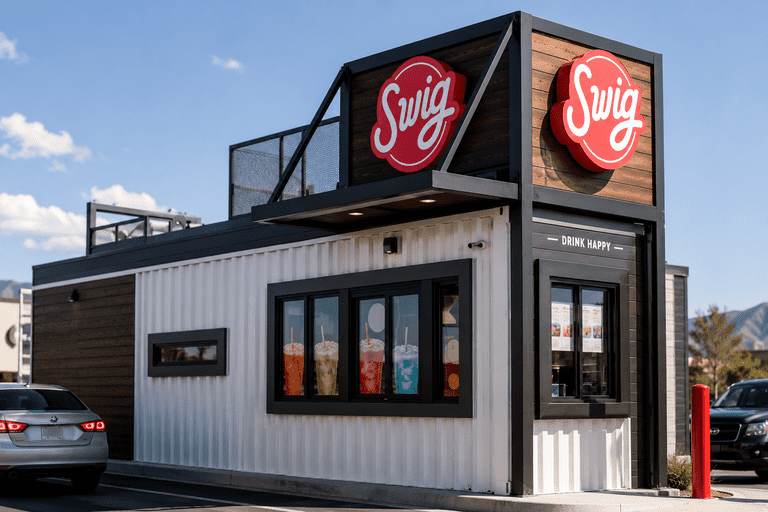
Dirty soda chain Swig is expanding into Colorado through a 10-unit franchise deal, riding a consumer beverage trend that's catching the attention of major QSR players nationwide.
May 15, 2026
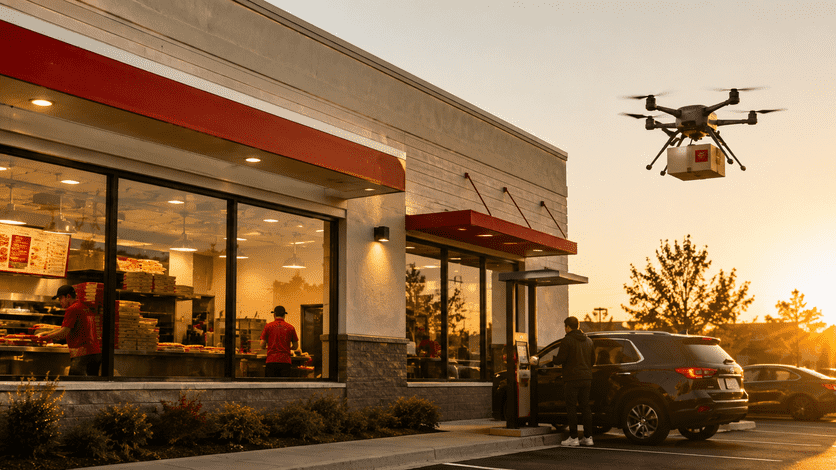
Papa Johns has teamed up with Alphabet's Wing for drone delivery of its new sandwich lineup in parts of Charlotte marking the first partnership of its kind between Wing and a national QSR brand.
May 15, 2026
A warm, expert-led look at McDonald’s Q1 results, menu makeover, and the refranchise question shaping its growth.
May 14, 2026
A reflective look at Habit Ranch, its immersive desert activation, and what it signals for brand loyalty and mindful, experiential dining.
May 14, 2026

Unlock Exclusive Access To Webinars, Events, And The Latest News For Free!
Linked Eats teams with Sauce Technologies to embed AI pricing and demand forecasting across VDC's 4,000 digital restaurants, sharpening profitability in virtual kitchens.

Photo by ANTIPOLYGON YOUTUBE
Linked Eats is stepping boldly into its next chapter. The restaurant profitability SaaS platform, born from Virtual Dining Concepts, announced its first acquisition: Sauce Technologies, an AI-powered digital ordering and pricing solution. The deal closed just one week after Linked Eats was publicly introduced, signaling VDC’s intent to turn software ambitions into real-world impact fast. The combined platform aims to reach VDC’s network of digital restaurants — more than 4,000 operations across 30 virtual brands — by weaving Sauce’s data-driven pricing insights into Linked Eats’ toolkit. This is more than a purchase; it’s a statement that industry-wide machine-learning optimization is moving from the margin of hype to the core of strategy.
Industry coverage notes the aggressive timeline and clear target: 4,000 digital restaurants across 30 virtual brands become the integration playground. By pairing Sauce’s data-driven pricing insights with Linked Eats’ real-time pricing and marketing automation, the partnership accelerates a broader push toward AI-enabled optimization in digital dining channels. The speed of the move—announced, closed, and ready to scale inside days—signals that the restaurant tech world is betting on speed to capitalize on market volatility and demand signals across multiple channels.
Why the move makes sense goes beyond a catchy headline. Sauce Technologies arrived as an AI-powered pricing platform known for adjusting prices based on data-driven insights. The acquisition gives Linked Eats a formal, ongoing capability in dynamic pricing and demand forecasting to complement its emphasis on real-time pricing and marketing automation. Public reporting confirms investors with roots in Sweetgreen, SBE, Uber, and Airbnb backing the effort, and a funding round exceeding $3.6 million that signals credible value and growth potential in restaurant tech.
The deal’s logic sits at the crossroad of product and market momentum. By stitching Sauce’s pricing engine into Linked Eats’ platform, VDC aims to give operators a more resilient toolkit for pricing and demand—helping restaurants respond to swing in demand and to optimize margin across online ordering, curbside, and dine-in channels. The public narrative emphasizes the speed and credibility behind the investment, framing an AI-enabled revenue-management approach as a core differentiator for digital dining in the market.

At its core, the integration centers on an AI-driven pricing engine capable of adjusting prices for individual items and specific dining events. Operators can modulate pricing based on current demand, including dynamic surcharges during peak times to manage orders and boost revenue. Linked Eats plans to embed Sauce’s pricing intelligence into its launch portfolio—a suite that already includes real-time dynamic pricing, AI-powered marketing automation, SEO tools, automated uptime monitoring, and robust communications designed to optimize operator performance. Beyond pricing, the collaboration will extend Sauce’s digital ordering capabilities across VDC’s broad network, broadening access to data-informed decision-making for thousands of digital restaurant operators.
Industry observers frame the move as part of a broader shift toward AI-enabled, data-driven tools that let operators respond to market volatility in near real time.
Voices from the leaders frame the strategic importance. "With third-party delivery reaching critical scale, we are seeing the landscape shift to a more profit-driven marketplace, and restaurants need new tools to thrive in this challenging and competitive environment. This acquisition will add further AI-expertise to our team and features and further our leadership in developing and providing these tools." — Robbie Earl, chairman of Linked Eats. "We at Sauce are excited to join the Linked Eats team and scale the digital growth tools that we’ve built for restaurants. Combining Linked Eats’ operator-first approach and current platform with Sauce’s marketing automation software creates a powerful synergy to supercharge what it means to be successful for today and tomorrow’s restaurateurs." — Colin Webb, CEO and co-founder of Sauce Technologies.
Their words underscore a shared belief: the combined toolkit will unlock growth for operators who are chasing efficiency, precision, and growth in a crowded digital dining landscape.
What the deal means for the market is that traditional restaurant models are increasingly turning digital-first and data-centric to compete with third-party platforms. By pairing Sauce’s pricing and demand-forecasting with Linked Eats’ toolkit, the joint offering gives operators granular pricing control and sharper forecasting across multiple digital channels. The move also shows how influential founders and investors are backing AI-enabled revenue management as a core asset in the restaurant-tech ecosystem.
Gaps, uncertainties, and next steps pepper the public materials: we know the acquisition and its rationale, but specifics on integration milestones, ROI timelines, and product roadmaps aren’t detailed. Analysts flag the risk of aligning Sauce’s engines with Linked Eats’ marketing automation and operations stack, and of scaling the combined platform across thousands of restaurants with varied concepts. Industry press will continue to track Linked Eats’ evolution as new partnerships and iterations emerge. The ultimate test will be operator adoption and whether profitability climbs at scale.