How Much Does It Cost to Open a Coffee Shop in 2026?
Opening a coffee shop in 2026 requires careful cost planning across rent, equipment, labor, technology, menu strategy, marketing, and sustainability.
operations
May 15, 2026
Opening a coffee shop in 2026 requires careful cost planning across rent, equipment, labor, technology, menu strategy, marketing, and sustainability.
May 15, 2026

This AI playbook covers restaurant tools for voice ordering, staffing, compliance, menu pricing, inventory, marketing, ChatGPT prompts, and SEO.
May 15, 2026

Hardee’s giant Boddie-Noell inks 31-unit Scooter’s Coffee deal for NC and VA, leveraging drive-thru growth and local roots with rollout over 12–18 months.
May 15, 2026

Wingstop turns match weeks into a multi-sensory festival, aligning bold pop-ups with World Cup energy to build brand affinity and measurable momentum.
May 15, 2026

The parent company behind Dunkin', Buffalo Wild Wings, and Arby's has filed for an IPO a move that could reshape how Wall Street views the restaurant sector.
May 15, 2026

Learn how to develop a memorable restaurant brand identity that stands out in a crowded market, attracts loyal customers, and drives repeat business with actionable strategies and affordable tools.
May 15, 2026

Dirty soda chain Swig is expanding into Colorado through a 10-unit franchise deal, riding a consumer beverage trend that's catching the attention of major QSR players nationwide.
May 15, 2026

Papa Johns has teamed up with Alphabet's Wing for drone delivery of its new sandwich lineup in parts of Charlotte marking the first partnership of its kind between Wing and a national QSR brand.
May 15, 2026

A warm, expert-led look at McDonald’s Q1 results, menu makeover, and the refranchise question shaping its growth.
May 14, 2026

A reflective look at Habit Ranch, its immersive desert activation, and what it signals for brand loyalty and mindful, experiential dining.
May 14, 2026

Unlock Exclusive Access To Webinars, Events, And The Latest News For Free!
With a Halloween-timed, AI-led game that converts choices into coupons and sweepstakes, Jack in the Box pushes customers deeper into its app while advancing a broader digital rebuild.
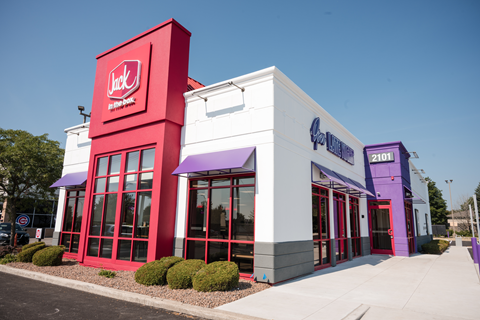
Jack in the Box opened the month with a clear play: run a Halloween-themed, in-app game from "October 1" to "October 31" and pull customers into its mobile ecosystem. The experience, DealQuest: Revenge of the Munchies, is choose-your-own-adventure by design. Players drop into a surreal Jack in the Box restaurant with mascot Jack Box and fight "AI Munchie Meals." Every typed decision changes the story. Every run can be different. Progress pays out. As users defeat virtual versions of real menu items, the game issues codes for tangible offers. The lineup includes "Free Regular Size Drink with $5+ purchase," "BOGO $1 Jr. Chicken Sandwich," "$5 Off $10+ purchase," and "Buy One, Get One 50% Off Monster or BYO Munchie Meal." Codes load straight into the app’s offer bank and are good for "seven days." That tight window nudges visits now, not later. Redemptions unlock sweepstakes entries for a custom Jack in the Box gaming PC, gaming consoles, or Resident Evil game codes. The funnel is layered: play for a deal, visit for a discount, then chase a prize. It’s a clean loop, built for repeat. Analysis: A time-boxed event with immediate, app-delivered value creates urgency. The structure links narrative to savings and pushes behavior toward near-term visits.
DealQuest leans on AI and text inputs. Players type actions, questions, or tactics, and the engine steers the plot in response. The setting stays consistent—Jack in the Box, but strange—while the outcomes shift. Beating "AI Munchie Meals" yields codes for in-restaurant savings. The virtual-to-real handoff is the core mechanic. The offers are direct and familiar. "Free Regular Size Drink with $5+ purchase" lands as a classic add-on. "$5 Off $10+ purchase" moves a larger basket. The app handles it all. Each unlocked offer slides into the user’s in-app bank. Each stays active for "seven days." Scarcity matters here. A week keeps the offer top of mind and aligns with typical fast-food cadence. After using a code, players earn entries toward larger prizes: a custom gaming PC themed to the brand, gaming consoles, or Resident Evil codes. The rhythm encourages continued play. It also puts the app at the center of the journey from story to store. Analysis: AI-driven inputs translate directly into time-bound incentives, compressing the gap between engagement and purchase. Sweepstakes add a second hook that extends interest beyond a single visit.
Jack in the Box built DealQuest with TBWA\Chiat\Day LA and then aimed it where gamers already spend time—social feeds, mobile platforms, and apps popular with that audience. The goal is simple: be discoverable where the core crowd lives and speaks. That keeps the message efficient and the spend focused. The activation fits a longer arc with Zoned, a GameSquare Holdings subsidiary. The partnership has been in place since "2022" and has produced Jack in the Drive Thru ("2022"), Gamer Jack ("2023"), an MLB The Show integration ("2024"), and Fortnite collaborations tied to Topgolf Universe and SpongeBob custom islands. The full slate tied to this relationship is projected to generate over "$3 million" for GameSquare. A renewed "three-year" deal into "2025" signals there’s more coming. This is a playbook, not a one-off. Bring a creative concept. Aim at gamer culture. Measure against revenue-related outcomes already cited for the partnership. Then repeat as the calendar turns. Analysis: Pairing a top creative shop with a specialist gaming partner provides repeatable structure. The revenue projection and renewed term suggest this channel is built to scale.
A good game still needs clean plumbing. Some users reported "outages, login issues, and missing reward redemptions" tied to the app experience. That’s a problem when the pathway runs through the app’s offer bank and redemptions are the gate to sweepstakes entries. The chain can break if the tech does. The campaign runs from "October 1" to "October 31." The clock is not forgiving. If a code sits in limbo or an account can’t sign in, the "seven days" on an offer doesn’t pause. That can delay value and bump people off the loop before they see a payoff. Friction dulls momentum. In a time-bound push, it also erodes trust. The fix is not cosmetic; it’s foundational to the promise being made on the splash screen. Analysis: Reliability gaps carry extra weight when rewards are perishable and entries are tied to redemption. Trust rises or falls with the stability of the app flow.
DealQuest is not happening in a vacuum. It sits inside a "Jack on Track" turnaround strategy in "2025" under CEO Lance Tucker. The plan includes closing "80 to 120" underperforming restaurants by year-end—"up to 200" closures—and shifting to an asset-light model with real estate sales and attention on stronger units. Same-store sales slipped around "4.4%" and "7.4%" in recent quarters. Urgency is real. On tech, the brand launched a new iOS app. An Android build and mobile web ordering are coming. New POS systems are slated across "nearly 550" units by "December 2025." The company expects digital business to move from "14%" to about "20%" of mix by "2027." The app is being put forward as a central revenue engine. In that frame, a gamified, seasonal push is both demand lever and proof point. It tests whether the renovated digital path can convert attention into baskets under pressure. Analysis: Store closures and sales headwinds set a hard backdrop. A functioning, engaging app campaign is a live test of the brand’s planned digital-first model.
Jack in the Box is not alone in courting gamers. The materials cite that McDonald’s rolled out a Minecraft Meal with in-game skin codes. That’s standardization of a once-niche idea. Gaming incentives are now a common language in quick service. Within that field, DealQuest stands out by leaning into narrative immersion. It pushes a choose-your-own-adventure format, delivers offers through the app first, and layers in sweepstakes. The pieces connect. The risk is also clear: when everyone plays in the same arena, execution quality and tech reliability decide who wins attention. The takeaway is disciplined differentiation. Use game mechanics, yes. But make the story and the system work without friction. Analysis: Competitors are normalizing game-linked promotions, so novelty fades. Differentiation rides on immersive design and dependable tech.
The campaign’s scoreboard is not public. The cited materials do not share app activations, offer redemptions, or sweepstakes participation rates. Without those figures, the scale of impact stays unquantified. There’s also the matter of what happens after "October 31." The theme is seasonal. The Android app and mobile web ordering are described as on the way, not live across the board. Keeping momentum will depend on follow-on programming and a smooth handoff into the next event or offer cadence. The right questions are basic. Did the app handle the load? Did the seven-day clock drive trips? And did the sweepstakes pull repeat play? The answers will point to durability. Analysis: Absent metrics, durability is the open item. Sustained gains will require clean tech and post-event retention tactics once the holiday wrapper comes off.
DealQuest shows where fast food engagement is going. An app-centric model ties AI storytelling to limited-time deals and sweepstakes so each touchpoint feeds the next. The setup is built for repetition: swap themes, keep the loop. The integration with TBWA\Chiat\Day LA and Zoned signals a template that can travel across seasons and cultural moments. While the company executes its "Jack on Track" plan and upgrades POS and ordering channels, it has a stage to test and learn. If reliability issues subside and post-event programming continues, the path from game to basket could nudge digital mix toward the stated targets by "2027." The lesson is straightforward. In a crowded field, you earn loyalty by linking story to savings and paying it off fast. Keep the offers live, the app stable, and the next chapter ready. Analysis: The initiative frames engagement as a continuous, app-led journey, not a single transaction. With stable tech and cadence, it can support the broader shift to a more efficient, digital-forward model.