How Much Does It Cost to Open a Coffee Shop in 2026?
Opening a coffee shop in 2026 requires careful cost planning across rent, equipment, labor, technology, menu strategy, marketing, and sustainability.
operations
May 15, 2026
Opening a coffee shop in 2026 requires careful cost planning across rent, equipment, labor, technology, menu strategy, marketing, and sustainability.
May 15, 2026

This AI playbook covers restaurant tools for voice ordering, staffing, compliance, menu pricing, inventory, marketing, ChatGPT prompts, and SEO.
May 15, 2026

Hardee’s giant Boddie-Noell inks 31-unit Scooter’s Coffee deal for NC and VA, leveraging drive-thru growth and local roots with rollout over 12–18 months.
May 15, 2026

Wingstop turns match weeks into a multi-sensory festival, aligning bold pop-ups with World Cup energy to build brand affinity and measurable momentum.
May 15, 2026

The parent company behind Dunkin', Buffalo Wild Wings, and Arby's has filed for an IPO a move that could reshape how Wall Street views the restaurant sector.
May 15, 2026

Learn how to develop a memorable restaurant brand identity that stands out in a crowded market, attracts loyal customers, and drives repeat business with actionable strategies and affordable tools.
May 15, 2026

Dirty soda chain Swig is expanding into Colorado through a 10-unit franchise deal, riding a consumer beverage trend that's catching the attention of major QSR players nationwide.
May 15, 2026

Papa Johns has teamed up with Alphabet's Wing for drone delivery of its new sandwich lineup in parts of Charlotte marking the first partnership of its kind between Wing and a national QSR brand.
May 15, 2026

A warm, expert-led look at McDonald’s Q1 results, menu makeover, and the refranchise question shaping its growth.
May 14, 2026

A reflective look at Habit Ranch, its immersive desert activation, and what it signals for brand loyalty and mindful, experiential dining.
May 14, 2026

Unlock Exclusive Access To Webinars, Events, And The Latest News For Free!
Crust Pizza wrestles with franchisee distress under Subchapter V as growth collides with capital intensity; broader industry shifts shape its path.
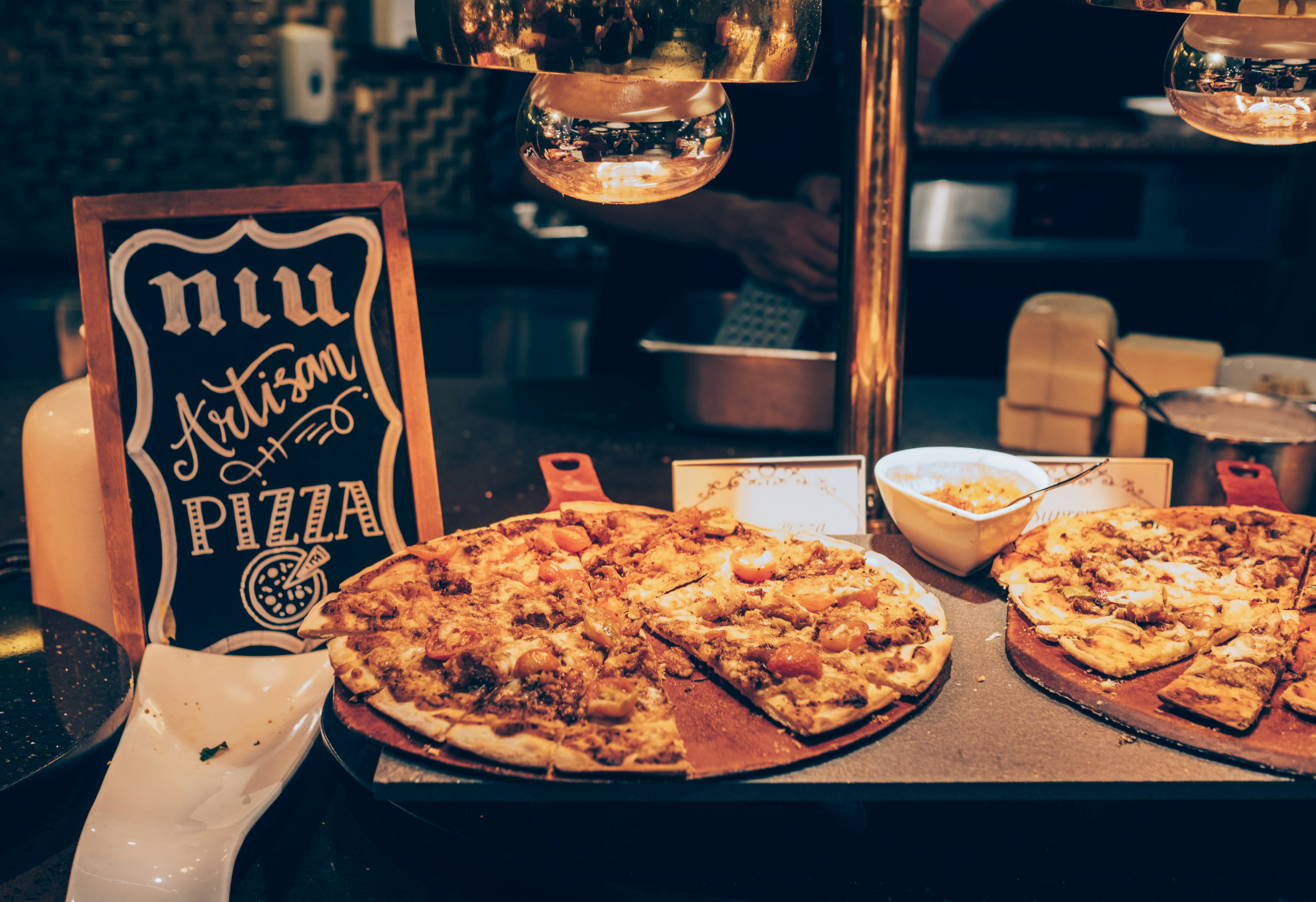
Photo by SJ 📸
Crust Pizza’s current moment feels like a carefully watched hinge in a larger story of growth and gravity. The chain, a Chicago-style concept expanding across Texas and Louisiana, has reached a point where the speed of openings must confront the cost of capital and the realities of franchisee finances. In March 2026, AJ Reno Enterprises (Crust Pizza Magnolia) and Swing Zone (Crust Pizza Heights) filed Chapter 11 petitions under Subchapter V, signaling a deliberate, smaller-business approach to restructuring. Court records show modest assets and a substantial debt load—the kind of math that tests even well-loved brands. The filings aren’t a verdict on quality; they’re a signal about balancing ambition with disciplined, nourishing growth.
Assets are reportedly between $50,000 and $100,000, while debts span from $1 million to $10 million. The debt stack includes a $1.2 million SBA loan and a $677,873 loan guarantee, underscoring how capital structures can shape outcomes for independent operators within a growing franchise system. The firms filed in late March 2026, with JRCP Restaurants LLC having pursued a similar route in November 2025. Taken together, these cases illuminate a brand navigating rapid expansion while facing the consequences of franchisee solvency—an issue that could quietly redefine its expansion path and strategic discipline.
Crust Pizza began with a clear mission: steady, controllable expansion. Yet the 2026 disclosures reveal a pendulum between growth momentum and the limits of capital. The brand operates toward a 40-location footprint across Texas and Louisiana with a longer-term goal of 250 units, a vision that now faces counterpressure from franchisee distress. The franchisee system—critical to turning enthusiasm into sustainable scale—must navigate the delicate balance of speed and solvency. Industry observers remind us that growth, when buffered by capital intensity, requires ongoing vigilance, with 2024’s sales momentum meeting 2026’s rebalancing reality. The questions now shift from “how fast can we go?” to “how carefully will we proceed?”
Impact on near-term trajectory will hinge on how the brand negotiates leases, supplier contracts, and franchisee financing during reorganization. The goal is not to stall vitality but to preserve the nourishing core—tasty, shareable pizzas and a dining experience that feels balanced and thoughtful. The Subchapter V path promises a streamlined process and continued operation, even as the brand retools its capital plan. In conversations around Crust, the thread is clear: growth deserves the same care as quality ingredients, a reminder that nourishment in dining extends to investors, operators, and guests alike.
Five Guys offers a telling counterpoint to the Crust moment. When the burger brand launched a birthday buy-one, get-one-free promotion on February 17 to celebrate 40 years, stores nationwide were overwhelmed. The company responded with candor and a swift corrective move—the so-called After Party from March 9 to March 12—and a generous distribution of bonuses, totaling about $1.5 million across roughly 1,500 domestic locations. CEO Jerry Murrell candidly acknowledged the misstep, saying, “I don’t want anybody shooting me in the back or anything after the first day, because we really screwed it up.” The episode is a reminder that scale invites intensity, and leadership must stay rooted in people-first hospitality.
Lessons in leadership emerge from transparent, timely action. The Five Guys moment shows that missteps in a fast-moving environment require not only an apology but a concrete plan that honors staff and guests alike. By foregrounding accountability and a thoughtful recovery, brands can turn a stumble into a demonstration of resilient, nourishing hospitality. Even amid the loud noise of campaigns, the health of the business rests on staff morale, predictable guest experiences, and a supply chain that can adapt without compromising quality.
The Melt, a San Francisco premium burger concept, is illustrating another path to scale. The 2025 results show a record $58.2 million in revenue across 19 corporate restaurants, signaling strong unit economics that underpin a pivot toward franchising. Leadership speaks of leveraging corporate momentum to fuel asset-light expansion while continuing to optimize unit economics. In 2025, the brand opened three locations and moved into Arizona, a calculated step that favors scalable growth without overextension. This approach—franchising while preserving product quality—embodies a balanced, nourishing strategy for growth in a capital-intensive category.
Unit economics as compass stand out in The Melt’s numbers: roughly $3.4 million in annual sales for restaurants opened more than a year, with the top third surpassing $4.5 million. The Stanford outpost—just under 2,000 square feet—exceeding $6 million in annual sales offers a provocative data point for operators weighing scale. The takeaway is clear: growth can be intentional, even asset-light, when margins stay healthy and guests keep returning for a nourishing, thoughtfully crafted menu.
California is moving toward greater menu transparency with SB 68, the Allergen Disclosures for Dining Experiences. The law requires written disclosure of the top nine allergens—milk, eggs, fish, shellfish, tree nuts, peanuts, wheat, sesame, and soybeans—for chains with 20+ locations, across standard items and multiple formats, from printed menus to QR codes. Effective July 1, 2026, the policy is shaping how operators map ingredients and present information, with platforms like EveryBite and Foodini joining the effort to automate disclosures and support more mindful dining.
Industry tremors and the road ahead show a sector recalibrating after years of rapid expansion. Pieology’s Hawaii closures following a late-2024 Chapter 11 filing, highlighted by NRN as part of broader consolidation pressures, underscore the demand for disciplined unit economics, robust franchisee support, and contingency planning. The through-line across Crust Pizza, Five Guys, The Melt, and Pieology is a shared commitment to balanced, nourishing dining that respects suppliers, operators, and guests. It’s a reminder that sustainable growth—rooted in thoughtful sourcing, clear governance, and transparent leadership—remains the ultimate competitive edge in a market that prizes both ambition and responsibility.