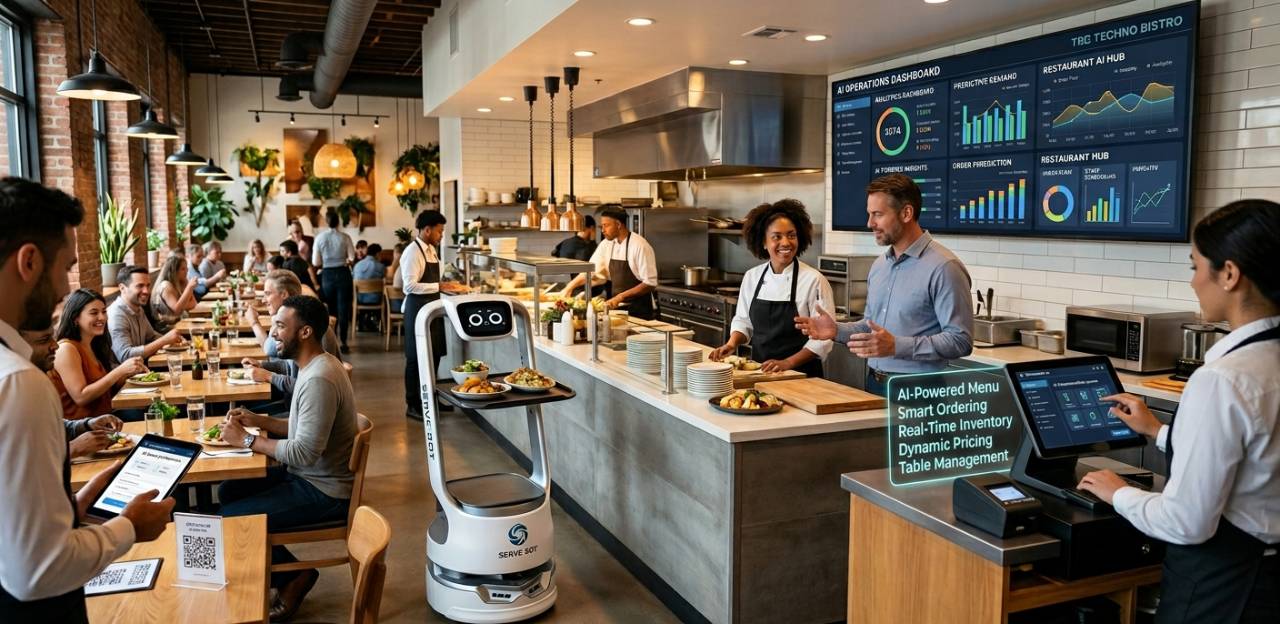
AI Playbook for Restaurant Owners
This AI playbook covers restaurant tools for voice ordering, staffing, compliance, menu pricing, inventory, marketing, ChatGPT prompts, and SEO.
tech
May 15, 2026
This AI playbook covers restaurant tools for voice ordering, staffing, compliance, menu pricing, inventory, marketing, ChatGPT prompts, and SEO.
May 15, 2026
Opening a coffee shop in 2026 requires careful cost planning across rent, equipment, labor, technology, menu strategy, marketing, and sustainability.
May 15, 2026
Hardee’s giant Boddie-Noell inks 31-unit Scooter’s Coffee deal for NC and VA, leveraging drive-thru growth and local roots with rollout over 12–18 months.
May 15, 2026
Wingstop turns match weeks into a multi-sensory festival, aligning bold pop-ups with World Cup energy to build brand affinity and measurable momentum.
May 15, 2026
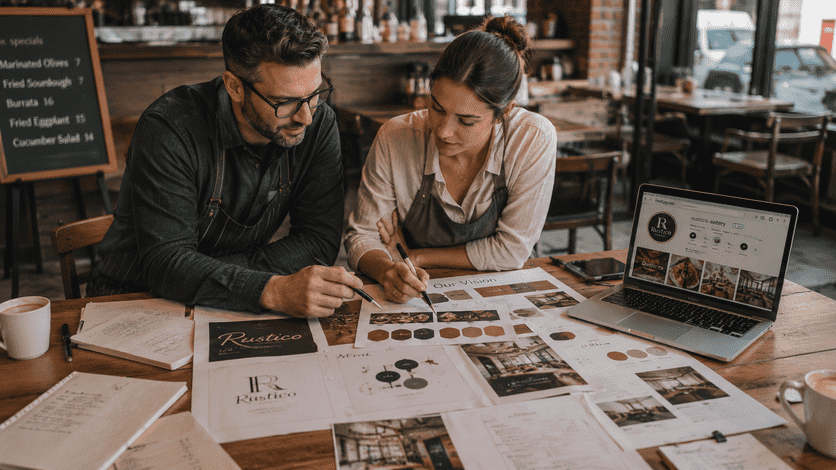
Learn how to develop a memorable restaurant brand identity that stands out in a crowded market, attracts loyal customers, and drives repeat business with actionable strategies and affordable tools.
May 15, 2026
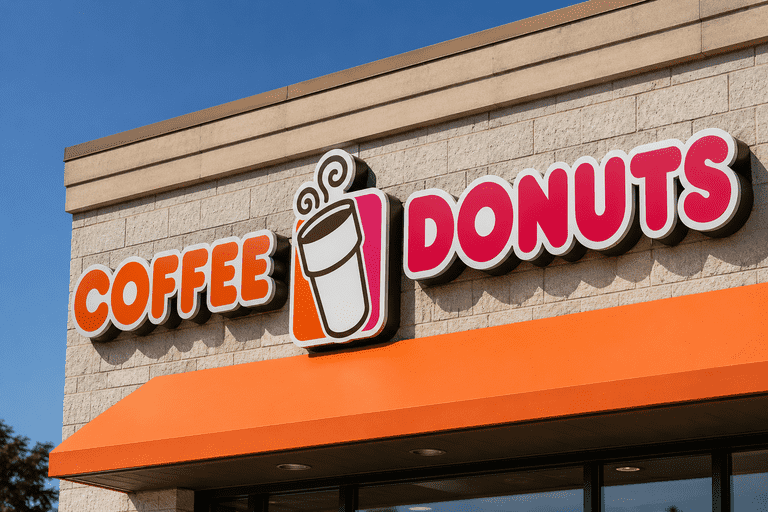
The parent company behind Dunkin', Buffalo Wild Wings, and Arby's has filed for an IPO a move that could reshape how Wall Street views the restaurant sector.
May 15, 2026
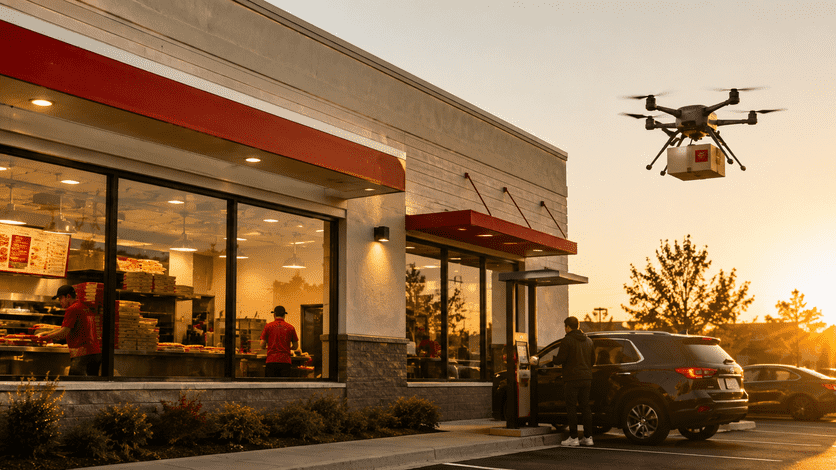
Papa Johns has teamed up with Alphabet's Wing for drone delivery of its new sandwich lineup in parts of Charlotte marking the first partnership of its kind between Wing and a national QSR brand.
May 15, 2026
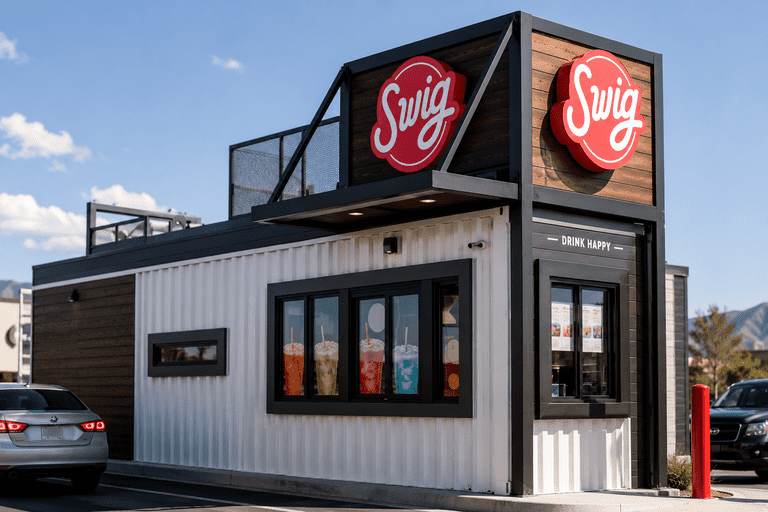
Dirty soda chain Swig is expanding into Colorado through a 10-unit franchise deal, riding a consumer beverage trend that's catching the attention of major QSR players nationwide.
May 15, 2026
A warm, expert-led look at McDonald’s Q1 results, menu makeover, and the refranchise question shaping its growth.
May 14, 2026
A reflective look at Habit Ranch, its immersive desert activation, and what it signals for brand loyalty and mindful, experiential dining.
May 14, 2026

Unlock Exclusive Access To Webinars, Events, And The Latest News For Free!
A warm, expert look at McDonald’s Crocs Happy Meal—its tactile toys, digital design playground, and what the cross-brand move means for brands and shoppers.
In a world of quick exchanges and fast moments, a single tray of fries can feel like more when it carries a memory. The McDonald’s Crocs Happy Meal arrives as a soft invitation to linger, a calm but confident blend of tangible toys and a whisper of digital play. Eight Crocs clips nestle inside their own Happy Meal shoeboxes, each a tiny doorway to design, color, and story. A Jibbitz sticker sheet invites kids and collectors to personalize, to imagine the Crocs they could someday wear beyond the box. The packaging itself hints at a larger conversation—about taste, nostalgia, and the joy of collecting—without shouting for attention.
The experience rests on a simple, gentle premise: design and share, but also savor the moment of choosing a favorite clip, a moment that feels almost like a quiet café table where friends linger over possibilities.
The core here is contrast—the tactile charm of eight unique Crocs clips paired with a QR-enabled doorway to a digital playground. The combination invites a slower kind of engagement: discover, design, share, and then step back from the screen with a sense of having touched something crafted for you. It’s not simply a toy drop; it’s a moment of design in a familiar package, a gentle invitation to a conversation that travels from the shelf to the screen and back again.
McDonald’s and Crocs launched their first major venture as a limited-edition collection, pulling Crocs’ Classic Clogs and Cozzzy Sandals into a shared character roster. The line wasn’t just about footwear; it broadened the Crocs pop-culture footprint with socks and Jibbitz charms inspired by Grimace, Hamburglar, and Birdie. Price points hovered around $70 to $75 per pair, and the press painted this as McDonald’s second fashion crossover in a busy year. The seeds of a deeper collaboration were planted, signaling a powerful, nostalgia-infused approach to cross-promo strategy.
The momentum persisted, with coverage noting how the partnership laid groundwork for 2024’s Happy Meal expansion and, in time, a technology-enabled evolution by 2026. Industry observers framed it as part of McDonald’s pattern of leveraging pop-culture tie-ins to refresh foot traffic during promotional windows. This wasn’t a one-off drop; it was a deliberate, staged collaboration tuned to evolving consumer expectations—where tangible collectibles meet digital play and social sharing.
The packaging itself becomes a portal. A QR code on every Happy Meal box unlocks an experiential digital content space that complements the eight Crocs clips and the Jibbitz charm sheet. Kids and collectors can design virtual Crocs, mixing and matching choices to fashion a personalized pair that exists beyond the meal. This tactile-to-digital bridge mirrors a broader retail trend: collectibility that extends into interactive online play, deepening connection through design and shareable outcomes.
Beyond the page, the platform invites users to design and customize virtual Crocs, creating a loop of inspiration and social shareability. Since 2023 this collaboration has grown into a multi-layered experience: the 2024 expansion added eight exclusive Crocs clips, and the 2026 All American Games edition added another promotional layer. The latest reporting confirms that the digital design component is an explicit feature of the current promotion, signaling a deliberate push toward immersive, shareable moments beyond the dish.
Industry coverage portrays the collaboration as emblematic of a broader shift: fast-food brands leaning into experiential partnerships that fuse fashion, entertainment, and digital play. The 2023 Crocs drop broadened Crocs’ pop-culture footprint and leveraged McDonald’s character roster to captivate nostalgic adults and younger users alike. The pattern echoes other cross-brand efforts in quick-service, with examples like Taco Bell’s Mellow Slide Crocs collaboration and KFC’s chicken-themed crocs in 2020. Together, these cases illustrate how tangible collectibles paired with limited-time experiences can generate press, drive sales, and fuel social sharing.
Market chatter in trade and mainstream outlets underscores a shared aspiration: blend memory, play, and product in a way that travels beyond a single purchase. The cross-brand energy points to a marketing direction where limited-time drops, character-driven nostalgia, and digital enrichment converge to capture younger audiences while sustaining broader consumer interest.
A social-impact thread runs through the threadbare fun. Proceeds from the All American Games edition support Ronald McDonald House Charities, a detail highlighted in coverage of the 2026 promotion. The All American Games Happy Meal launches on March 10, 2026 and runs for a limited window, featuring one of six mini Crocs keychain toys with Jibbitz charm stickers to customize the mini footwear. Consumers can scan the QR code on the box to unlock an integrated digital gaming experience, weaving philanthropy, play, and brand storytelling into a single moment.
Continuity and care anchor a promotion that began in 2023 and culminates in a 2026 edition, reinforcing the strategy of limited-time themes to drive traffic during promotional windows. The pairing remains not just about a toy or a discount but about a narrative that ties design, charity, and interactivity into a shared cultural moment—an approach McDonald’s and Crocs appear intent on refining with each chapter.
Across the industry, cross-brand collaborations are shifting toward experience-driven partnerships that fuse fashion, entertainment, and digital play. For Crocs, the collaborations broaden exposure to younger audiences while leaning on enduring fans for momentum; for McDonald’s, the strategy refreshes its narrative and widens the avenue for social sharing through design-forward merchandise and digital design. Piper Sandler’s surveys about teen mindshare reinforce the idea that comfort, personality, and experiential hooks still captivate this audience, even as rankings shift. The takeaway is clear: the most durable promotions harmonize product, packaging, digital content, and charitable storytelling to stay relevant in a crowded market.
Gaps and uncertainties remind us that numbers can diverge. Some figures claim Crocs sells about 150 million pairs annually, while Crocs’ Form 10-K shows 127.0 million Crocs Brand pairs sold in 2024 (versus 119.6 million in 2023), with possible inclusion of the HEYDUDE line complicating totals. Piper Sandler’s teen rankings have varied by cohort and year, placing Crocs around No. 6 in multiple snapshots. This underscores the distinction between brand mindshare and unit volume, a nuance that matters when shaping long-term strategy and customer trust.