How Much Does It Cost to Open a Coffee Shop in 2026?
Opening a coffee shop in 2026 requires careful cost planning across rent, equipment, labor, technology, menu strategy, marketing, and sustainability.
operations
May 15, 2026
Opening a coffee shop in 2026 requires careful cost planning across rent, equipment, labor, technology, menu strategy, marketing, and sustainability.
May 15, 2026
This AI playbook covers restaurant tools for voice ordering, staffing, compliance, menu pricing, inventory, marketing, ChatGPT prompts, and SEO.
May 15, 2026
Hardee’s giant Boddie-Noell inks 31-unit Scooter’s Coffee deal for NC and VA, leveraging drive-thru growth and local roots with rollout over 12–18 months.
May 15, 2026
Wingstop turns match weeks into a multi-sensory festival, aligning bold pop-ups with World Cup energy to build brand affinity and measurable momentum.
May 15, 2026
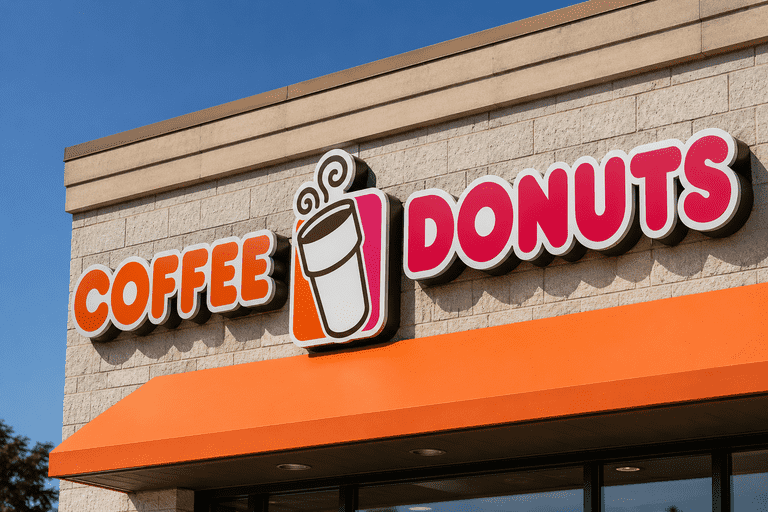
The parent company behind Dunkin', Buffalo Wild Wings, and Arby's has filed for an IPO a move that could reshape how Wall Street views the restaurant sector.
May 15, 2026

Learn how to develop a memorable restaurant brand identity that stands out in a crowded market, attracts loyal customers, and drives repeat business with actionable strategies and affordable tools.
May 15, 2026
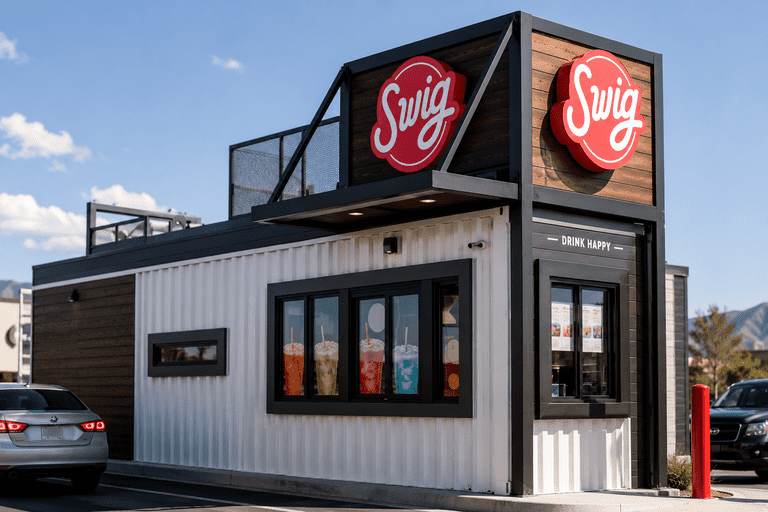
Dirty soda chain Swig is expanding into Colorado through a 10-unit franchise deal, riding a consumer beverage trend that's catching the attention of major QSR players nationwide.
May 15, 2026
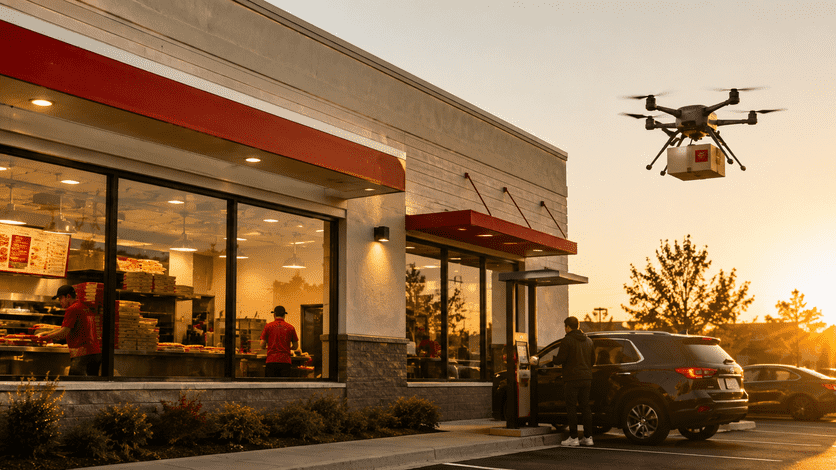
Papa Johns has teamed up with Alphabet's Wing for drone delivery of its new sandwich lineup in parts of Charlotte marking the first partnership of its kind between Wing and a national QSR brand.
May 15, 2026
A warm, expert-led look at McDonald’s Q1 results, menu makeover, and the refranchise question shaping its growth.
May 14, 2026
A reflective look at Habit Ranch, its immersive desert activation, and what it signals for brand loyalty and mindful, experiential dining.
May 14, 2026

Unlock Exclusive Access To Webinars, Events, And The Latest News For Free!
Chick-fil-A plans 20–25 restaurants in Puerto Rico by 2030, backed by QOZ incentives and a public-private partnership shaping community development.
Photo by Hybrid Storytellers
On July 2, 2024, Chick-fil-A announced a long‑term investment in Puerto Rico, planning to grow from five restaurants to 20–25 by 2030. The gesture read as a deliberate redefinition: a shift from a light footprint to a core market strategy. The language surrounding the move emphasized more than quarterly targets: it spoke of economic vitality and community ties stitched into a single, patient arc. In those terms, every planned storefront carries weight beyond the cash register, hinting at a crafted partnership with local life: a promise of jobs, training, and shared prosperity.
The expansion was framed with the cadence of a measured ascent, and it carried a clear outward sign: this is not simply about more locations, but about embedding a national brand into the island’s fabric. Chick-fil-A’s growth in Puerto Rico creates a tremendous opportunity not only for our business, but for economic development and local community impact across the Island. said Paul Trotti, Vice President for International at Chick-fil-A, Inc., rendering the announcement as a blend of enterprise and social purpose. The emphasis on community and employment suggested that the island’s future openings would be evaluated through a dual lens: market performance and civic benefit.
Puerto Rico’s incentives framework, embodied in the Puerto Rico Incentives Code of 2019 as Act 60-2019, designates large swathes of the island as qualified opportunity zones, where development can be accelerated through transferrable credits and streamlined permitting. Local officials have noted a concentration of QOZs, presenting a policy architecture aimed at redevelopment and job creation in communities still recovering from the storms of recent years. Secretary Manuel Cidre of the Department of Economic Development and Commerce described the partnership as a blend of private investment with public‑sector support, a union intended to deliver high‑quality products while fostering employment and social wellbeing.
The policy frame is not abstract theory. It is designed to channel capital into distressed or transitional zones while aligning private ambition with public redevelopment goals. In practical terms, the framework creates a pathway for projects that meet designated criteria to access incentives that may lubricate timelines and reduce friction in approvals. For Chick-fil-A, this means a clearer runway to site development, longer‑term employment, and deeper supplier relationships on the island. The alliance between incentives and redevelopment goals sits at the heart of the plan’s ambition.