AI Playbook for Restaurant Owners
This AI playbook covers restaurant tools for voice ordering, staffing, compliance, menu pricing, inventory, marketing, ChatGPT prompts, and SEO.
tech
May 15, 2026
This AI playbook covers restaurant tools for voice ordering, staffing, compliance, menu pricing, inventory, marketing, ChatGPT prompts, and SEO.
May 15, 2026

Opening a coffee shop in 2026 requires careful cost planning across rent, equipment, labor, technology, menu strategy, marketing, and sustainability.
May 15, 2026

Hardee’s giant Boddie-Noell inks 31-unit Scooter’s Coffee deal for NC and VA, leveraging drive-thru growth and local roots with rollout over 12–18 months.
May 15, 2026

Wingstop turns match weeks into a multi-sensory festival, aligning bold pop-ups with World Cup energy to build brand affinity and measurable momentum.
May 15, 2026

Learn how to develop a memorable restaurant brand identity that stands out in a crowded market, attracts loyal customers, and drives repeat business with actionable strategies and affordable tools.
May 15, 2026

The parent company behind Dunkin', Buffalo Wild Wings, and Arby's has filed for an IPO a move that could reshape how Wall Street views the restaurant sector.
May 15, 2026

Papa Johns has teamed up with Alphabet's Wing for drone delivery of its new sandwich lineup in parts of Charlotte marking the first partnership of its kind between Wing and a national QSR brand.
May 15, 2026

Dirty soda chain Swig is expanding into Colorado through a 10-unit franchise deal, riding a consumer beverage trend that's catching the attention of major QSR players nationwide.
May 15, 2026

A warm, expert-led look at McDonald’s Q1 results, menu makeover, and the refranchise question shaping its growth.
May 14, 2026

A reflective look at Habit Ranch, its immersive desert activation, and what it signals for brand loyalty and mindful, experiential dining.
May 14, 2026

Unlock Exclusive Access To Webinars, Events, And The Latest News For Free!
Chapter 11 roils EYM’s Pizza Hut footprint, with auctions and asset sales reordering stores across IL, WI, IN, GA, and SC.
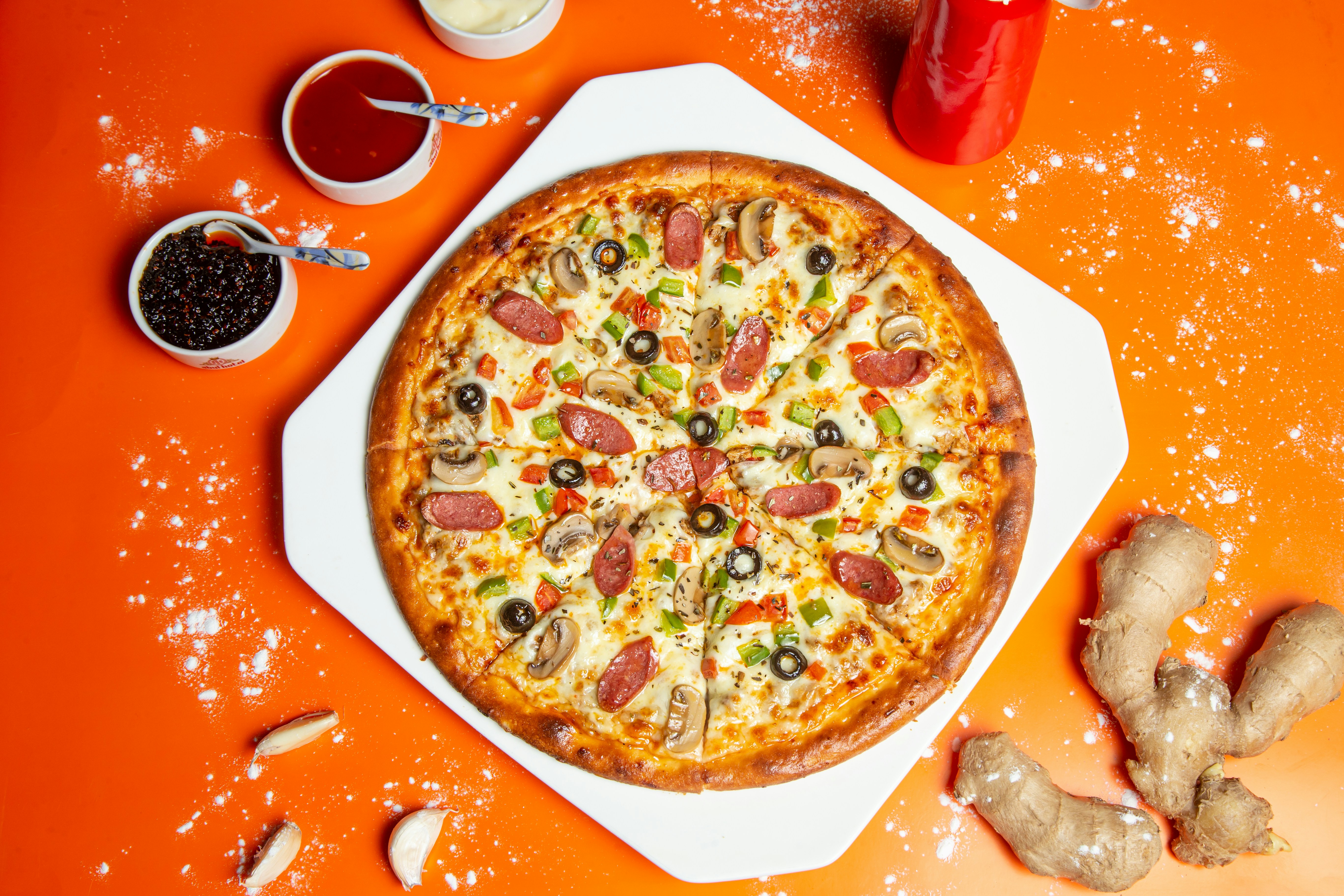
Photo by Shourav Sheikh
EYM Pizza Group kicked off a bold expansion in 2016, banking on a multi‑state footprint built through strategic buys. It secured Illinois territories for $10.85 million and Indiana for $8.67 million, then pushed into Georgia and South Carolina for $9.02 million and $6.88 million in Wisconsin. The founder, Eduardo Diaz, had steered an era of growth across McDonald’s Mexico and other brands, aiming to scale under the Pizza Hut umbrella. It looked like a big win on paper, but the breadth of acquisitions seeded governance and performance questions that would surface later.
Public records reveal a five‑state push that expanded through a string of acquisitions, signaling ambition more than immediate certainty. Yet the map’s breadth masked underlying rifts: Pizza Hut systemwide sales rose about 7% from 2019 to 2023, while EYM locations posted roughly a 10% decline. Reports flagged quality assessments at EYM shops that lagged peers, feeding concerns about consistency and the guest experience. The financial drumbeat sharpened as past‑due royalties and vendor payments exceeded multi‑million dollars by December 2022, setting the stage for a broader, high‑stakes reckoning with the franchisor.
Forbearance arrangements with Pizza Hut were meant to pause franchise‑termination pressure while EYM sold stores and paid down debt. In August 2023, the framework allowed sales while addressing debts, but Georgia and South Carolina units stayed unsettled and operations frayed. The franchisor terminated the forbearance in February and offered a Limited Term Reinstatement Agreement (LTRA) in April. With continued breaches, final termination notices followed in June, signaling a hard line even as restructuring plans remained in motion. The court‑driven path thus began to replace any lingering negotiations.
Legal actions Massachusetts fans this saga: EYM filed lawsuits against Pizza Hut for breach of contract, seeking relief to protect its business, employees, and customers. The franchisor countered with claims of underperformance and contractual noncompliance. By spring 2024, a district court denied EYM’s requests for a preliminary injunction and a temporary restraining order, shrinking the franchisee’s leverage and nudging the parties toward bankruptcy proceedings. The stage was set for a court‑driven reckoning that would redefine the footprint and leverage for both sides.
National Franchise Sales emerged as a key voice in the restructuring drama, noting that asset disposition would unlock value for creditors. A partner framed the moment around strategic execution and buyer relationships, essential to extracting value from a distressed portfolio. The injunction ruling narrowed EYM’s options, while the bankruptcy process moved ahead with the aim of preserving as much value as possible for workers, customers, and creditors.
Judicial gravity in these cases shows how courts can steer strategic outcomes in franchise networks. As asset dispositions gained momentum, the focus shifted to whether buyers could maintain brand standards and labor relations, and how quickly the portfolio could be rebalanced under a court‑backed timetable.
Bankruptcy filings exposed the magnitude of EYM’s Pizza Hut portfolio and its obligations. A court‑supervised auction began reconfiguring the unit count, and by early 2025, 77 stores had moved to new operators in a Dallas‑area auction. Earlier in 2025, Pizza Hut acquired 18 units in Georgia, Illinois, and Wisconsin for more than $11 million, expanding its company‑owned footprint. Debts to Manufacturers Bank and Pizza Hut framed the pressure, while the remaining stores faced further transfers, shaping the post‑bankruptcy map.
What this implies is a broader strategy: stabilize brand standards, move assets to where buyers can sustain operations, and keep workers & communities in mind through the sale process. For franchisors, the lesson centers on clear termination triggers, solid quality metrics, and disciplined support in multi‑unit networks. For franchisees, it reveals the leverage dynamics that rise when debt, royalty structures, and performance expectations collide with execution.
Taken together, the EYM case sits inside a wider wave of 2024 industry volatility. High‑profile restructurings—Red Lobster, Rubio’s Coastal Grill, Tijuana Flats, Sticky Fingers, and others—spotlight debt, labor costs, and shifting demand testing even strong concepts. The pattern extended to Arby’s, Subway, Popeyes and more, proving the franchise model remains exposed to macro headwinds even as brands chase growth. The takeaway is simple: disciplined operations, clear contracts, and proactive governance anchor stability when the market shifts.
What lies ahead for franchisors is a call for explicit termination triggers, measurable quality benchmarks, and a plan for asset reallocations that uphold brand standards and fair labor relations. For franchisees, the episode highlights the leverage at stake when debt and control collide with execution. The path forward involves asset reallocation and court‑backed timetables that balance speed with responsibility, giving multi‑unit networks a steadier route through distress.