HR and Payroll Automation
Labor is one of the hardest areas for restaurant owners to control because it changes every day. Employees call out, schedules shift, new hires need training, breaks must be tracked, overtime must be managed, and payroll has to be accurate. When these tasks are handled through paper forms, spreadsheets, text messages, or disconnected systems, small mistakes can become expensive problems.
The risk is not only administrative. Labor errors can directly affect profit. A missed break, incorrect time punch, unapproved overtime shift, or incomplete onboarding document can lead to payroll disputes, compliance issues, employee frustration, or costly penalties. For a restaurant already operating on tight margins, one preventable labor mistake can wipe out the profit from several busy shifts.
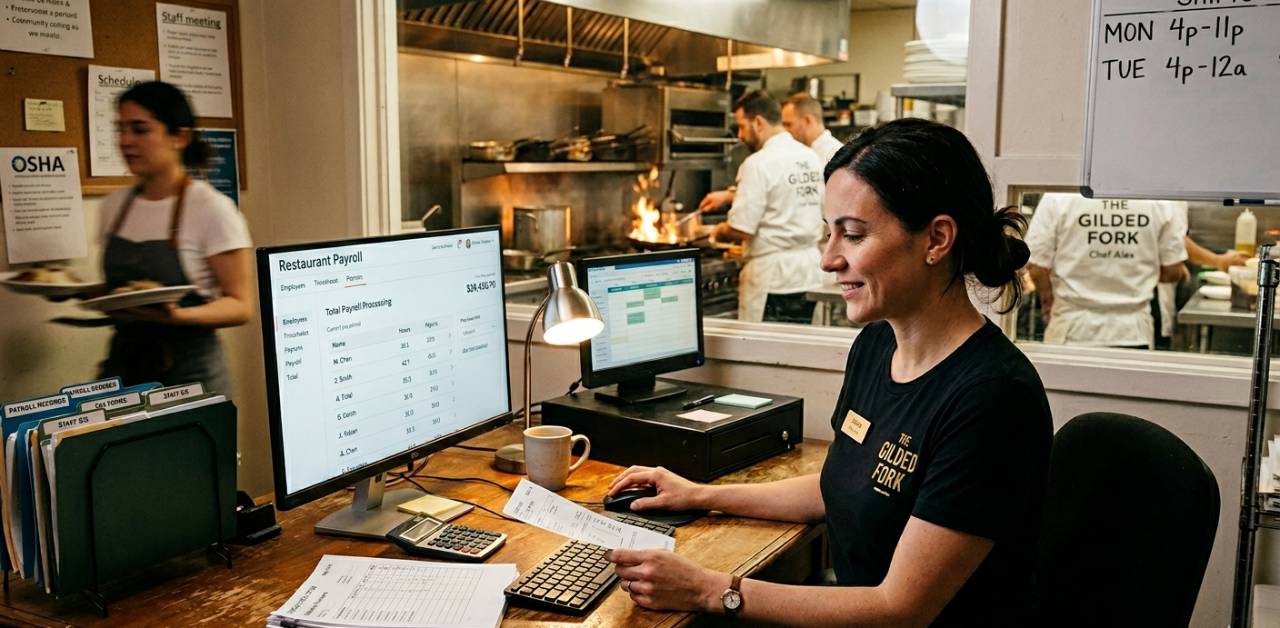
AI-powered HR and payroll automation helps restaurants create more control over the employee lifecycle. Instead of managing hiring in one place, onboarding in another, schedules in another, and payroll somewhere else, owners can bring these tasks into one connected process. This gives managers better visibility into who is scheduled, who clocked in, who missed a break, who is approaching overtime, and which employees still need documents completed.
The biggest value is prevention. A manager should not have to find out about a labor issue after payroll is processed or after a complaint is filed. Automation can flag problems earlier, such as an employee nearing overtime, a missing meal break, an incomplete timecard, or a schedule that may create coverage gaps. This allows managers to fix issues before they become financial or legal problems.
For restaurant owners, HR automation can improve four important areas -
1. Hiring speed - Faster applicant tracking, interview scheduling, and onboarding can help fill open roles sooner.
2. Timekeeping accuracy - Digital time records reduce the risk of missed punches, manual edits, and payroll confusion.
3. Schedule control - Managers can compare staffing levels against expected sales so they are not overstaffed during slow periods or understaffed during rushes.
4. Compliance protection - Automated alerts can help managers stay aware of breaks, overtime, local labor rules, required documents, and employee records.
The financial impact comes from reducing waste in the labor process. If managers spend hours each week fixing timecards, chasing paperwork, correcting schedules, or answering payroll questions, that time is being pulled away from operations, guests, food quality, and sales. Automation does not remove the need for strong leadership, but it gives managers a cleaner system to work from.
Restaurant owners should view HR and payroll automation as a margin-protection tool. It helps reduce errors, control labor costs, improve employee accountability, and lower the chance of expensive compliance mistakes. In a business where labor is one of the largest expenses, better control over staffing and payroll can have a direct effect on profitability.