How Much Does It Cost to Open a Coffee Shop in 2026?
Opening a coffee shop in 2026 requires careful cost planning across rent, equipment, labor, technology, menu strategy, marketing, and sustainability.
operations
May 15, 2026
Opening a coffee shop in 2026 requires careful cost planning across rent, equipment, labor, technology, menu strategy, marketing, and sustainability.
May 15, 2026

This AI playbook covers restaurant tools for voice ordering, staffing, compliance, menu pricing, inventory, marketing, ChatGPT prompts, and SEO.
May 15, 2026

Hardee’s giant Boddie-Noell inks 31-unit Scooter’s Coffee deal for NC and VA, leveraging drive-thru growth and local roots with rollout over 12–18 months.
May 15, 2026

Wingstop turns match weeks into a multi-sensory festival, aligning bold pop-ups with World Cup energy to build brand affinity and measurable momentum.
May 15, 2026

The parent company behind Dunkin', Buffalo Wild Wings, and Arby's has filed for an IPO a move that could reshape how Wall Street views the restaurant sector.
May 15, 2026

Learn how to develop a memorable restaurant brand identity that stands out in a crowded market, attracts loyal customers, and drives repeat business with actionable strategies and affordable tools.
May 15, 2026

Dirty soda chain Swig is expanding into Colorado through a 10-unit franchise deal, riding a consumer beverage trend that's catching the attention of major QSR players nationwide.
May 15, 2026

Papa Johns has teamed up with Alphabet's Wing for drone delivery of its new sandwich lineup in parts of Charlotte marking the first partnership of its kind between Wing and a national QSR brand.
May 15, 2026

A warm, expert-led look at McDonald’s Q1 results, menu makeover, and the refranchise question shaping its growth.
May 14, 2026

A reflective look at Habit Ranch, its immersive desert activation, and what it signals for brand loyalty and mindful, experiential dining.
May 14, 2026

Unlock Exclusive Access To Webinars, Events, And The Latest News For Free!
After shedding costly ventures and paring underperforming doors, Krispy Kreme enters 2026 with capital-light growth, outsourced delivery, and refranchising to protect margins and generate cash.

Krispy Kreme enters 2026 like a kitchen that has cleared its counters after a frenetic service—mise en place restored, indulgence tempered by intent. The flourishes of experiment have been exchanged for a quieter craft: capital‑light growth, steadier cash, fewer distractions. In 2025, the company exited its remaining stake in Insomnia Cookies and closed the book on a McDonald’s venture that had placed doughnuts in about 2,400 U.S. locations but proved “costly and ultimately unsustainable,” a move that underscored the new discipline. Management’s guidance is unvarnished and disarming in its restraint; CEO Joshua Charlesworth even cast the near‑term plan as “a bit more boring,” a choice of words that reads like a chef declining extra truffle shavings in favor of balance. The numbers echo this sober palette. Q3 2025 delivered approximately $375.3 million in net revenue, a GAAP net loss of $20.1 million, and a 17% year‑over‑year rise in adjusted EBITDA to $40.6 million, with positive free cash flow of $15.5 million. The company expects further EBITDA improvement and continued positive cash flow in Q4 and into 2026. In culinary terms, the glaze is setting: sheen without slip, sweetness held taut by structure. Analysis: The company has traded pace for posture, using 2025 divestitures and exits to reset expectations, bolster EBITDA, and turn free cash flow positive ahead of a measured 2026.

The 2025 portfolio cleanup sharpened attention on the core doughnut business while paring exposures that did not earn their keep. Exiting McDonald’s—where the brand “despite delivering on quality, failed to generate profitability”—and divesting Insomnia Cookies were cast not as a retreat but a recalibration toward profitability and de‑leveraging. The strategy orients around profit‑centric access points and refranchising, an acknowledgement that reach must be curated like a wine list rather than expanded indiscriminately. Early‑year data showed the allure and its cost. In Q1 2025, Points of Access rose 21.4% year‑over‑year, yet the quarter recorded a GAAP net loss of $33.4 million and adjusted EBITDA of $24.0 million amid macroeconomic headwinds. The juxtaposition is unmistakable: growth that strains margins is an over‑reduced sauce, its intensity impressive but unsustainable. The refocus seeks balance—fewer pours, higher quality of revenue, and a balance sheet that can stand the heat without boiling over. Analysis: Management prioritized the caliber of revenue and debt repair over raw footprint growth, reshaping the mandate from “be everywhere” to “be profitable where it counts.”
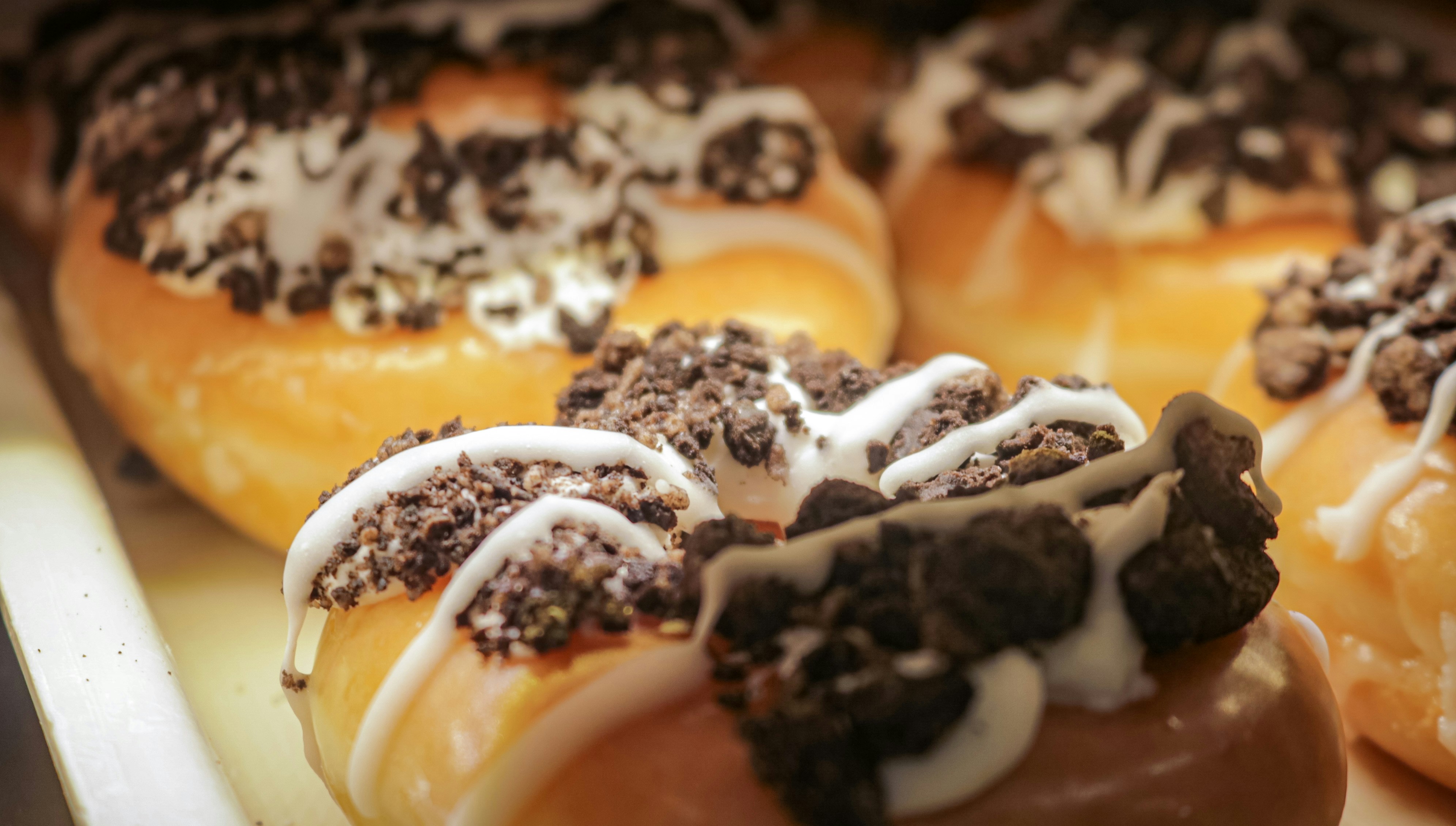
In the U.S., the company pivoted from company‑owned pushes to high‑velocity retail partnerships with Walmart, Target, Costco, Kroger and Publix—“fantastic customers that we’re growing profitably with.” The Delivered Fresh Daily network was re‑edged with a paring knife: roughly 1,500 underperforming doors exited, replaced by approximately 1,100 more profitable, high‑volume sites. The logic mirrors a sommelier’s curation—drop the crowd‑pleasers that don’t sell through with integrity; double down on labels that move with margin. Q3 2025 earnings reflected this deliberate mix shift. Trimming lower‑performing outlets and exiting McDonald’s created a modest revenue decline while quickly lifting adjusted EBITDA and delivering positive free cash flow. This is the pragmatic choreography of unit economics: sacrifice breadth to restore flavor, then let the improved blend of partners and locations carry the finish. Analysis: Channel optimization favored productivity over presence, demonstrating that fewer, better outlets can enrich EBITDA and cash generation even as the top line moderates.
Delivery became a hinge for the turnaround. By Q2 2025, 40% of U.S. fresh doughnut deliveries were outsourced to third‑party logistics providers, with a full transition expected by mid‑2026. The aims are explicit: stabilize delivery costs, reduce liability expenses—especially casualty losses—and borrow the hard‑won craft of route optimization and fleet management from specialists. In essence, the brand keeps the recipe and the glaze, but lets seasoned couriers carry the box. Offloading fleet complexity is intended to convert a tangle of variables into steadier cost contours. Predictability, not panache, is the desired flavor profile. When a perishable promise hinges on precise timing, dependable partners are the leavening that keeps the product aloft without demanding fresh capital at every turn. It is an engineer’s solution with a pâtissier’s sensitivity to freshness windows. Analysis: The 3PL shift targets cost stability and lower exposure to casualty‑related losses, reinforcing a capital‑efficient model that can protect quality without owning every mile.
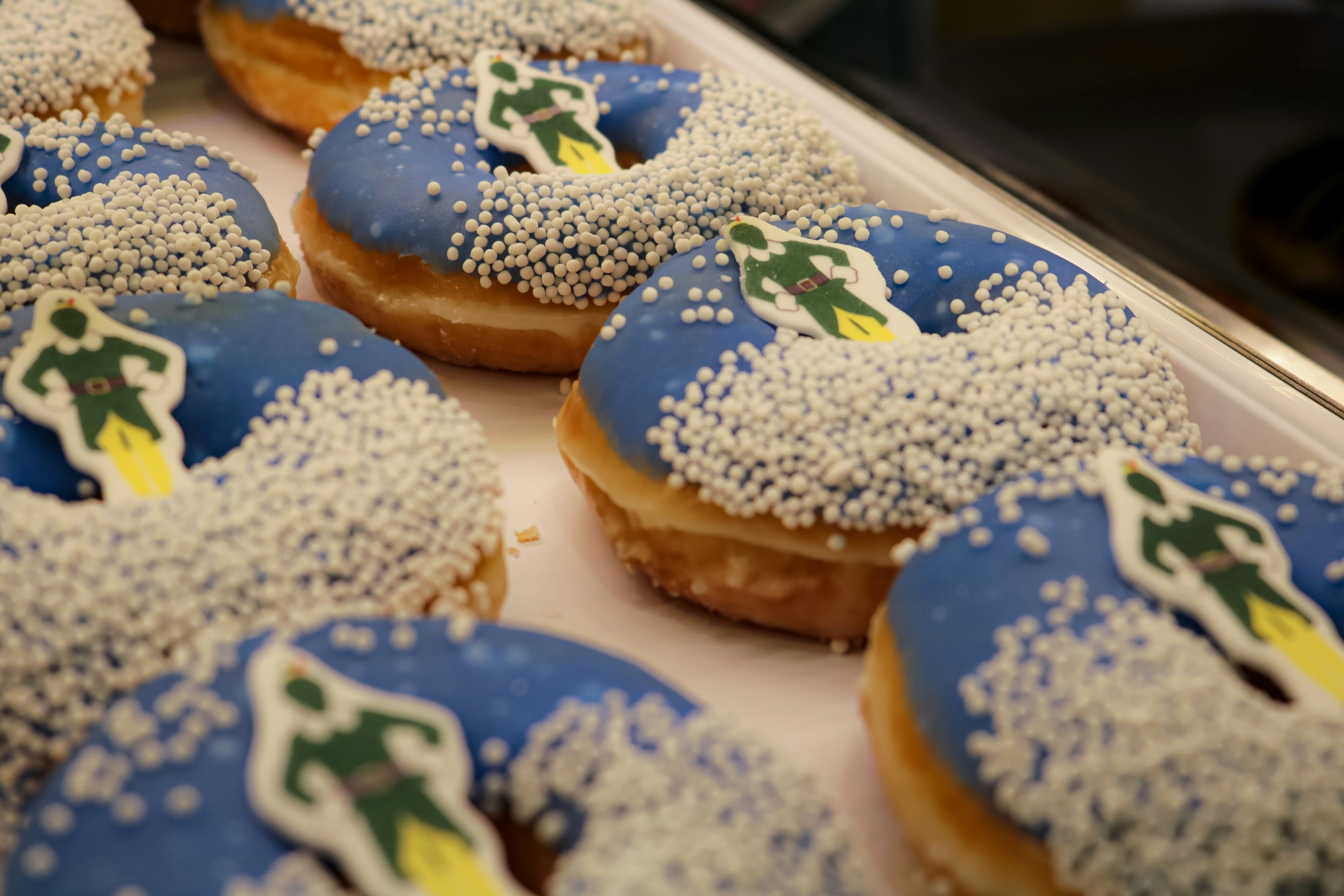
Internationally, the company is drafting a franchise‑led blueprint. Refranchising is underway in Japan, Australia, the U.K., Mexico and New Zealand, with Raphael Duvivier, President of International, charged with extending the approach across Europe and Latin America. The ambition is elegant in its risk transfer: let capable partners hold more execution risk and capital needs, while the brand polishes systems and standards. At home, a restructuring of a joint venture in the Western U.S.—a region that represents around 15% of U.S. revenues—was designed to free capital and reduce net debt. Abroad, momentum surfaced in the second quarter: international organic revenue increased 5.9%, led by Canada, Japan and Mexico, even as Points of Access declined due to strategic optimization. Leadership appointments reinforced the operating cadence: Nicola Steele stepped in as COO, Dave Skena became Chief Growth Officer, and others joined to align around global franchise expansion. The direction reads like a classic brigade de cuisine: roles clarified, scope tightened, execution entrusted to specialists. Analysis: By refranchising markets and tightening leadership seams, the company is building a more scalable engine that privileges capital efficiency and partner capability over owned expansion.
The financial tableau at Q3 2025 shows traction with caveats. Net revenue came in at approximately $375.3 million, with a GAAP net loss of $20.1 million. Adjusted EBITDA rose 17% to $40.6 million, and free cash flow turned positive at $15.5 million. Organic revenue edged up 0.6%, while global Points of Access fell 6.1% as underperforming locations were pared. It’s margin repair by design—an edit that trims the line‑up to regain control of the finish. Leverage remains the pronounced note on the palate. Net debt stood near $973.9 million against trailing 12‑month adjusted EBITDA of $159.3 million, a 6.1x net leverage ratio as of Q1 2025. Management expects continued EBITDA improvement and positive cash flow in Q4 and into 2026, plans a substantial reduction in capital expenditures, and targets sustainable—rather than flashy—growth. The scorecard is not yet sweet, but the bitter has softened, and the aftertaste promises steadier days if discipline holds. Analysis: Profitability metrics are improving even as leverage stays elevated, explaining why 2026 is cast as a reset year centered on cash generation and balance sheet repair.
Markets, like diners, scrutinize consistency. In August 2025, JPMorgan downgraded the stock to “underweight,” spotlighting execution risks tied to refranchising and the possibility that the doughnuts’ freshness appeal could erode in third‑party channels. The critique lands at the nexus of strategy: growth through retail partners and 3PL delivery must enhance, not dilute, the signature experience. Yet the quarter’s arithmetic offers a counterpoint. Exiting McDonald’s and pruning lower‑performing outlets improved adjusted EBITDA and generated positive free cash flow. If the brand can marry its retail partnerships with the precision of outsourced logistics—keeping windows of freshness as tight as promised—skepticism may fade. The burden of proof is squarely operational, the kind best answered not with rhetoric but with reliably warm product on arrival. Analysis: Investor caution centers on whether outsourcing and refranchising can scale without compromising the freshness promise; recent EBITDA and cash flow gains show the economic case, but consistency will adjudicate the brand case.

Some ingredients are still offstage: the magnitude of cost savings from the 3PL transition, the pace and proceeds of refranchising by market, and the timeline for net debt reduction beyond stated aims. Even so, management’s outlook—continued EBITDA improvement and positive cash flow, reduced capital expenditures, and a measured, “a bit more boring” cadence—has cohered into a capital‑light framework. U.S. channel optimization, global refranchising, and logistics outsourcing form a triptych that privileges profitable reach over spectacle. The lesson is as classical as a well‑tempered ganache: restraint can be a higher form of richness. By paring doors, privileging productive partners, and shifting logistics to specialists, the company is betting that 2026 will trade speed for durability—margin integrity, predictable cash, and the slow burn of deleveraging. If execution holds, the brand’s sweetness can be delivered at scale without melting its promise in transit. Analysis: With partner quality, delivery consistency, and franchise oversight as guardrails, the 2026 reset aims to convert past ambition into durable margins and cash flow, even absent precise savings or timing disclosures.